English
 русский
An oil and gas gate valve is a linear-motion valve designed to start or stop fluid flow by lifting a flat or wedge-shaped gate out of the flow path. Unlike throttling valves, gate valves are built for fully open or fully closed service. In wellhead and production applications, they are preferred for their low pressure drop, tight sealing under high pressure, and ability to handle abrasive fluids. When you need dependable isolation in a drilling or production system, the gate valve is usually the first component engineers specify.
Content
- What Makes a Gate Valve Essential in Oil and Gas Operations?
- How Does a Gate Valve Work Inside a Wellhead?
- Main Types of Gate Valves Used in Oil Fields
- Material Selection: The Real Driver of Valve Performance
- Sizing, Pressure Classes, and End Connections
- Gate Valves vs. Ball Valves: Which One Should You Choose?
- Selecting Gate Valves: Critical Criteria for Procurement
- Installation and Maintenance: Avoiding Field Failures
- Automation and Remote Shutdown Capabilities
- Frequently Asked Questions
- Where to Source Reliable Oil and Gas Gate Valves
- Final Recommendation
What Makes a Gate Valve Essential in Oil and Gas Operations?
Gate valves are the workhorses of upstream oil and gas because they handle the three most demanding jobs on a well: isolation, emergency shutdown, and flow direction control. Their straight-through design means the bore aligns perfectly with the pipeline, so pressure loss is minimal and debris does not accumulate around the sealing surfaces. That is why they dominate on Christmas trees, flowlines, manifolds, and mud systems.
Three operational characteristics explain their dominance:
- Bubble-tight shutoff — metal-to-metal or soft-seated gates provide a positive seal even after years of service.
- Bi-directional sealing — pressure can come from either direction without affecting performance.
- Minimal turbulence — the full bore opening reduces erosion and vibration in high-flow pipelines.
For wellhead equipment, threaded or flanged gate valves are typically installed as master valves, wing valves, and casing valves. They meet API 6A specifications for pressure control and are tested to rigorous performance requirements (PR1 or PR2).
How Does a Gate Valve Work Inside a Wellhead?
A gate valve operates with a simple up-and-down movement: the stem rotates, which moves the gate either into the flow path (closed position) or out of it (open position). Because the gate travels perpendicular to the flow, the valve requires multiple turns to fully open, but this also prevents accidental throttling damage.
Key Components You Should Know
Understanding the internal architecture helps you evaluate quality and plan maintenance:
- Body and bonnet – Cast or forged steel housing that contains the pressure; usually joined by studs or a threaded connection.
- Gate – The disc that moves to block or allow flow; solid, split, or expanding designs are available.
- Stem – Transmits torque from the handwheel or actuator to the gate; rising-stem designs give a visual open/closed indication.
- Seat rings – Pressed or threaded rings that form the sealing surface; these see the most wear.
- Packing and seals – Prevent leakage around the stem. High-pressure wellhead valves use energized packing that stays tight across wide temperature swings.
When the gate is in the fully open position, the bore is unobstructed, which allows pigs to pass through and keeps erosion low—a critical advantage in produced water and multiphase flow.
Main Types of Gate Valves Used in Oil Fields
Not all gate valves are identical. Choosing the wrong type can lead to premature failure, so it is useful to understand the basic classification used across the industry.
| Solid gate | Single-piece wedge; simple and rugged | General isolation on flowlines and manifolds |
| Expanding gate | Two-piece gate that expands on closure | Requires low torque, ideal for gas and high-pressure wells |
| Slab gate | Flat plate with a through bore | Used on wellhead trees for liquid service |
| Mud gate | Wide-body design with replaceable seats | Abrasive drilling mud circulation systems |
In oil and gas wellhead service, expanding gate valves are often preferred because they do not rely on pressure to energize the seal. For high-pressure gas wells, this means a more reliable bubble-tight seal even at low differential pressure. On the drilling side, DM or OTECO-style mud gate valves are common because their elastomer seats can be replaced in the field without removing the valve body from the line.
Material Selection: The Real Driver of Valve Performance
Material choice is the single most important factor determining whether a gate valve survives in sour gas, high-temperature, or abrasive service. API 6A designations like AA, BB, CC, DD, EE, FF, and HH define material classes based on service conditions, including H2S content, partial pressure, and temperature limits.
A common mistake is specifying a valve body in carbon steel for a service that requires stainless steel trim. This leads to rapid corrosion and, eventually, well control issues. Here is a practical breakdown of material classes:
- AA / BB – General service, no H2S; typically carbon steel or low alloy steel. Suitable for sweet oil and water injection.
- CC / DD – Moderate H2S resistance; 316 stainless steel trim is standard for the gate and seats.
- EE / FF – Sour service per NACE MR0175; all wetted parts are corrosion-resistant alloys. Required for gas wells with H2S above 3.5 kPa partial pressure.
- HH – Severe sour service; uses nickel-based alloys such as Inconel 718. Common in high-temperature high-pressure (HTHP) wells.
Beyond the metallurgy, you should verify that the gate valve conforms to the current material requirements in your well's environment. If the completion fluid contains CO2 or chlorides, trim material should be upgraded accordingly.
Sizing, Pressure Classes, and End Connections
Gate valves for upstream service are not chosen by pipe size alone. The full system pressure rating, face-to-face dimensions, and end connections must match the wellhead or manifold design.
Pressure Ratings
API 6A gate valves are classed by working pressure at the wellhead. The most common pressure classes are:
- 2,000 psi – Shallow wells, low-pressure water injection
- 3,000 psi – Standard onshore production trees
- 5,000 psi – Common for medium-depth wells and fracturing operations
- 10,000 psi – High-pressure gas wells and deep drilling
- 15,000 psi – HTHP and ultra-deep reservoirs
- 20,000 psi – Extreme HTHP, typically subsea
Do not confuse the valve's rated working pressure with its test pressure. API 6A requires a body test at 1.5 times the working pressure. Always confirm the valve's pressure rating on the nameplate before installation.
Size Range and End Connections
Gate valves used on wellhead equipment normally range from 1-13/16" to 11" bore sizes. End connections include studded flanges, threaded, weld-end, and clamp-hub connectors. For drilling mud systems, flanged or butt-weld connections are standard because they can handle vibration and hammer-union impact loads.
Gate Valves vs. Ball Valves: Which One Should You Choose?
Engineers often debate between gate valves and ball valves for oilfield service. The answer depends on the function required. If you need a valve for rapid on/off control during fracturing or well testing, a ball valve offers quarter-turn operation. However, for throttling or for handling fluids with high solids content, the gate valve's linear motion and full bore are more forgiving.
| Feature | Gate Valve | Ball Valve |
| Operation speed | Multiple turns; slower | Quarter-turn; faster |
| Flow restriction | Full bore, zero obstruction | Reduced bore options exist |
| Throttling service | Not recommended | Not recommended |
| Sour gas suitability | Excellent with proper trim | Good, but seal reliability varies |
| Solid particle handling | Good for mud, but seats erode | Lower tolerance for entrained solids |
For wellhead isolation service, gate valves are the conventional choice because their rising stem gives a visual indication of valve position, which is valuable during well interventions and flowback operations.
Selecting Gate Valves: Critical Criteria for Procurement
When you are ready to specify a gate valve, go through a checklist to avoid expensive mismatches. We have seen too many failures caused by a valve body that met size but not the environmental specification. Here is the order of priority we recommend to our customers:
- Confirm the working pressure and temperature of the system.
- Identify the fluid composition (H2S, CO2, chlorides, solids content).
- Determine the material class per API 6A (AA to HH).
- Check the bore size and end connection compatibility.
- Select the gate design—solid, slab, or expanding—based on required sealing performance.
- Specify the actuation type: manual, hydraulic, or pneumatic.
- Verify certification and traceability documents (API monogram, MTR, NACE compliance).
A useful way to evaluate a supplier is to review their product range. A manufacturer that offers multiple gate valve styles, such as gate valves with forged steel bodies and API 6A certification, demonstrates the production capability you need. Similarly, a provider that manufactures expanding gate valves for high-pressure gas service is more likely to understand downhole conditions than one that only makes commodity valves.
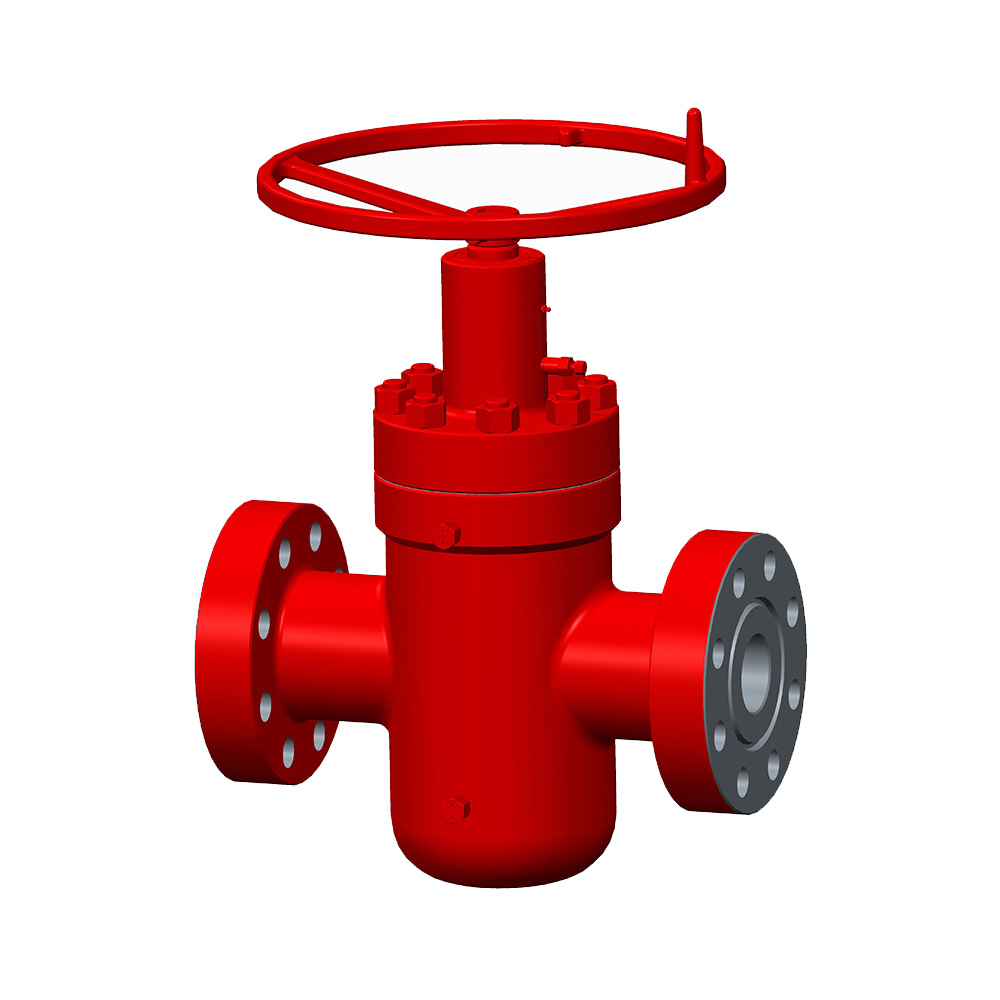 China 5IN expanding gate valve Suppliers, Custom 5IN expanding gate valve CompanJiangsu Zhonglin Oil Equipment Co., Ltd is China 5IN expanding gate valve suppliers and 5IN expanding gate valve company, We specialize i...View Product →
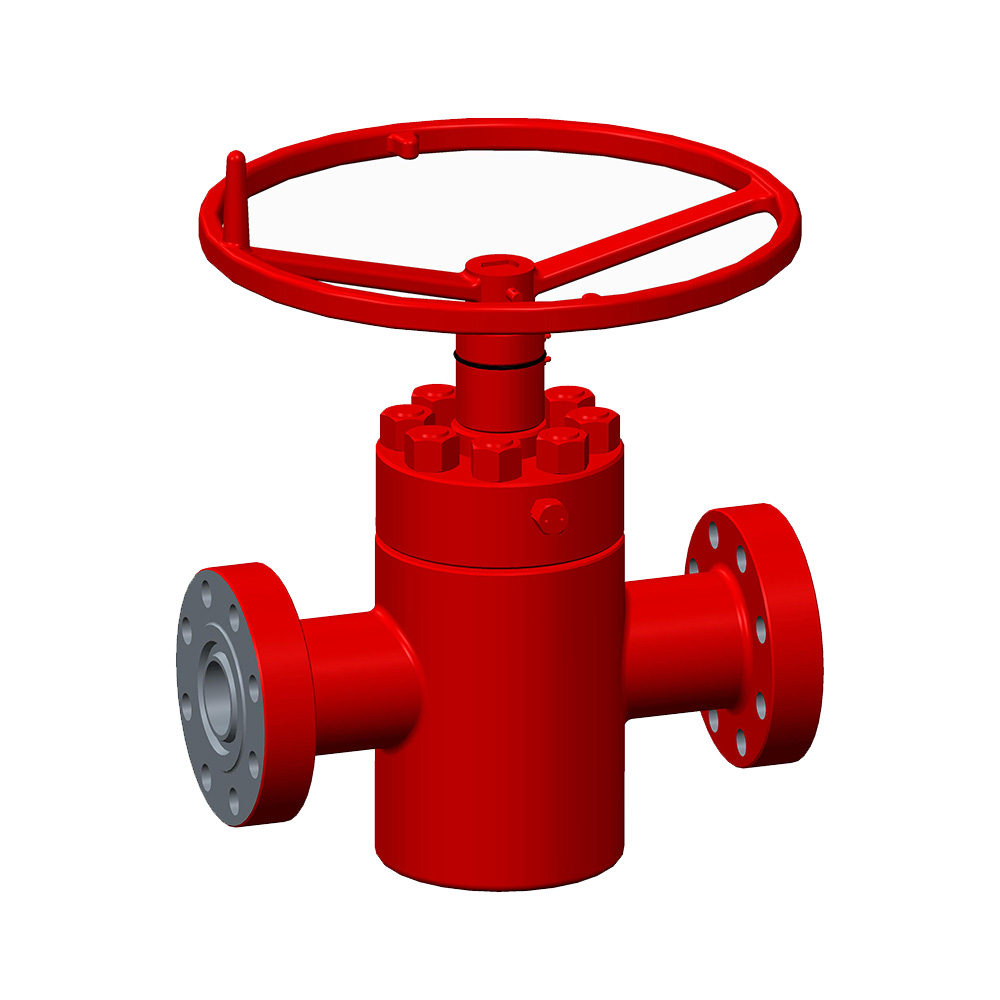 China GATE VALVE FC Suppliers, Custom GATE VALVE FC Company- Jiangsu Zhonglin OiJiangsu Zhonglin Oil Equipment Co., Ltd is China GATE VALVE FC suppliers and GATE VALVE FC company, We specialize in producing custom GAT...View Product →
Installation and Maintenance: Avoiding Field Failures
A gate valve is only as good as its installation. The most common root cause of premature valve leakage is not manufacturing defects, but improper installation—over-torquing the bonnet, misaligning flanges, or failing to support the pipe weight. Follow these rules:
Installation Best Practices
- Flush the pipeline before installation to remove weld slag and scale that can damage seating surfaces.
- Leave the valve in the fully closed position during installation to protect the gate.
- Support the pipe independently so the valve body is not carrying bending loads.
- Use the correct torque pattern for flange studs; overtightening can distort the body and cause leaks.
Routine Maintenance
Periodically cycle the valve from fully closed to fully open to prevent scale buildup on the stem. For mud gate valves, check the seats annually; if they are worn but not damaged, replacing the seat and seals in the field is straightforward. Grease the stem threads with a compatible lubricant and pay attention to stem packing leaks—they are the first sign that the valve is nearing the end of its service life.
Automation and Remote Shutdown Capabilities
Modern well sites are increasingly moving toward automated valve control. Hydraulic and pneumatic actuators allow gate valves to be operated from a control panel or via remote signals. This is especially critical for safety systems, where a gate valve must close quickly during a kick or blowout event.
When integrating actuators, verify that the torque requirement of the gate valve at maximum differential pressure is within the actuator capacity. A gate valve that is not fully opened or closed during emergency shutdown can fail to seat, which is unacceptable in well control scenarios.
Frequently Asked Questions
What is the difference between a wedge gate valve and a slab gate valve?
A wedge gate has an angled sealing surface that pushes into the seats for a tight seal. A slab gate is flat and relies on upstream pressure to press the gate against the downstream seat. Wedge gates are used in more corrosive services, while slab gates are common on wellhead trees for liquid service.
Can gate valves be used for throttling?
No. Partial opening creates high-velocity flow that erodes both the gate and the seat. Use a choke valve, such as a needle-style or sleeve choke, when flow regulation is required.
How do I select the right gate valve for a high-pressure wellhead?
Check the nominal working pressure (2,000 to 20,000 psi), select the correct material class for your fluid's corrosivity, and choose an expanding gate design if you need a reliable seal at low pressure. For complex reservoirs, it is worth consulting with a manufacturer that engineers wellhead assemblies.
Where to Source Reliable Oil and Gas Gate Valves
For operators and procurement teams looking for a dependable supply partner, Jiangsu Zhonglin Oil Equipment Co., Ltd. manufactures a full range of API-certified valves, including FC, FL, FLS, hydraulic gate valves, and expanding gate valves. Their team designs equipment for service from shallow wells to 15,000 psi HTHP environments and supports international projects with factory acceptance testing and documentation. You can explore their complete gate valve product lineup or review the certifications and quality approvals that support their manufacturing claims.
Final Recommendation
Choosing the right oil and gas gate valve is not just about matching size and pressure class—it is about understanding the well's entire production environment, from fluid chemistry to emergency shutdown requirements. Prioritize manufacturers with API 6A compliance, proven material traceability, and in-house testing. A well-selected gate valve will give you decades of reliable isolation; a poorly selected one can compromise the safety of the entire well operation.