English
 русский
A wellhead is the structural and pressure-containing assembly installed at the surface of an oil or gas well. It suspends the casing and tubing strings, seals the annular spaces between them, and provides the controlled connection point for drilling, completion, and production equipment. Every well, from a low-pressure stripper well to a deep 15,000 psi gas well, is managed through its wellhead.
Content
What Is a Wellhead, Exactly?
A wellhead is a stacked system of flanged and threaded components mounted on top of the wellbore. It is not a single valve or fitting: it combines housings, hangers, spools, and seals that carry the weight of all casing strings, contain wellbore pressure, and give operators a controlled path for monitoring and intervention.
During drilling, the wellhead supports the blowout preventer (BOP) stack. After the well is completed, the BOP is removed and a Christmas tree is bolted to the same wellhead to control production. The wellhead therefore has to handle two very different phases of the well's life with equal reliability.
Main Components of a Wellhead
A conventional wellhead stack consists of a casing head, casing hangers, casing spools, a tubing head, a tubing hanger, and a Christmas tree on top. Each component has a defined job, and all of them are selected as one system rather than as individual parts.
| Component | Function |
|---|---|
| Casing head | The base of the stack; supports the surface casing and provides the first annulus outlet. |
| Casing hanger | Lands and seals a casing string inside the casing head or spool. |
| Casing spool | A spacer that lets a second or third casing string be hung above the first. |
| Tubing head | Supports the production tubing and seals the tubing-casing annulus. |
| Tubing hanger | Suspends the tubing string and seals the annulus around it. |
| Christmas tree | The top valve assembly that controls production flow and allows well access. |
The casing hanger and the tubing hanger are the most critical load-bearing components. For mid-range well designs, the C22 casing hanger is a common selection because it loads directly into a matching C22 casing head spool and carries the full casing weight through the wellhead body.
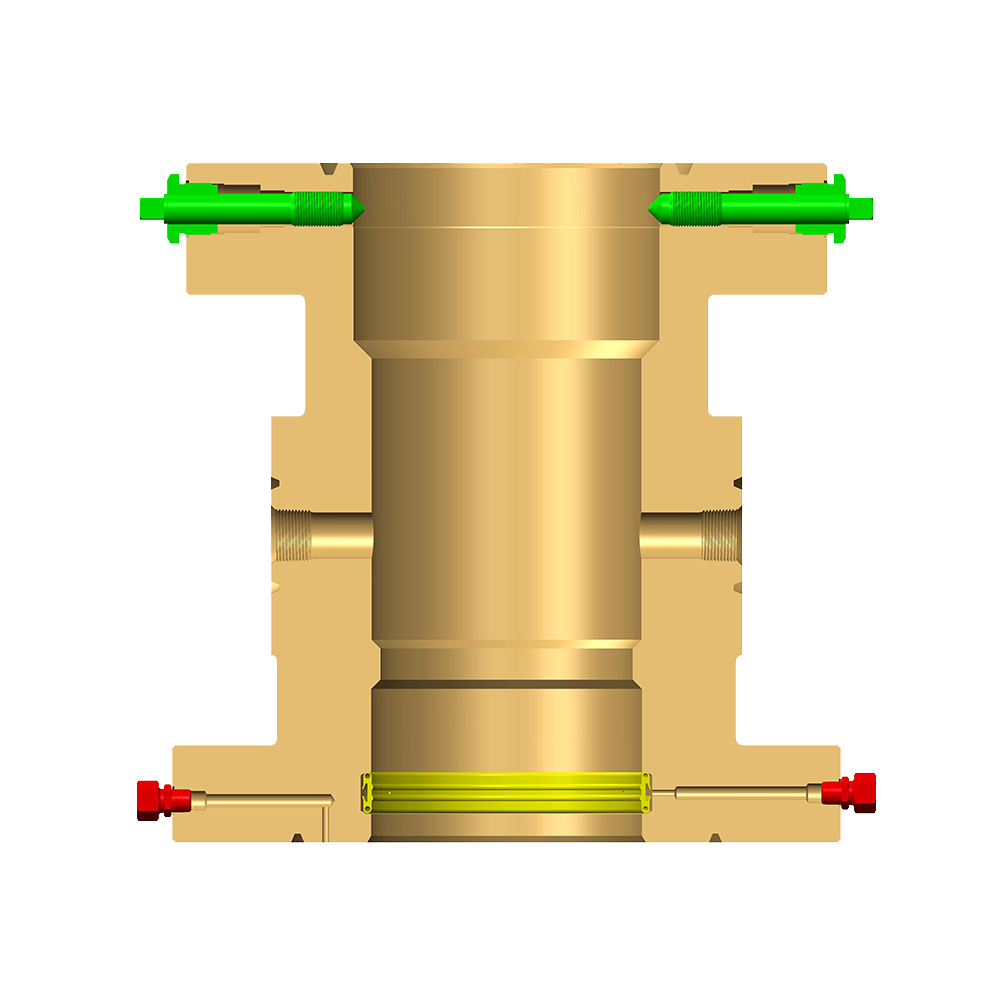 China C22 Casing Head Spool Suppliers, Custom C22 Casing Head Spool Company- JiaJiangsu Zhonglin Oil Equipment Co., Ltd is China C22 Casing Head Spool suppliers and C22 Casing Head Spool company, We specialize in prod...View Product →
How Does a Wellhead Work?
A wellhead works by transferring casing and tubing loads into the ground and containing pressure at the surface. Each casing hanger converts the downward weight of a casing string into a load carried by the casing head and the shallow foundation around the well. Elastomer and metal seals inside the wellhead block any leak path between the casing strings, the tubing, and the atmosphere.
Side outlets on the casing heads and spools let operators monitor annulus pressure, circulate fluids, and inject chemicals. In modern installations, sensors can be added to report pressure, temperature, and seal integrity in real time, so that real-time wellhead monitoring catches small problems before they escalate.
Wellhead Pressure Ratings and Standards
Wellhead equipment is built to a small set of international standards, the most important being API Specification 6A. API 6A defines pressure ratings, temperature classes, material classes, and testing requirements, so that a casing head from one manufacturer can be safely combined with a hanger from another.
| Working Pressure Rating | Typical Application |
|---|---|
| 2,000 psi | Shallow, low-pressure wells |
| 3,000 psi | Conventional production wells |
| 5,000 psi | The most common middle-range wells |
| 10,000 psi | High-pressure gas and injection wells |
| 15,000 psi | High-pressure high-temperature (HPHT) wells |
| 20,000 psi | Extreme HPHT and deepwater applications |
Pressure rating is the first selection criterion, but material class matters just as much. In wells producing sour gas (H2S), components must resist sulfide stress cracking, which is why the material class is marked on every API-compliant body. An API-certified manufacturer stamps this information on each component, and inspectors check it before installation.
Wellhead vs. Christmas Tree: What Is the Difference?
The wellhead and the Christmas tree are separate pieces of equipment, even though the names are often used interchangeably. The wellhead is the permanent foundation that supports the casing and seals the well. The Christmas tree is the valve assembly mounted above the tubing head that controls production flow, allows interventions, and acts as the final surface barrier.
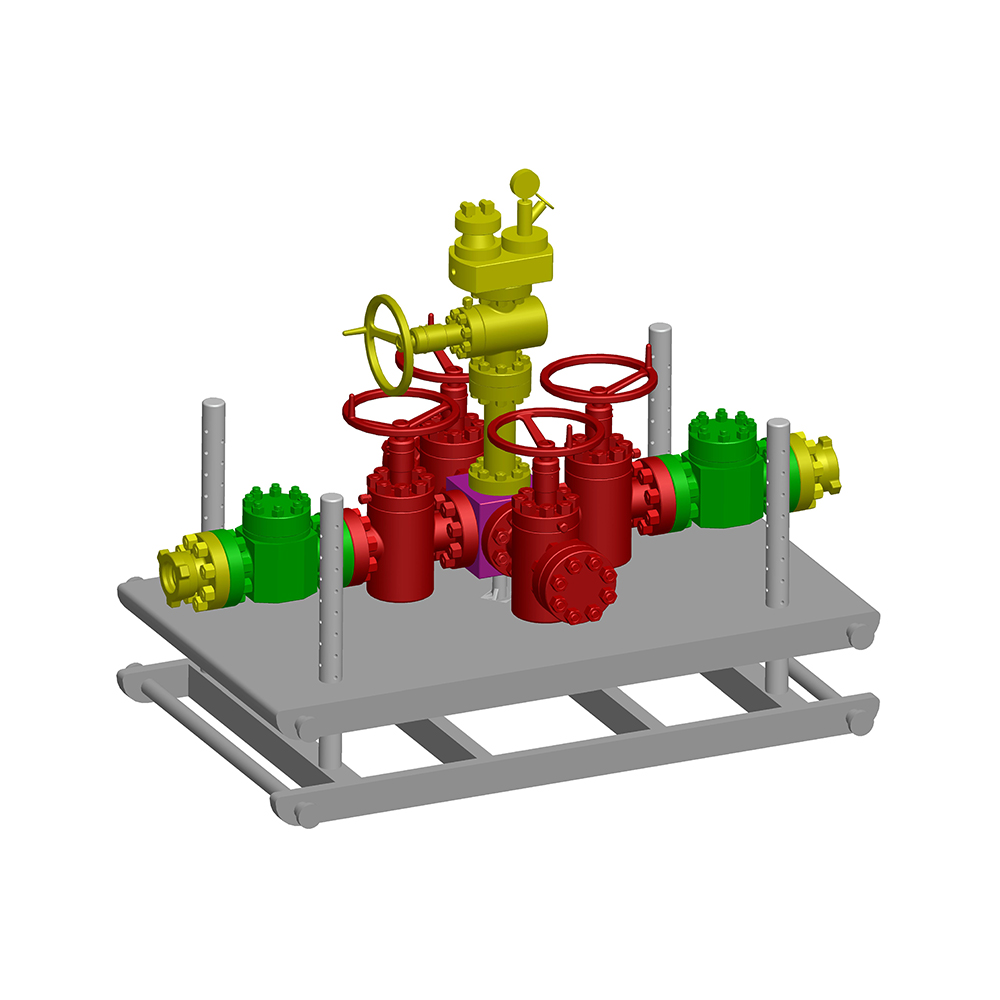
In a completion, the vertical stack of casing heads and the tubing head is the wellhead, and the tree sits above it on the tubing head adapter. For dual completions, where two tubing strings are produced from the same well, the tree must route both strings individually, which is why a dual-tubing Xmas tree assembly is used instead of a standard single-bore tree.
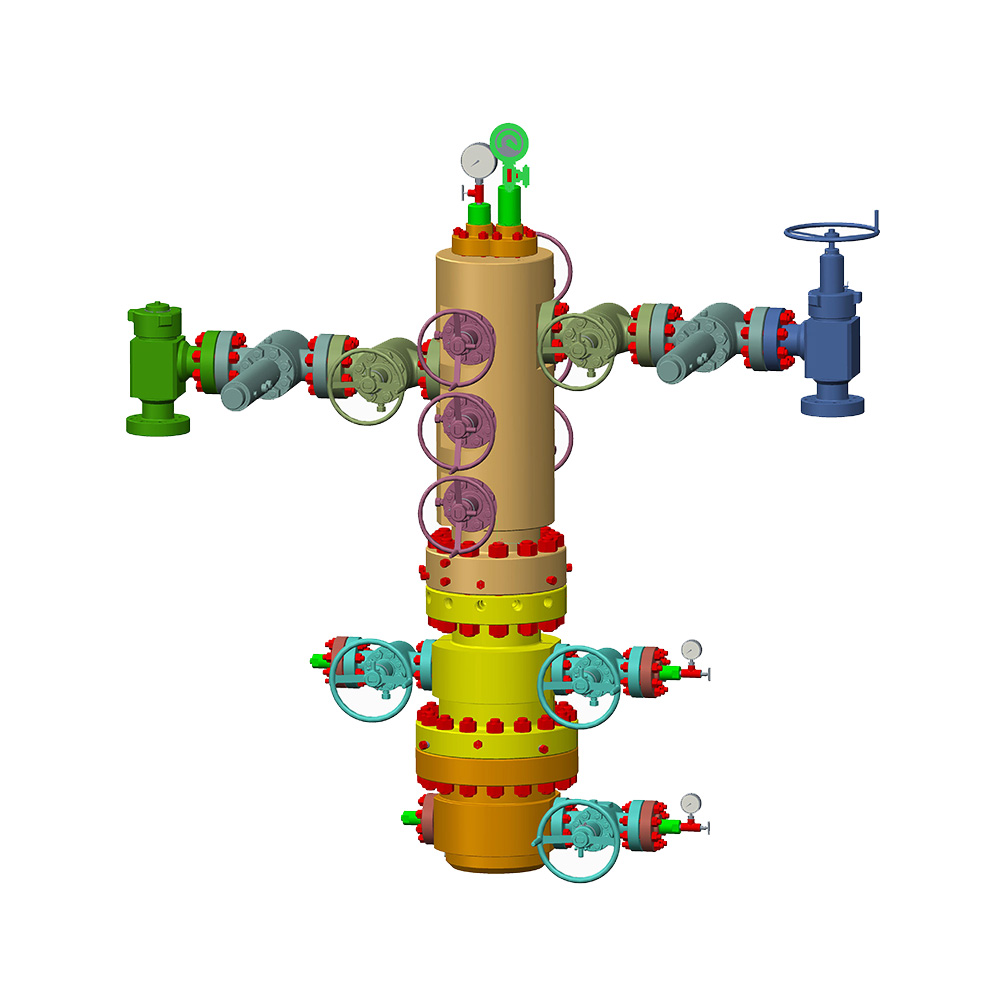 China Custom Well Head And X-Mas Tree Suppliers, CompanyJiangsu Zhonglin Oil Equipment Co., Ltd is China well head and x-mas tree suppliers and X-mas tree for dual tubing company, our company s...View Product →
Common Types of Wellhead Systems
Wellhead designs have diversified to match modern drilling and completion methods. The main types are:
- Conventional production wellheads for standard vertical and deviated wells.
- Frac wellheads, rated for the high pressures and erosive slurry flow of hydraulic fracturing.
- Thermal wellheads for steam injection (SAGD, CSS) and geothermal wells, where heat changes seal material behavior.
- ESP wellheads, with a tubing head adapter that lets the electric submersible pump cable pass through while keeping the annulus sealed.
- Dual-tubing wellheads for completions with two parallel production strings.
- Subsea wellheads, installed on the seafloor and operated remotely from the surface.
How to Choose the Right Wellhead
Selecting a wellhead starts with the worst-case shut-in surface pressure and the casing program, then accounts for the produced fluids and operating temperature. Use the following checklist:
- A working pressure rating equal to or higher than the maximum expected surface pressure.
- Material class matched to the fluid corrosivity (H2S, CO2, chlorides).
- Temperature class covering both normal and transient flowing conditions.
- Casing sizes, weights, and the number of casing strings in the program.
- Tubing size and weight, and whether the hanger must support a packer load.
- Flange, stud, and seal-ring compatibility across the whole stack.
- Back-pressure valves, wear bushings, test plugs, and lock screws as needed.
For an ordinary production well, a package made of one casing head, one casing spool, a tubing head, and a Christmas tree covers most needs. The tubing hanger must be matched to the tubing program, and a TCM tubing hanger is often selected where the tubing string is supported and sealed directly at the tubing head. For complex or HPHT wells, load capacity at every hanger and seal performance at every interface must be checked by the manufacturer's engineering team. Confirm whether the wellhead is supplied as a fully pressure-tested assembly or as loose components for site assembly, because this affects both fabrication time and installation planning.
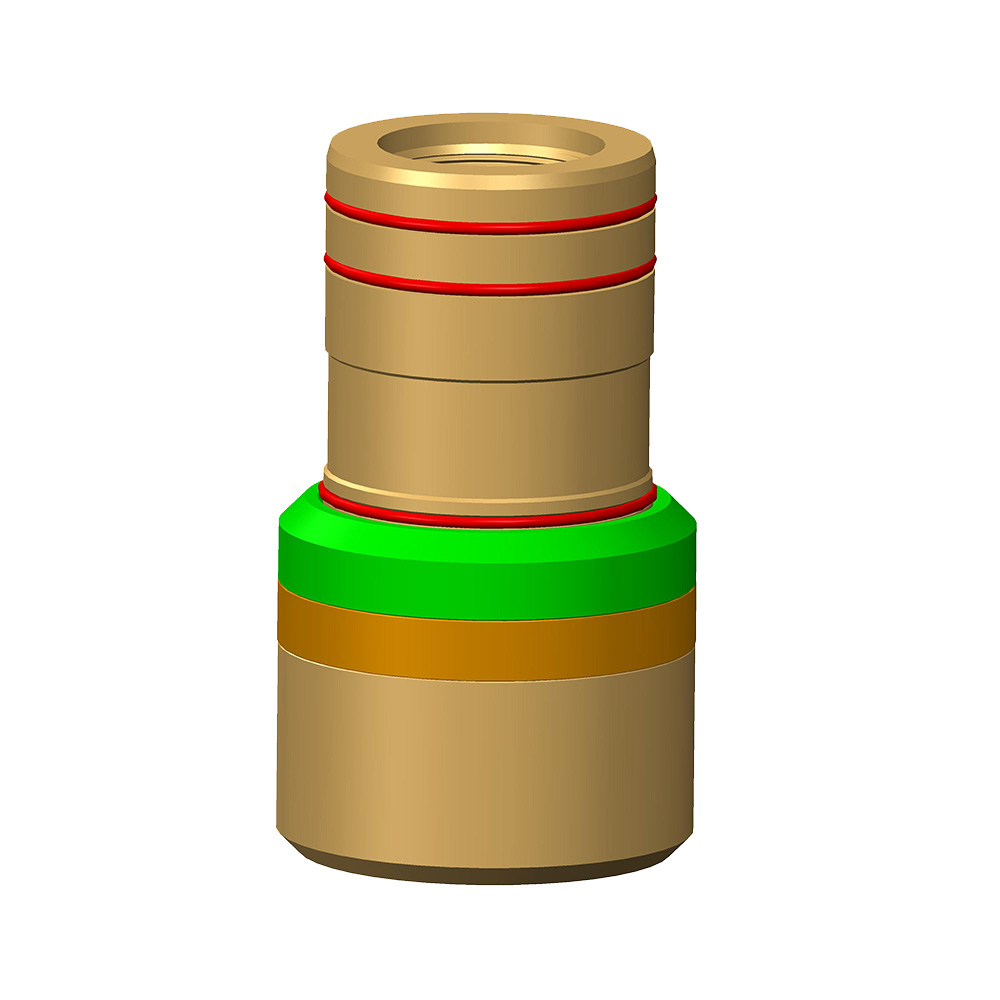 China TCM tubing hanger Suppliers, Custom TCM tubing hanger Company- Jiangsu ZhoJiangsu Zhonglin Oil Equipment Co., Ltd is China TCM tubing hanger suppliers and TCM tubing hanger company, We specialize in producing cu...View Product →
Wellhead Frequently Asked Questions
Is a Christmas tree considered part of the wellhead?
Technically no, but the two are always combined. The wellhead provides support and sealing; the Christmas tree provides flow control and access. Both are specified and tested to the same API 6A standard.
What pressure rating do most production wells use?
5,000 psi is the most common working pressure. Shallow and low-pressure wells often use 2,000 or 3,000 psi, while deep gas, injection, and HPHT wells require 10,000 psi or higher.
Can wellhead components be reused?
They can be refurbished and re-certified after pressure and dimensional testing, provided the full load and pressure history is known. Components with an unknown history are not reused by responsible operators.
What causes wellhead seal failures?
Incorrect installation torque, damaged seal surfaces, thermal cycling, and annular corrosion are the main causes. Good installation procedures and condition monitoring reduce most of these risks.
A wellhead is a small part of the total well cost but carries the entire responsibility for safe, leak-free operation. When it is specified for the correct pressure, material, and temperature, and manufactured to API 6A by a certified supplier, it protects the well investment for its full life. Working with a manufacturer that offers the complete range of casing heads, casing hangers, tubing heads, and Christmas trees is also the simplest way to avoid compatibility problems and procurement risk.