English
 русский
A gas line check valve is a mechanical device that permits gas flow in one direction only and automatically blocks any reverse flow. In a natural gas transmission line, a compressor station, or a wellhead flowline, the failure of a check valve can send pressurized gas backward into upstream equipment, damaging compressors, contaminating separation vessels, and creating a serious leak hazard. Unlike liquid service, where the fluid's weight and viscosity assist valve operation, gas is compressible and lightweight, which changes both the opening dynamics and the sealing requirements. This article explains how gas line check valves work, compares the types most commonly installed in oil and gas pipelines, and provides a practical framework for selection, installation, and maintenance.
Content
What Is a Gas Line Check Valve and Why Does It Matter?
A gas line check valve is an automatic, self-operated valve that opens when the upstream gas pressure exceeds the downstream pressure by a certain threshold, and closes when the flow direction reverses or the differential pressure drops. It requires no external actuation, no electric signal, and no operator intervention. The valve's internal disc, ball, or flap moves into the open position under forward flow and returns to its seat when forward pressure is lost, creating a seal against reverse flow.
In gas systems, the stakes are higher than in typical water or oil service. Natural gas is combustible, odorless in its raw state, and often carries entrained liquids or solid particles. A leaking check valve in a gas pipeline can allow hydrocarbon gas to migrate into low-pressure sections, vent stacks, or equipment that is not rated for gas service. This is not just a process efficiency problem; it is a personnel safety and environmental compliance issue.
Consider three common gas line scenarios where the check valve is the critical protective element:
- Compressor discharge lines: If the compressor trips, the downstream high-pressure gas can rush back through the machine, causing reverse rotation and mechanical damage. A gas check valve installed at the discharge nozzle prevents this backflow in milliseconds.
- Wellhead flowlines: In gas wells with intermittent production, the pressure from a manifold header or a neighboring well can push gas back into a depleted well. A check valve maintains the integrity of the individual well's flow path.
- Gas gathering and processing units: Separation vessels, filters, and dehydration units operate at different pressures. Check valves isolate these vessels from each other, preventing cross-contamination of process streams.
Without a properly selected gas line check valve, these systems rely on manual valves that depend on human action, which is not fast enough for dynamic pressure reversals. For a broader view of where check valves function across the industry, you can read about check valve applications across key industry scenarios.
How Does a Check Valve Work in a Gas System?
The operating principle of a gas line check valve is deceptively simple. A spring or gravity holds the closing element against its seat. When the upstream pressure rises to a level that overcomes this closing force, the element lifts, tilts, or slides away from the seat, permitting flow. When the upstream pressure falls below the downstream pressure, the pressure differential plus the spring or gravitational force pushes the element back onto the seat, isolating the downstream side.
But gas behaves differently from liquid inside a check valve, and those differences have direct consequences for valve selection:
Low density requires lower opening forces
Natural gas has a density roughly 1000 times lower than water. A swing check valve with a heavy cast-iron disc that opens easily in water service may not open at all in a low-pressure gas line, because the gas stream simply cannot generate enough dynamic force to lift the disc. For low-pressure gas applications, a flapper-type check valve with a lightweight, purpose-built disc, or a spring-assisted design, is often the right choice.
Compressibility creates pressure surges
When liquid flow suddenly stops, the resulting pressure spike is called water hammer. In gas service, the same effect occurs, but it plays out differently because the gas stores energy through compression. When a gas check valve closes rapidly, the upstream gas column continues to compress, generating a pressure wave that can briefly exceed the nominal line pressure. The valve and its adjacent piping must withstand this transient pressure, not just the steady-state operating pressure.
Sealing is more demanding
Gas molecules are smaller than liquid molecules and can escape through micro-gaps that would hold liquid without leaking. A check valve that is acceptable for oil service with a minor seat imperfection may fail a gas bubble-tightness test. For gas lines, the seat material, surface finish, and closing force must be engineered for gas-tight shut-off, typically verified to API 598 closure standards.
Main Types of Check Valves Used in Gas Lines
Not all check valves are equivalent in gas service. The internal geometry, the closing element's mass, and the seal mechanism determine whether a valve will operate reliably for years or become a chronic maintenance problem. The following types are the ones most frequently selected for gas pipeline applications, and they correspond to the product range we manufacture.
Swing check valves
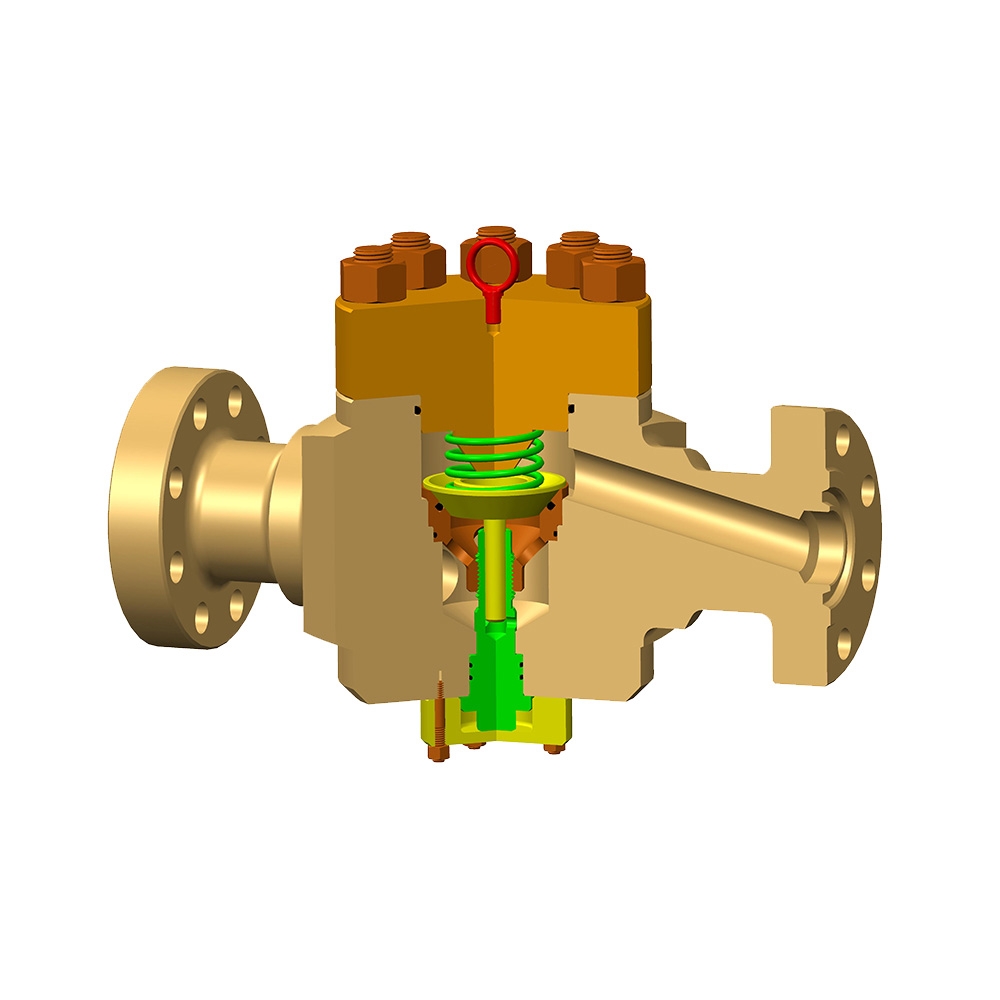
The swing check valve is the most common type in large-diameter gas transmission lines. It uses a disc that swings on a hinge or trunnion, moving out of the flow path when open. The full-bore opening creates very low flow resistance, making it energy-efficient for continuous high-volume gas flow. In gas service, the disc's weight is a double-edged sword: it closes positively when flow stops, but in low-pressure lines it may not open fully, causing flutter and premature wear. Swing check valves are normally installed in horizontal lines or vertical lines with upward flow, where gravity assists the closing action. For this service, we offer swing check valves for gas line service designed with a guided disc and replaceable seat.
 China Swing Type Check Valve Suppliers, Custom Swing Type Check Valve Company- JJiangsu Zhonglin Oil Equipment Co., Ltd is China Swing Type Check Valve suppliers and Swing Type Check Valve company, We specialize in pr...View Product →
Lift check valves
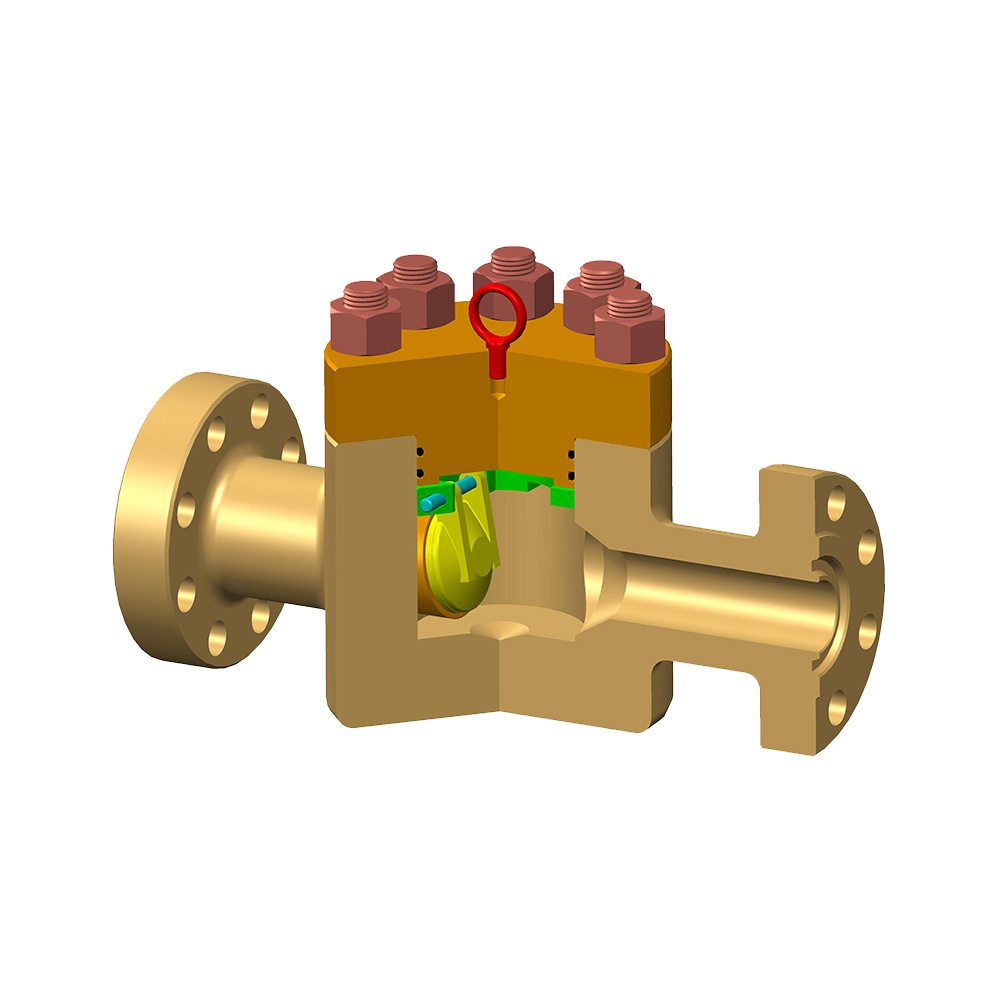
A lift check valve operates on a different principle: the disc lifts vertically off the seat, guided by a stem that travels in a bore. This construction gives excellent sealing performance and is well suited to high-pressure gas applications where tight shut-off is mandatory. The trade-off is higher flow resistance and a greater sensitivity to dirty gas. If the gas carries scale, sand, or corrosion products, the guide surfaces can bind or score, leaving the valve stuck open or closed. For clean, high-pressure gas lines, though, a lift check valve is often the most reliable option. We manufacture lift check valves for high-pressure gas applications with replaceable seats and precision-guided discs.
 China Lift Check Valve Suppliers, Custom Lift Check Valve Company- Jiangsu ZhongJiangsu Zhonglin Oil Equipment Co., Ltd is China Lift Check Valve suppliers and Lift Check Valve company, We specialize in producing cust...View Product →
Flapper check valves
The flapper check valve uses a thin, lightweight disc that resembles a flapper door. Because the moving mass is minimal, it responds quickly to changes in flow direction, making it ideal for compressor discharge and other services where rapid backflow prevention is essential. The flapper design also tolerates the pressure pulsations common in gas compression systems. Its main limitation is a lower pressure rating compared to swing or lift types. For most mid-range gas pressures, the flapper valve is a dependable and economical choice.
Dart check valves
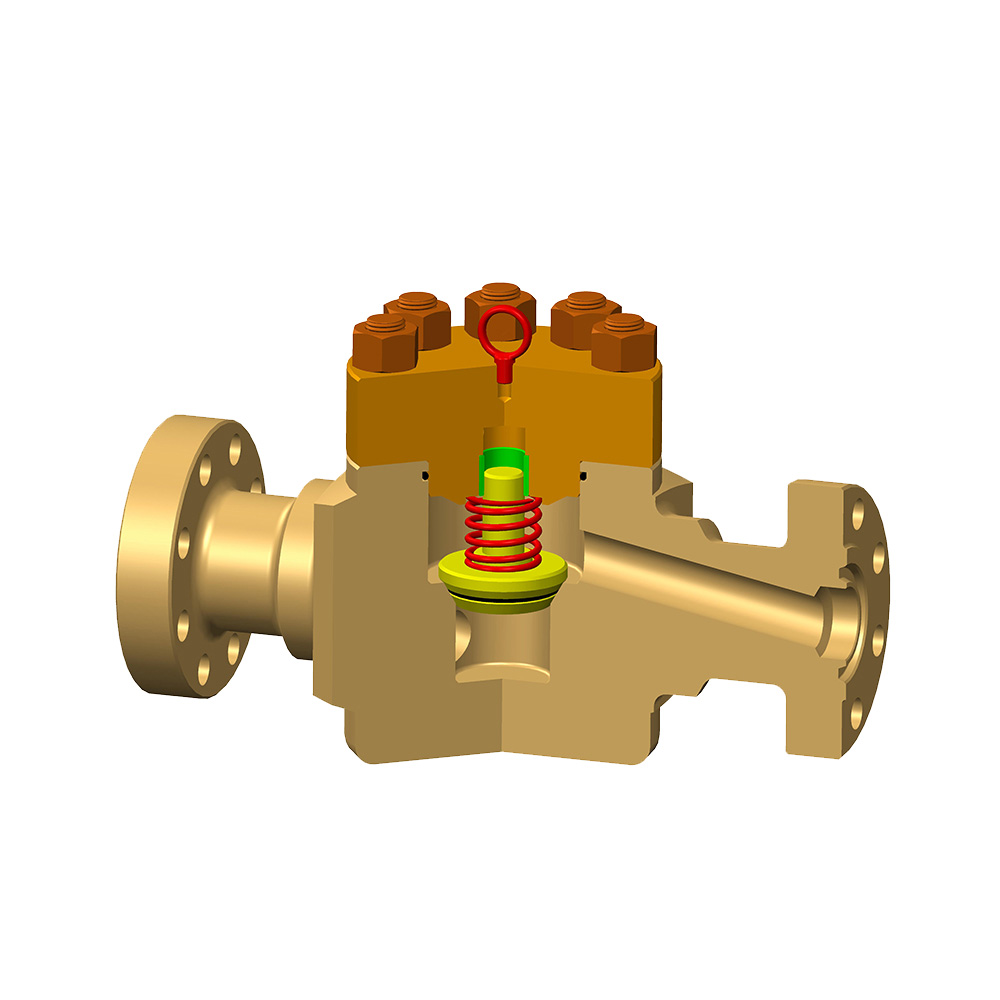
Dart check valves feature a conical or dart-shaped closing element that moves in a straight line against the seat. This design is robust and handles viscous or solids-laden media better than flapper or swing types. In gas lines that carry entrained liquids, condensate, or fine sand, a dart check valve reduces the risk of debris interfering with the seal. The dart construction is also common in high-pressure drilling mud systems, which is why this type is listed among our check valve offerings.
Top-entry check valves
The top-entry check valve is designed with a removable cover on the top of the body, allowing access to the internal trim without removing the valve from the pipeline. This is a major operational advantage in gas service, where line depressurization and valve extraction are costly and time-consuming. With a top-entry design, a maintenance crew can inspect, repair, or replace the disc and seat in place, dramatically reducing downtime. This configuration suits gas plants and compressor stations where continuous operation is a priority.
For a complete overview of every type we manufacture, you can review our complete range of check valves.
Key Selection Factors for Gas Line Check Valves
Selecting the right gas line check valve is not a matter of picking the most expensive or the most popular model. The correct choice is a function of your specific operating parameters. The following factors should be resolved before you contact a supplier, because they directly determine the valve body material, pressure class, trim design, and even the installation orientation.
| Factor | Typical gas service range | Why it matters | Impact on valve design |
|---|---|---|---|
| Working pressure | 50–5000 psi depending on pipeline class | Determines the pressure rating of the body and closure element | Body rating (e.g., 300#, 600#, 900#), flange class |
| Gas temperature | −20°C to +120°C for standard service | Temperature affects elastomer seals and metal strength | Seat material (PTFE, elastomer, metal), body material |
| Gas composition | Sweet (H₂S-free) or sour (H₂S present) | Sour gas requires corrosion-resistant materials per NACE | Trim material (316 SS, Inconel, etc.) |
| Entrained solids/liquids | Dry gas to wet gas with condensate | Solids can prevent sealing; liquids alter flow dynamics | Valve type (dart vs. flapper), seat hardness |
| Installation orientation | Horizontal or vertical, upward flow | Swing valves need gravity to close; lift valves need a spring | Spring-assisted design, orientation-specific models |
| Allowable pressure drop | Usually limited to 1–5% of line pressure | Higher drop increases energy cost, may affect flow | Full-bore vs. reduced-bore design |
| Leakage requirement | Bubble-tight for gas per API 598 | Gas leakage is hazardous and detectable via gas detectors | Seat material and closing force |
Pressure rating and API classes
The working pressure of your gas line is the first parameter to lock down. API 6D covers pipeline valves, and it defines pressure-temperature ratings for different materials and flange classes. A Class 600 valve, for instance, is rated for approximately 1,440 psi at ambient temperature in standard carbon steel construction, but the rating decreases as temperature rises. If the gas line operates at 800 psi and 100°C, you must verify that the selected valve's rating curve still covers those conditions. Never assume that a valve rated for a certain pressure at 20°C will hold the same rating at elevated temperatures.
Sealing standard for gas service
Gas lines demand a higher leakage classification than liquid lines. API 598 specifies the testing and inspection requirements for valves, including permissible leakage rates for different categories. For gas service, you should request a valve that meets a Class VI or bubble-tight seal under API 598 test procedures. In practice, this means the valve seat must be manufactured to a finer finish and the closing element must have sufficient force to compress the seal material into any micro-irregularities. When comparing lift check valves for high-pressure gas applications or any other type, ask specifically about the leakage test result, not just the nominal pressure rating.
China Lift Check Valve Suppliers, Custom Lift Check Valve Company- Jiangsu ZhongJiangsu Zhonglin Oil Equipment Co., Ltd is China Lift Check Valve suppliers and Lift Check Valve company, We specialize in producing cust...View Product →
Flow velocity and opening behavior
Gas pipelines operate over a wide range of velocities. At very low flow rates, the gas may not have enough momentum to fully open a heavy disc, causing it to hover near the seat and wear rapidly. At very high flow rates, the disc may slam against its stop, causing mechanical shock. A good check valve spec should include both the minimum and maximum expected flow rates, so the manufacturer can size the disc travel and spring force accordingly. In multi-stage compressor stations, where flow can vary between startup and full load, a spring-assisted or flapper design is often preferred.
Corrosion and sour gas considerations
If the gas contains hydrogen sulfide (H₂S), the valve materials must comply with NACE MR0175 to prevent sulfide stress cracking. Carbon steel bodies with standard trims are not acceptable for sour service. The valve interior surfaces, the seat, and the closure element all need corrosion-resistant alloys, and the weld overlay on the seat must be inspected for hardness. This is a case where purchasing a "standard" valve to save cost can lead to catastrophic failure within months.
Installation and Maintenance Best Practices
Correct installation is as important as correct selection. A gas line check valve that is improperly oriented, incorrectly supported, or installed without proper upstream flow conditioning will underperform regardless of its design quality.
Installation orientation
The flow direction arrow on the valve body must align exactly with the pipeline's intended flow direction. Swing check valves should normally be installed in horizontal piping with the hinge pin above the centerline, so the disc is in the upper half of the pipe and gravity pulls it onto the seat when flow stops. In vertical pipework, swing check valves should be used only for upward flow. For vertical downward flow, a spring-loaded lift check valve or a spring-loaded flapper valve is the correct choice. If the valve is installed with the disc below the hinge pin, the disc cannot close fully, leaving a constant leak path.
Upstream flow conditioning
Gas flow should be relatively uniform when it reaches the check valve. Bends, tees, or partially closed block valves immediately upstream create turbulence and asymmetric flow, which can cause the disc to oscillate and wear unevenly. As a rule of thumb, install the check valve at least 5 pipe diameters downstream of any flow-disturbing fitting, and at least 3 pipe diameters upstream of a bend or reducer. If space is constrained, a valve with a spring-loaded or guided disc will tolerate turbulence better than a free-floating design.
Maintenance and inspection routines
A gas line check valve is not a fit-and-forget component. Over time, the seat can be eroded by entrained sand, the seal can harden in a hot gas environment, and the hinge pin or spring can fatigue. Schedule these inspection steps on a regular basis, typically during planned pipeline shutdowns:
- Seal surface examination: Look for pitting, scoring, or embedded particles on the seat and disc. Any visible defect means the valve will leak, and gas leakage at the seat is detectable by pressure decay tests.
- Disc travel verification: Manually actuate the disc through its full stroke and confirm it returns to the seat smoothly without binding. A disc that sticks in the open position offers no backflow protection at all.
- Spring check: If the valve is spring-loaded, compress and release the spring to confirm it retains force. A spring that has taken a set (lost its preload) will allow the valve to open at too low a pressure and may chatter.
- Debris cleaning: In wet gas or gas with solid entrainment, clean the internal chamber and the disc hub. This is particularly important for lift check valves, where debris can wedge between the guide and the stem.
For gas lines that require frequent inspection, a top-entry check valve design for simplified field maintenance can reduce downtime significantly, because the valve remains in the line while the internal trim is accessed.
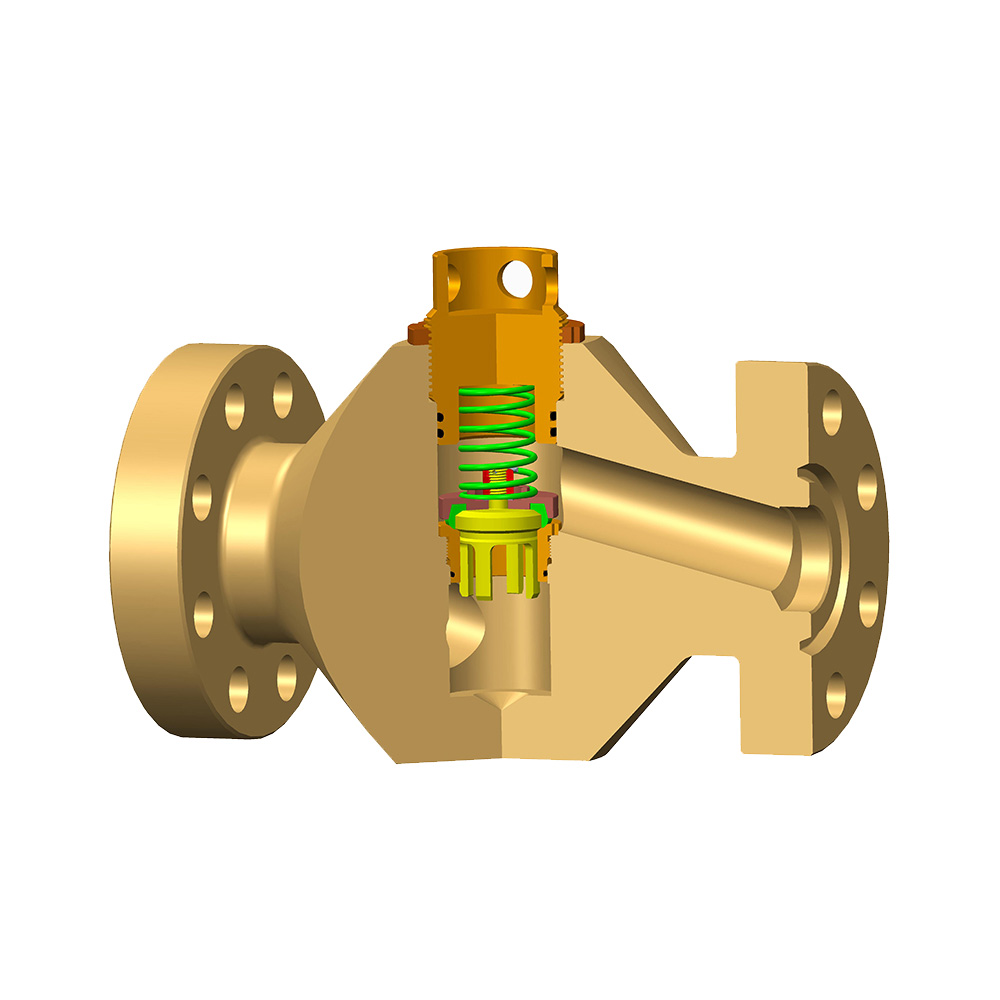 China Top-Entry Check Valve Suppliers, Custom Top-Entry Check Valve Company- JiaJiangsu Zhonglin Oil Equipment Co., Ltd is China Top-Entry Check Valve suppliers and Top-Entry Check Valve company, We specialize in prod...View Product →
Common failure signals
Operators should watch for these signs that a gas line check valve is failing:
- Abnormal vibration or pulsation in the pipe downstream of the valve, indicating the disc is fluttering.
- A continuous gas leak detected by a fixed or portable gas detector near the valve, suggesting the seat is not sealing.
- Unusual noise (rattling or hammering) during flow transients, which often means the disc is slamming without a proper damping mechanism.
- Pressure fluctuations in the upstream and downstream piping that mirror each other, which implies the valve never fully closes.
Why API Standards Matter for Gas Line Check Valves
API standards define the minimum design, manufacturing, and testing requirements for oil and gas industry valves. When you buy a gas line check valve that complies with these standards, you are buying a documented level of quality, not just a piece of metal with flanges. For a critical service like gas, where a valve failure can have immediate safety consequences, standards compliance is not an optional extra.
The most relevant API specifications for this equipment are:
- API 6D – Specification for Pipeline and Piping Valves. This covers the design, materials, pressure testing, and documentation of valves for pipeline service, including check valves.
- API 594 – Check Valves: Flanged, Lug, Wafer, and Butt-welding. This standard is specific to check valves and defines the pressure-temperature ratings, face-to-face dimensions, and test requirements.
- API 598 – Valve Inspection and Testing. This standard defines the acceptance criteria for pressure tests and leakage tests, including the bubble-tight requirement for gas service.
When evaluating a supplier, ask for concrete evidence of API compliance. A manufacturer that designs and manufactures to API standards will usually have:
- API monogram license, which permits the manufacturer to place the API monogram on products that meet the standard.
- Valve testing records that show leakage test results and pressure test results for each valve or batch.
- Material traceability documentation that confirms the body, trim, and fasteners meet the specified material grades.
At the enterprise level, our company states that it has passed the API audit and obtained the right to use the API monogram, and that its design and manufacturing processes follow API standards. For engineering and procurement teams, this means the check valves we supply come from a production system that operates under documented quality control procedures. You can verify this commitment by reviewing our API-certified manufacturing capabilities.
Conclusion
Selecting a gas line check valve correctly comes down to three disciplined steps. First, define your operating conditions precisely: pressure, temperature, gas composition, flow range, and installation orientation. Second, match the valve type to those conditions, understanding that a swing valve suits large-diameter, low-pressure-drop lines, a lift valve suits high-pressure clean gas, and a flapper valve serves fast-response compressor applications. Third, verify that the supplier designs and manufactures to API standards and can provide test evidence for gas-tight sealing.
A gas line check valve is a small component in the overall pipeline system, but its failure can halt production, damage rotating equipment, and create a leak point in a combustible gas circuit. Investing time in proper selection, correct installation, and scheduled maintenance is not overhead; it is the cheapest insurance you can buy for the pipeline's reliability and the safety of the personnel around it. When you are ready to move forward, talk directly with a manufacturer that can walk you through API-based design choices and recommend a valve matched to your specific gas service conditions.