English
 русский
Deepwater well planning usually begins with a deceptively simple question: how will the well stay contained at the seabed while casing is run, the blowout preventer (BOP) is latched on top, and the tree is landed later? The answer is the subsea wellhead. It is the pressure-containing foundation of an offshore well: it suspends casing strings, seals each annulus, and provides the structural and pressure interface for the BOP and, later, the xmas tree. Get this component right, and the well program has a solid foundation; get it wrong, and the cost is measured in downtime, lost wells, or worse.
Content
What Is a Subsea Wellhead?
A subsea wellhead is a pressure-containing vessel mounted on the seabed that provides the suspension point and pressure seals for the casing strings extending from the bottom of the hole sections back to the wellhead itself. In simpler terms, it is the permanent interface between the wellbore and every piece of equipment connected to the well from above.
The physical footprint is compact — a single wellhead may measure only 3 to 4 metres square and stand up to 5 metres high — but it carries a disproportionate share of engineering risk. The housing must withstand full shut-in pressure, the combined weight of several casing strings, bending loads from the BOP stack and riser, and the external hydrostatic pressure of the water column above it.
Because the wellhead is installed by remote tools rather than by hands-on crews, every seal, latch, and orientation slot must tolerate misalignment, run reliably, and remain leak-tight for the life of the well.
Main Components of a Subsea Wellhead System
Every subsea wellhead system uses the same building blocks: a wellhead housing, casing hangers, wellhead spools, annulus seals, and a tubing hanger system. Understanding what each part does makes it far easier to specify a reliable stack.
| Component | Primary duty | Selection watch points |
|---|---|---|
| Wellhead housing (low- and high-pressure sections) | Contains well pressure; supports the BOP or tree | Fatigue life, corrosion allowance, connector profile |
| Casing hangers | Suspend casing strings and seal annuli | Load rating, seal type, running tool interface |
| Casing head spools | Step down casing sizes; provide side outlets | Working pressure, outlet size and rating |
| Annulus seals | Isolate pressure between casing annuli | Metal-to-metal option for permanent wells |
| Tubing hanger and tubing head spool | Support production tubing; isolate the production annulus | Control line feed-throughs, orientation |
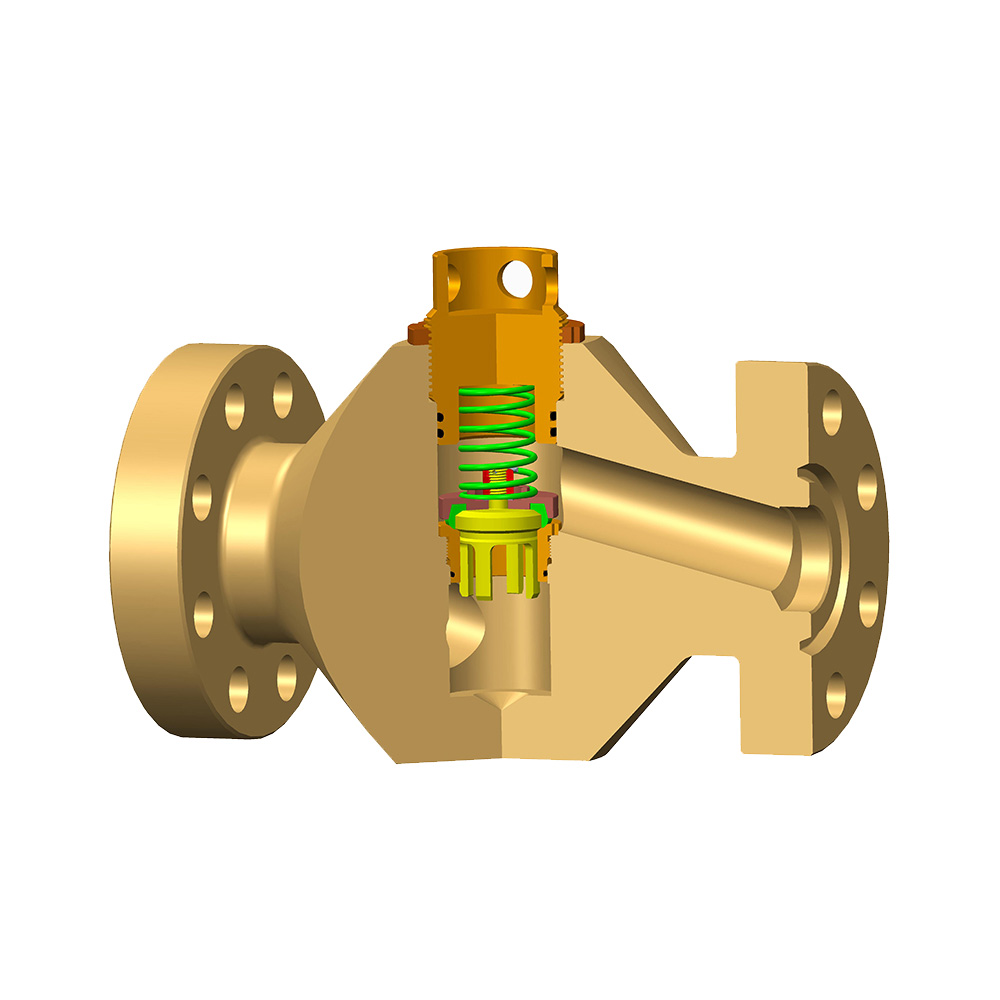
| Back-pressure valve | Provides an extra barrier during BOP or tree removal | Sizing and retrieval tool compatibility |
Casing hangers are the load-bearing heart of the system. A mandrel-type hanger engages a machined profile in the housing and forms a metal-to-metal seal, which makes it the preferred choice for high-load, high-pressure wells. The same design principles apply to land and platform wellheads: manufacturers such as Zhonglin Oil Equipment produce the C22 casing hanger for exactly this role. Across the industry, casing hanger designs have had to adapt to demanding environments, from high temperatures to corrosive service fluids.
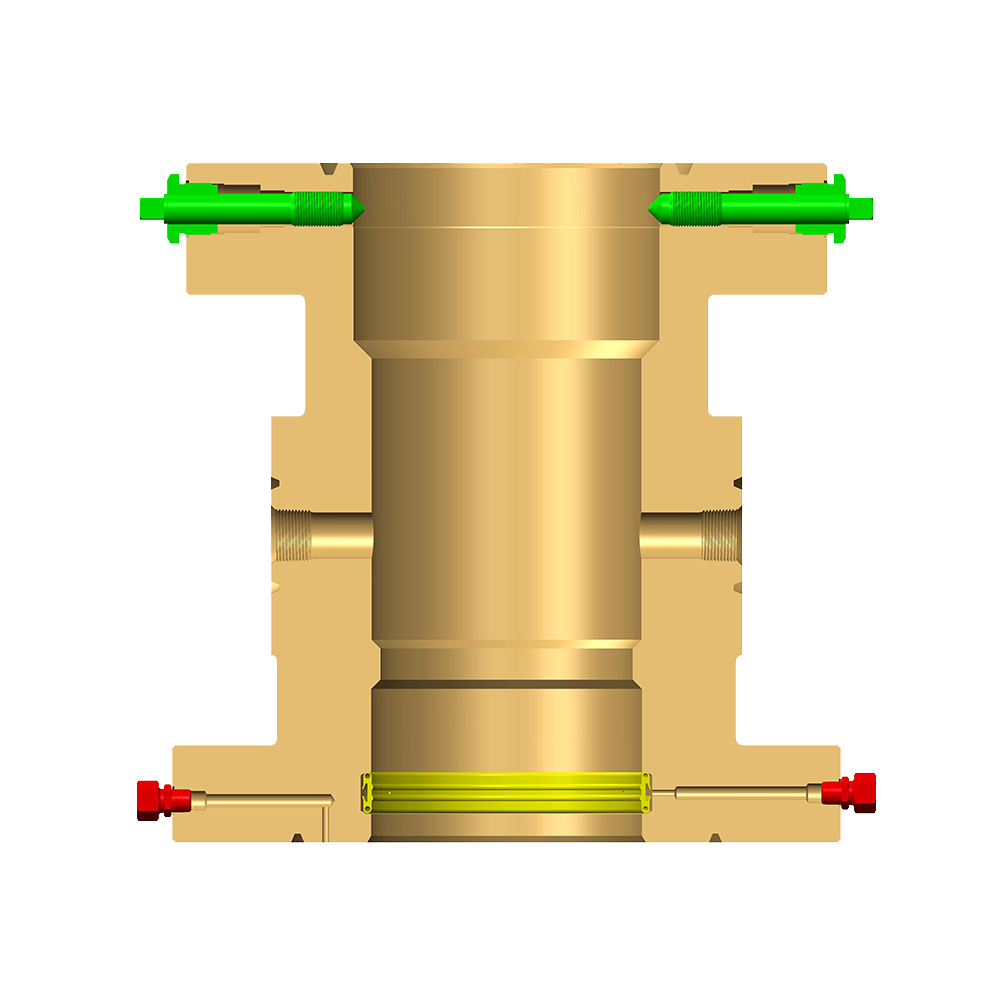 China C22 Casing Head Spool Suppliers, Custom C22 Casing Head Spool Company- JiaJiangsu Zhonglin Oil Equipment Co., Ltd is China C22 Casing Head Spool suppliers and C22 Casing Head Spool company, We specialize in prod...View Product →
What a Subsea Wellhead Does
The subsea wellhead has five main jobs: casing suspension, pressure containment, BOP interface, completion interface, and a foundation for monitoring and intervention. Each function places its own demands on the design.
- Casing and tubing suspension: carries the weight of each string, holds it at the correct depth, and seals the annulus above it.
- Pressure containment: contains formation pressure inside the well; all load-bearing housings and seals are rated for the maximum anticipated surface pressure.
- BOP interface: the BOP latches onto the wellhead connector and must resist internal pressure, tension, and bending throughout the drilling phase.
- Completion interface: the xmas tree lands on the production bore; orientation, lock-down, and sealing are provided by the wellhead profile.
- Monitoring and intervention access: the wellhead is the controlled entry point for wireline and well intervention tools and can host permanent sensors.
During completion, the tubing hanger and tubing head spool are the last major components run before the tree is landed. The spool carries the tubing hanger, seals the production annulus, and routes control lines and chemical injection lines. On land and platform wells, a tubing head spool from a qualified API-certified manufacturer performs the same duties with the same design logic: load shoulder, seal bore, and side outlets engineered as one system.
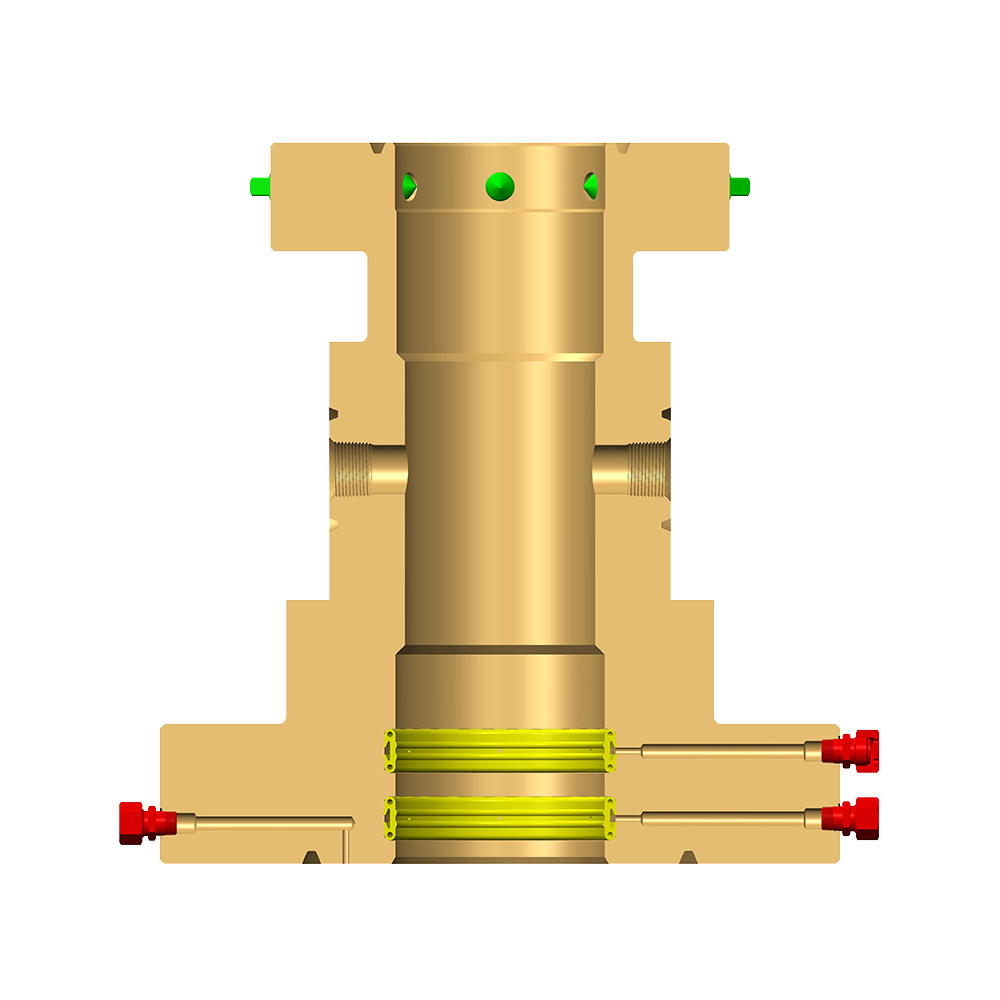 China Tubing head spool Suppliers, Custom Tubing head spool Company- Jiangsu ZhoJiangsu Zhonglin Oil Equipment Co., Ltd is China Tubing head spool suppliers and Tubing head spool company, We specialize in producing cu...View Product →
Design Standards and Pressure Ratings
Subsea wellhead equipment is specified to API 17D, while surface wellhead components fall under API 6A (ISO 10423). Buyers should confirm that the manufacturer holds the relevant API monogram and that design, manufacturing, and testing all follow those standards.
| Working pressure (psi) | Typical application |
|---|---|
| 5,000 | Shallow water and moderate-pressure reservoirs |
| 10,000 | Deepwater and higher-pressure reservoirs |
| 15,000 | High-pressure, high-temperature (HPHT) wells |
| 20,000 | Emerging ultra-HPHT developments |
Material selection is driven by the service fluid. API material classes range from AA for general service to HH for severely corrosive, high-temperature hydrogen sulfide environments, and each class defines stress and hardness limits for pressure-containing components. Certified manufacturers document these choices systematically; Zhonglin Oil Equipment, for example, publishes its API and ISO certificates for verification. Temperature and water-depth ratings are specified separately, with the design water depth setting the external hydrostatic loads used in the structural analysis.
How to Choose the Right Subsea Wellhead
Selection is driven by five factors in roughly this order: working pressure, service fluid composition, water depth, casing program, and intervention philosophy.
- Working pressure and temperature: set the pressure-containing envelope and material class for every housing, hanger, and seal.
- Service fluid: H2S and CO2 content determines whether sour-service material grades and NACE-compliant processing are required.
- Water depth: affects external pressure loads, installation tooling, and ROV accessibility.
- Casing program: the number and size of casing strings defines the number of spools and hangers in the stack.
- Intervention and abandonment philosophy: influences running tools, subsea accumulators, and monitoring systems.
Buyers should also weigh supply-chain efficiency. A complete wellhead stack includes the housing, casing head spools, casing hangers, and the tubing head system; sourcing from a single manufacturer with a documented quality system reduces interface problems. For surface and platform installations, a one-stop supplier such as Zhonglin Oil Equipment can provide the casing head spool and casing hanger configurations needed for a complete stack, so engineering, load ratings, and testing are coordinated rather than improvised.
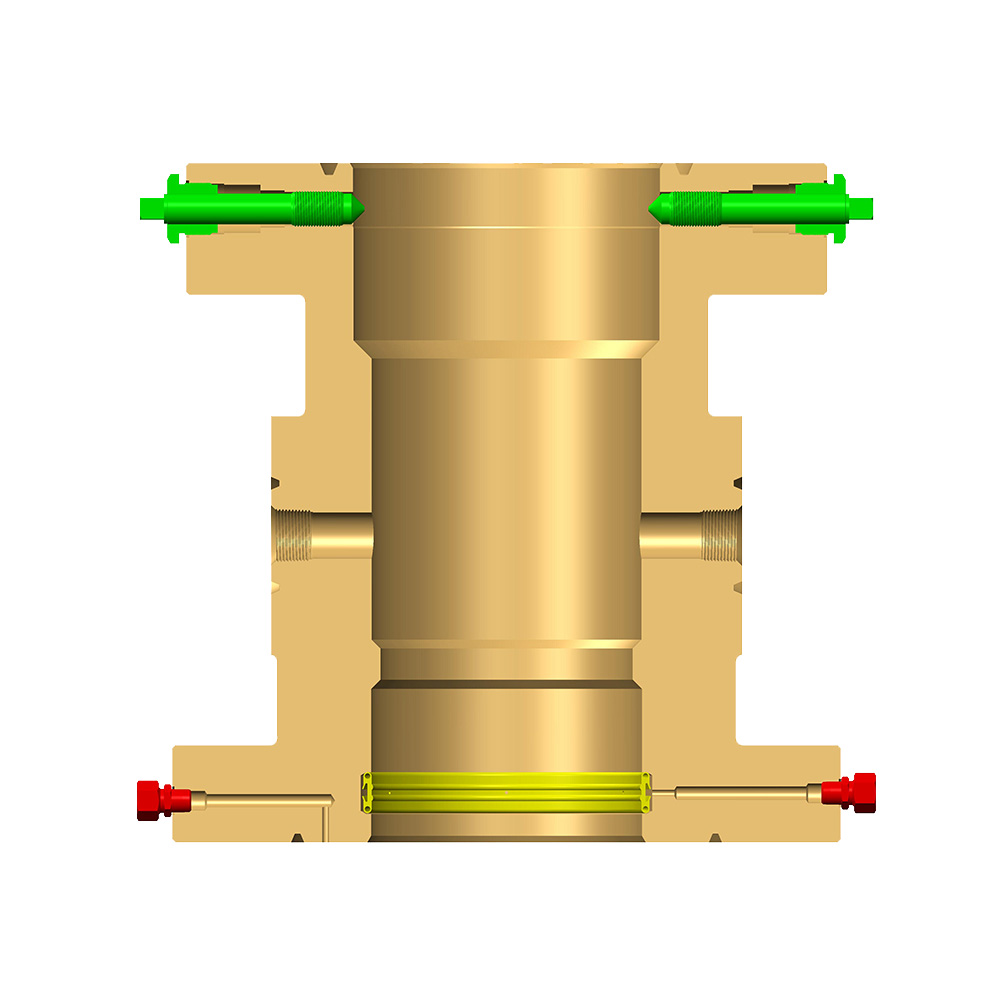 China C22 casing head spool Suppliers, Custom C22 casing head spool Company- JiaJiangsu Zhonglin Oil Equipment Co., Ltd is China C22 casing head spool suppliers and C22 casing head spool company, We specialize in prod...View Product →
Installation, Monitoring, and Long-Term Care
Subsea wellheads are installed remotely with running tools, which makes operational margins the first line of defense. Wear bushings protect sealing bores while casing is run, test plugs verify pressure integrity, and a back-pressure valve keeps the well contained whenever the BOP or tree is removed.
Long-term integrity relies on monitoring. Permanent gauges track annulus pressure and wellhead temperature in real time, alerting operators to seal degradation before it becomes a leak. Suspended wells are fitted with a protective cap and left under surveillance until final plug and abandonment.
Subsea Wellhead FAQ
What is the difference between a subsea wellhead and a subsea xmas tree?
The wellhead is the permanent pressure-containing base that supports the casing and tubing strings. The tree is the completion equipment that controls production and provides the main barriers; it lands on and locks into the wellhead after drilling is complete.
What pressure ratings are common for subsea wellheads?
Standard designs cover 5,000, 10,000, and 15,000 psi working pressure, with 20,000 psi systems now deployed for ultra-HPHT wells.
Why is the casing hanger so critical?
Because it supports the entire weight of a casing string and seals the annulus at the same time. A hanger failure creates an uncontrolled leak path, so load rating, seal type, and installation repeatability are the focus of qualification testing.
Can a subsea wellhead be monitored in real time?
Yes. Modern systems integrate downhole and wellhead pressure and temperature sensors, and the data is transmitted to the surface through an umbilical or a subsea electronics module for continuous surveillance.