English
 русский

A flow control check valve lets fluid travel one way and blocks it the other, using nothing but the pressure in the line — no actuator, no air supply, no operator decision. It cannot throttle a rate and it cannot give you a commanded shut-off; that is the job of a choke or a gate valve. So the real selection question is narrower and more practical: which disc design, cracking pressure, pressure class and trim material will survive your duty — abrasive drilling mud, fracturing slurry, wet gas or hot produced fluid — without chattering, leaking backward or seizing between service intervals.
Get those four items right and a check valve runs for years with almost no attention. Get them wrong and you get a worn seat, a slammed disc, a pump that loses prime, or a manifold that quietly passes pressure the wrong way.
Content
- What a flow control check valve actually does
- Which check valve design fits which duty
- Sizing and specification checklist
- Installation orientation and piping detail
- Failure modes, inspection and spares
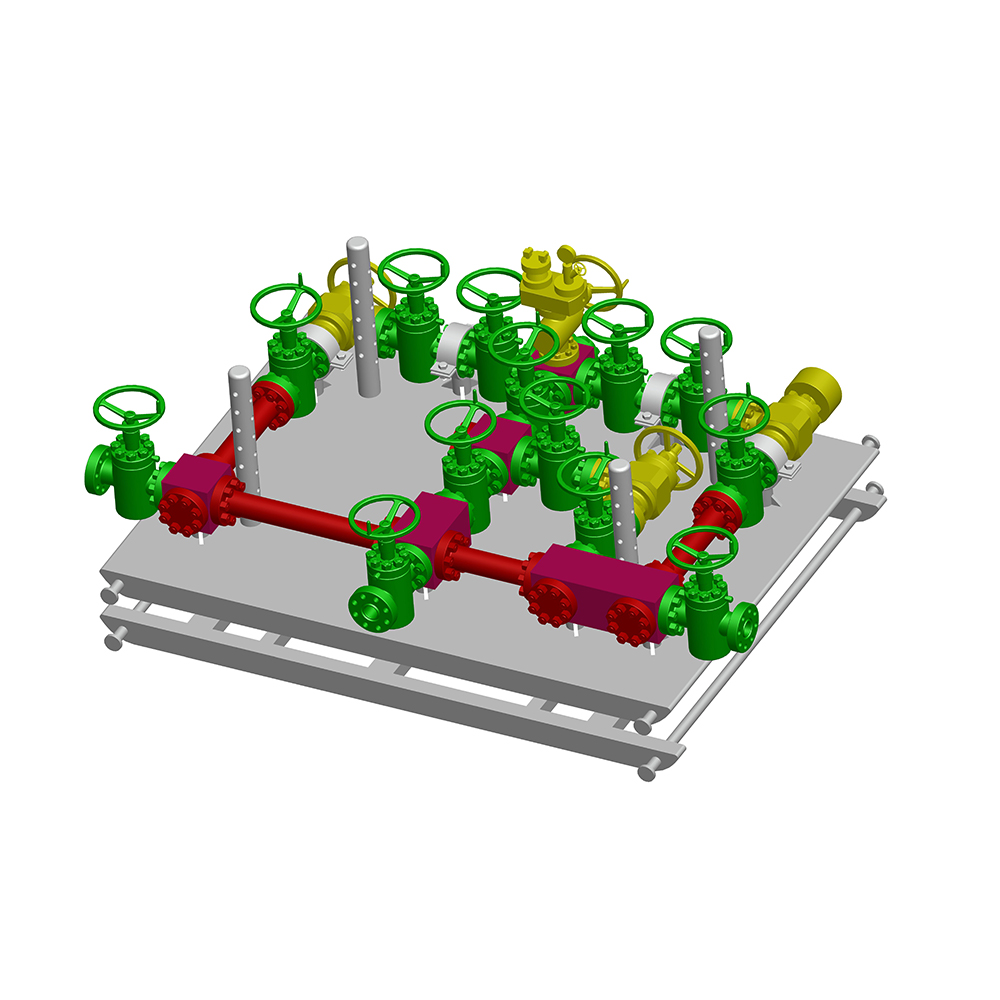
- How the valve fits into a wider flow control package
- Procurement risks worth checking before you order
- Frequently asked questions
What a flow control check valve actually does
A flow control check valve is a passive, self-actuated one-way valve: upstream pressure lifts the disc off its seat, and the moment flow stops or reverses, weight, spring load or back pressure pushes the disc back into the seat.
In oilfield service the valve earns its place in the flow control chain by doing four jobs:
- Preventing reverse flow into pumps, meters and upstream equipment when a line loses pressure.
- Holding pressure on one side of a circuit so the rest of the system can be bled down or serviced.
- Keeping pump prime and stopping product from draining back through a discharge line.
- Keeping flow direction predictable through manifolds, flow iron and treating lines where several pressure sources meet.
Two numbers describe the closing behaviour. Cracking pressure is the upstream pressure needed to open the valve; reseal pressure is the reverse pressure at which it closes tight again. A light spring cracks at a fraction of a bar and closes fast; a heavy spring cracks higher and holds a firmer seal, but it also costs you more pressure drop across the line. Neither number is a "flow rate" — the valve is binary, open or closed, with only partial opening during the transition.
Which check valve design fits which duty
Match the disc first to the dirtiest, most cyclical duty in the line, then match the body and trim to pressure class and fluid.
| Design | Seating action | Typical duty | Field notes |
|---|---|---|---|
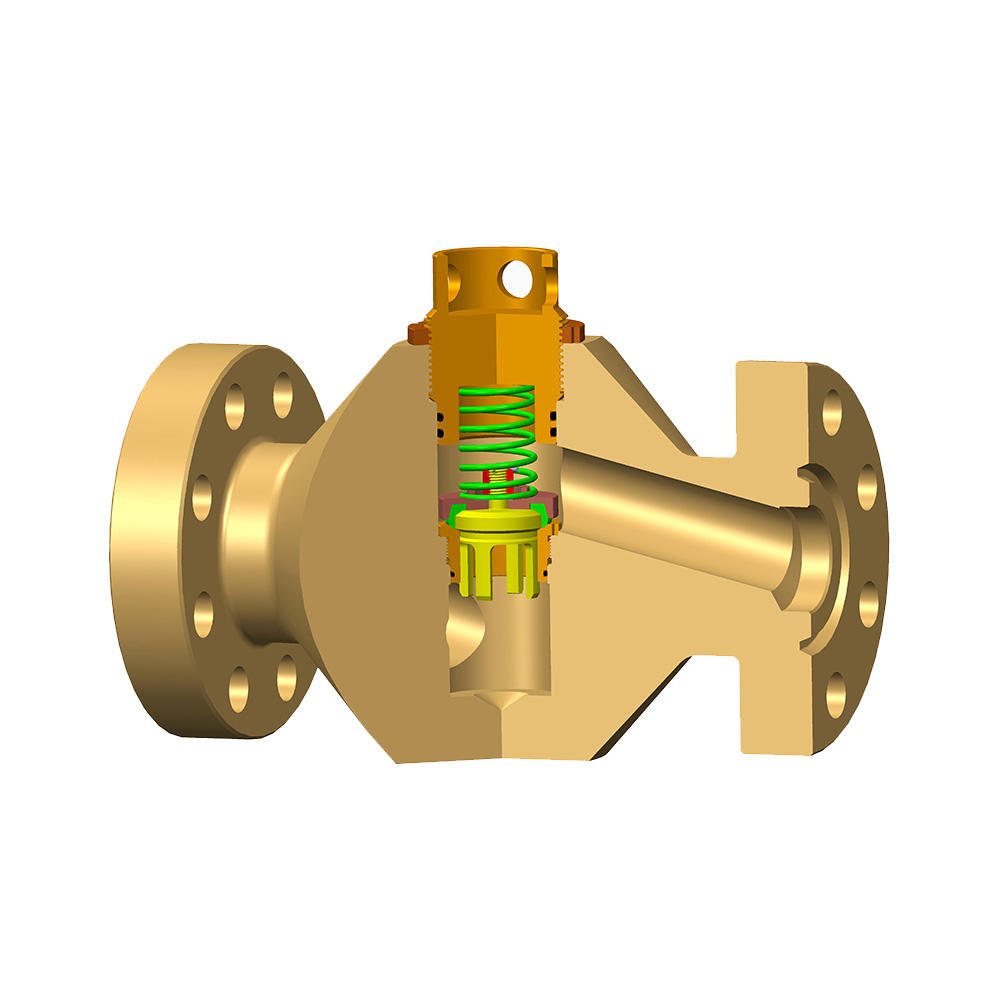
| Lift / piston | Disc lifts off the seat, guided by the body bore | High-pressure small-bore lines, pump discharge | Fast closing; sensitive to scale and debris in the guide area |
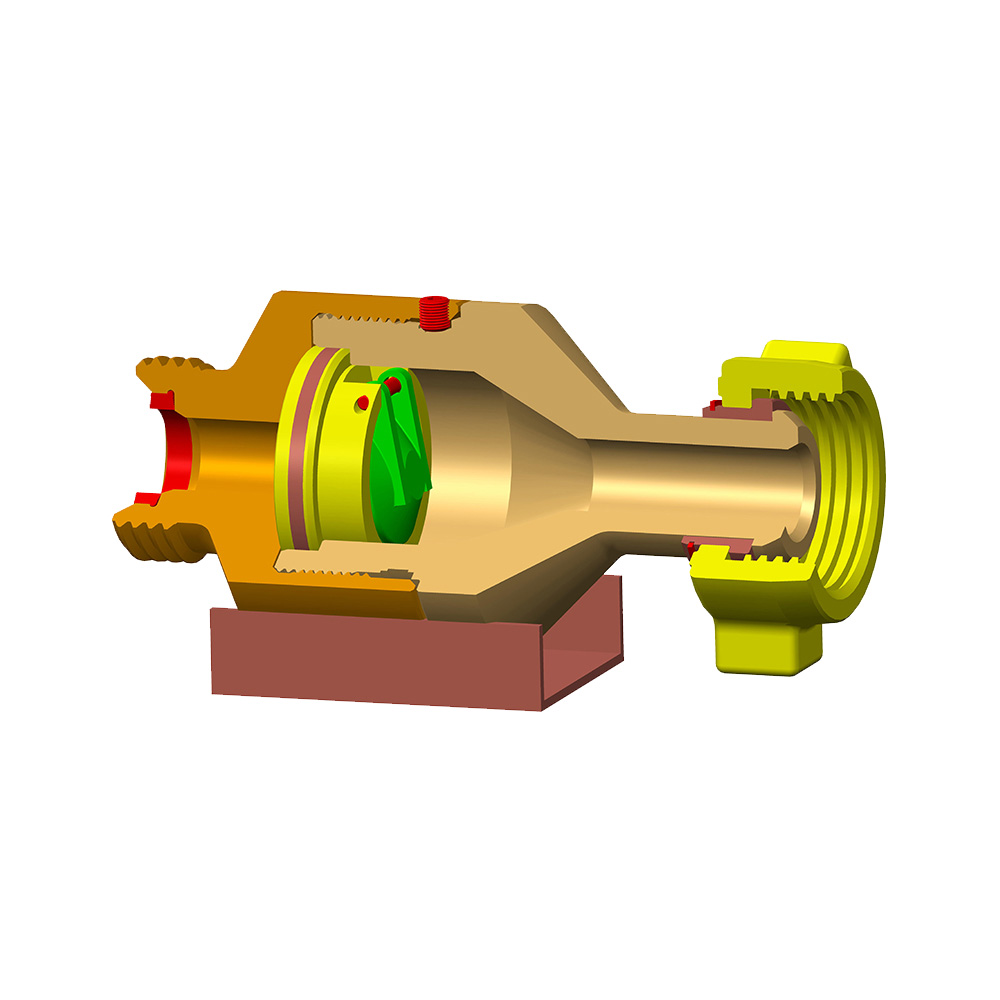
| Swing | Hinged disc swings clear of the flow path | Large-bore lines where pressure drop matters | Low resistance, but slow closure and water hammer risk on long runs |
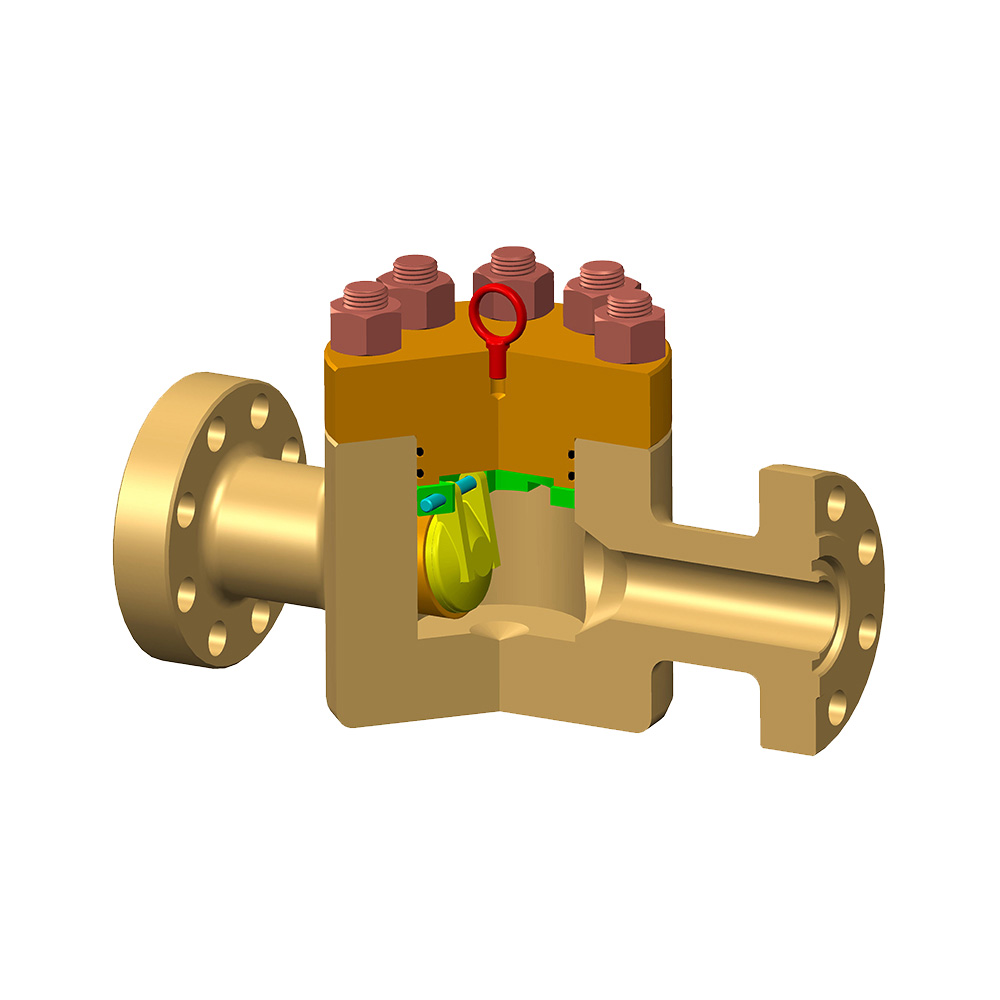
| Flapper | Light disc seats against a flat face | Mud lines, manifolds, flow iron, frac support lines | Very fast shut-off; slams hard if the reverse flow is sudden |
| Dart | Spring-loaded dart guided in a cage | Gas, compressor and instrument lines | Firm reseal and quick response; wants reasonably clean fluid |
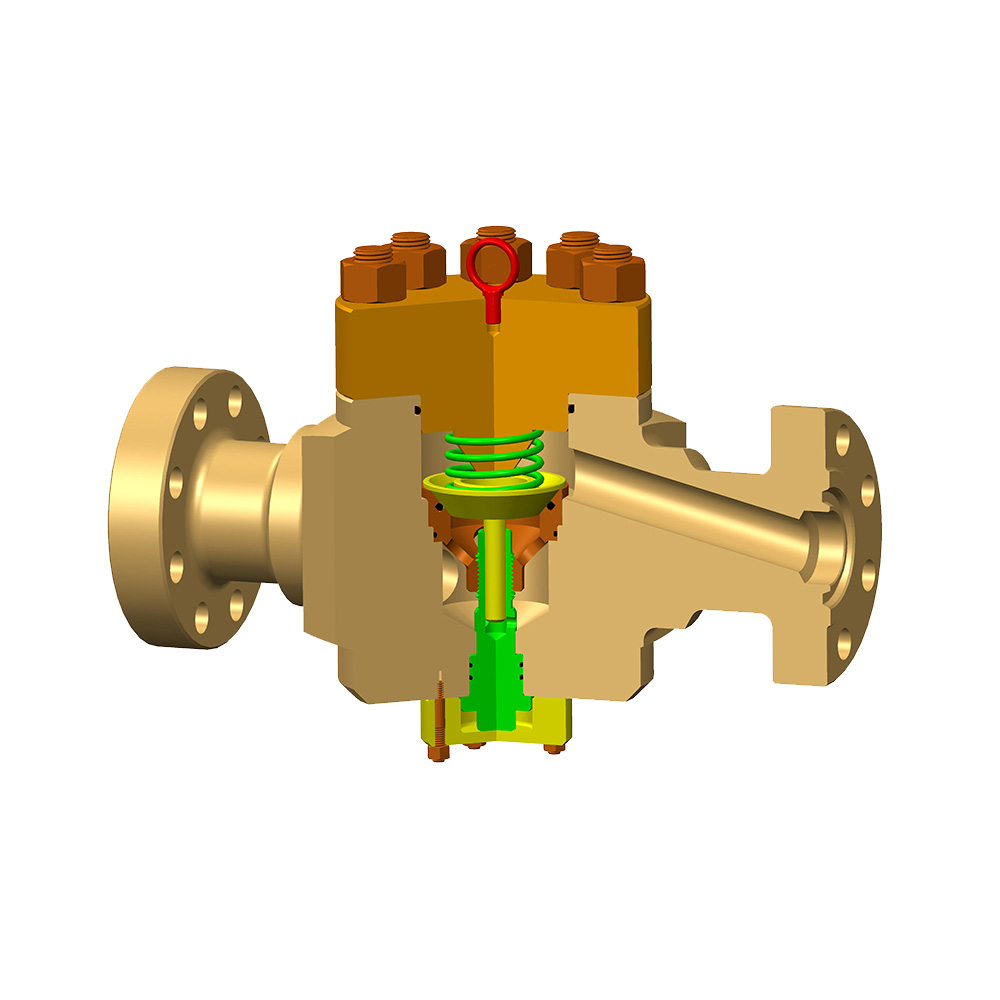
| Top-entry | Disc and seat reachable through a top bonnet | Lines with welded or permanent connections | In-line repair without cutting pipe — a real cost saving on flow iron |
| R-type | Compact inline body, short face-to-face | Space-restricted wellhead and manifold tie-ins | Confirm end connections and pressure class carefully at order stage |
Swing and flapper designs dominate large-bore and mud service because they pass solids and cuttings without clogging the guide. Lift and dart designs dominate high-pressure, smaller-bore duty where positive, quick reseal matters more than pressure drop. If the line is welded, the top-entry pattern usually pays for itself the first time a seat is damaged, because the body stays in place and only the internals come out.
 Flapper Check Valve by Jiangsu Zhonglin Oil EquipmentReview this flapper check valve listing when comparing check valve designs; the page provides product identification and a supplier inquiry route but no technical data.View Product →
Flapper valves are the workhorse of mud and manifold service, but they punish sloppy installation more than any other design: mounted against the flow arrow, or too close to a tee, a flapper will chatter and lose its seat face within weeks.
 Swing Type Check Valve from Jiangsu ZhonglinUse this swing-type check valve listing to identify product and contact supplier; no pressure class, bore, connection, cracking pressure, or seat material is published.View Product →
Sizing and specification checklist
Four numbers decide whether the valve works: pressure class, bore and end connection, cracking pressure, and seat material.
- Pressure class and standard. Wellhead and manifold equipment is commonly specified to API 6A with a stated product specification level; pipeline valves to API 6D, and wafer or lug check valves to API 594 dimensions. State the standard and the class on the enquiry rather than assuming it.
- Bore and end connection. Flanged, threaded, butt-weld or hammer union. A mismatch here is the most common reason a valve arrives and cannot be installed without an adapter.
- Cracking pressure. Light enough not to starve the downstream equipment, heavy enough to prevent gravity circulation or nuisance opening from pump pulsation.
- Seat and trim material. Metal-to-metal for abrasive or high-temperature duty, elastomer-seated for bubble-tight gas sealing within the seal's temperature range, carbide-faced seats where sand or proppant is present.
For sour production, confirm the material meets NACE MR0175 requirements before the purchase order is issued — this cannot be retrofitted in the field. For high-temperature wells, the elastomer rating, not the steel, is normally the limiting factor.
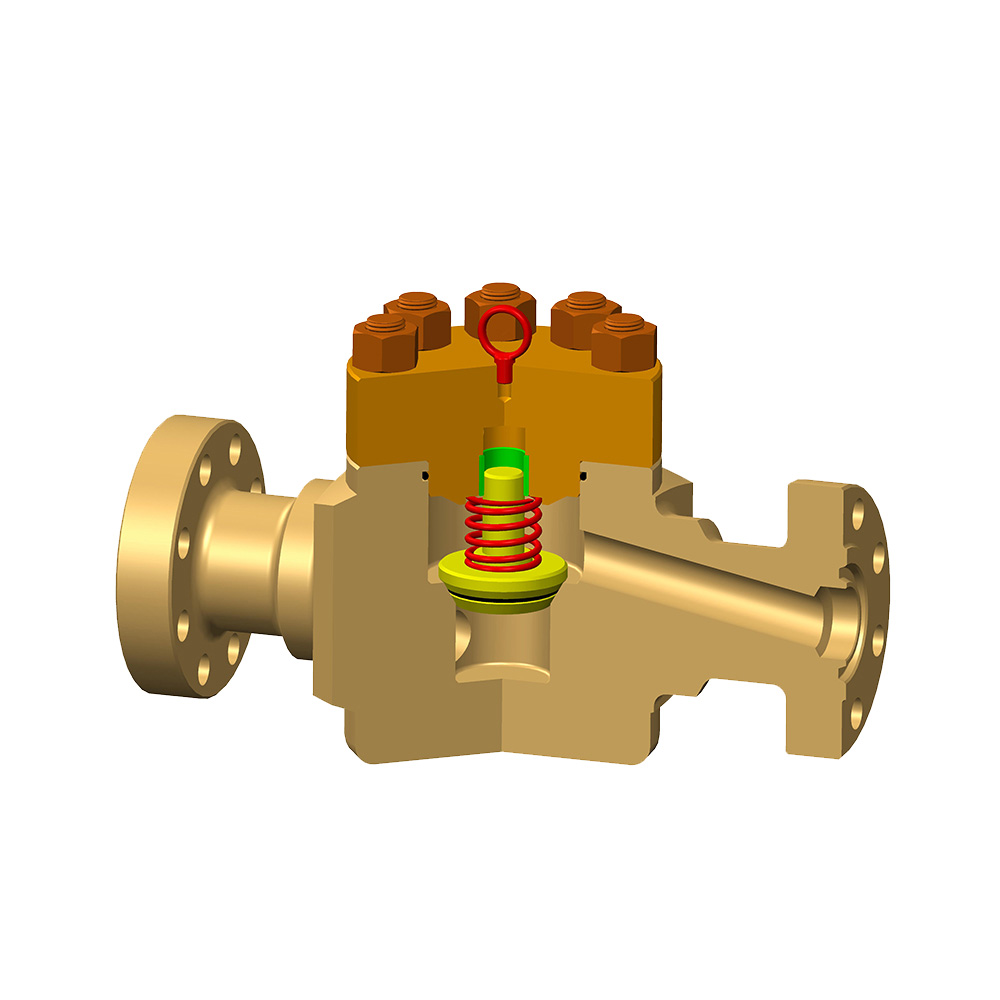 Lift Check Valve by Jiangsu Zhonglin Oil EquipmentCheck this lift check valve listing for product identification and supplier contact; material, pressure rating, and application details are not shown on the page.View Product →
Installation orientation and piping detail
Mount the valve so flow direction, gravity and maintenance access all agree with the design intent.
- Follow the flow arrow. A swing or flapper valve installed backwards will usually seat and then fail to open, or chatter until the hinge wears.
- Keep a straight run of several pipe diameters upstream and downstream. Turbulence from an elbow or a pump discharge directly at the valve face causes disc flutter and seat hammer.
- For vertical runs, confirm the design closes by gravity in that orientation; gravity-closing discs behave differently from spring-loaded ones.
- Leave room to lift the bonnet or remove the top entry. A valve that needs a crane and a cut pipe to inspect will not be inspected.
- Add downstream protection where a closing disc could produce a pressure surge on a long line — a surge on a fast-closing flapper can be more damaging than the backflow it was fitted to prevent.
Failure modes, inspection and spares
Most field failures are seat damage and disc chatter, not a ruptured body, and they announce themselves as a slow leak, noise or a rising differential pressure.
- Wire drawing and erosion. A partly open disc passing abrasive mud or proppant cuts a groove in the seat within days. Fit carbide-faced seats in these lines.
- Chatter. Caused by pulsating flow, an oversized valve or insufficient straight pipe; it wears guides and hinges long before the seat fails.
- Debris and scale. Lift and dart designs are most exposed; if the fluid is dirty, prefer a design with a wide, unobstructed flow path.
- Spring fatigue and elastomer ageing. Both change the cracking and reseal pressures invisibly. Replace them on a calendar basis in critical isolation duty.
In mud service, inspect seats during every mud pump or manifold service window rather than on a fixed annual plan, because wear tracks directly with the solids content and pump hours. Keep seat, disc, spring and seal kits on site — a check valve is cheap, but a stopped rig waiting for one is not.
How the valve fits into a wider flow control package
A check valve is one element of a flow control package, not a substitute for the rest of it.
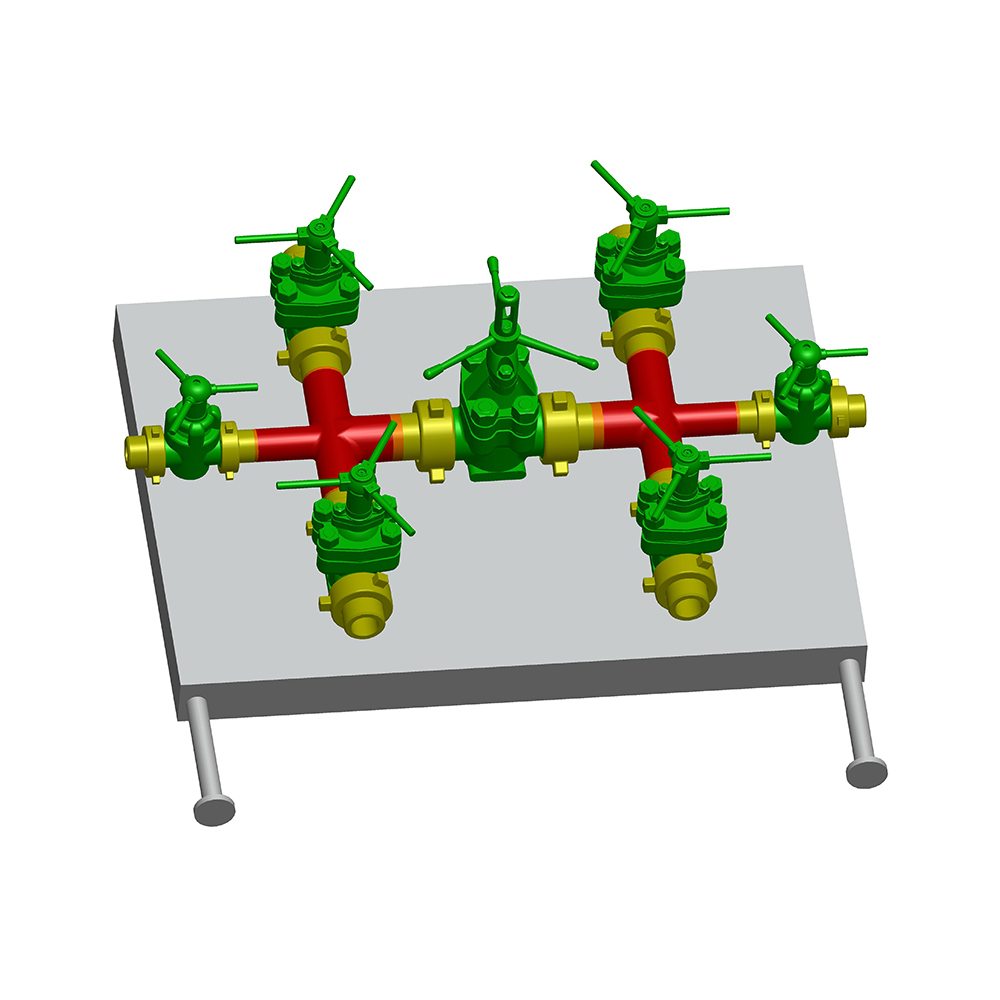
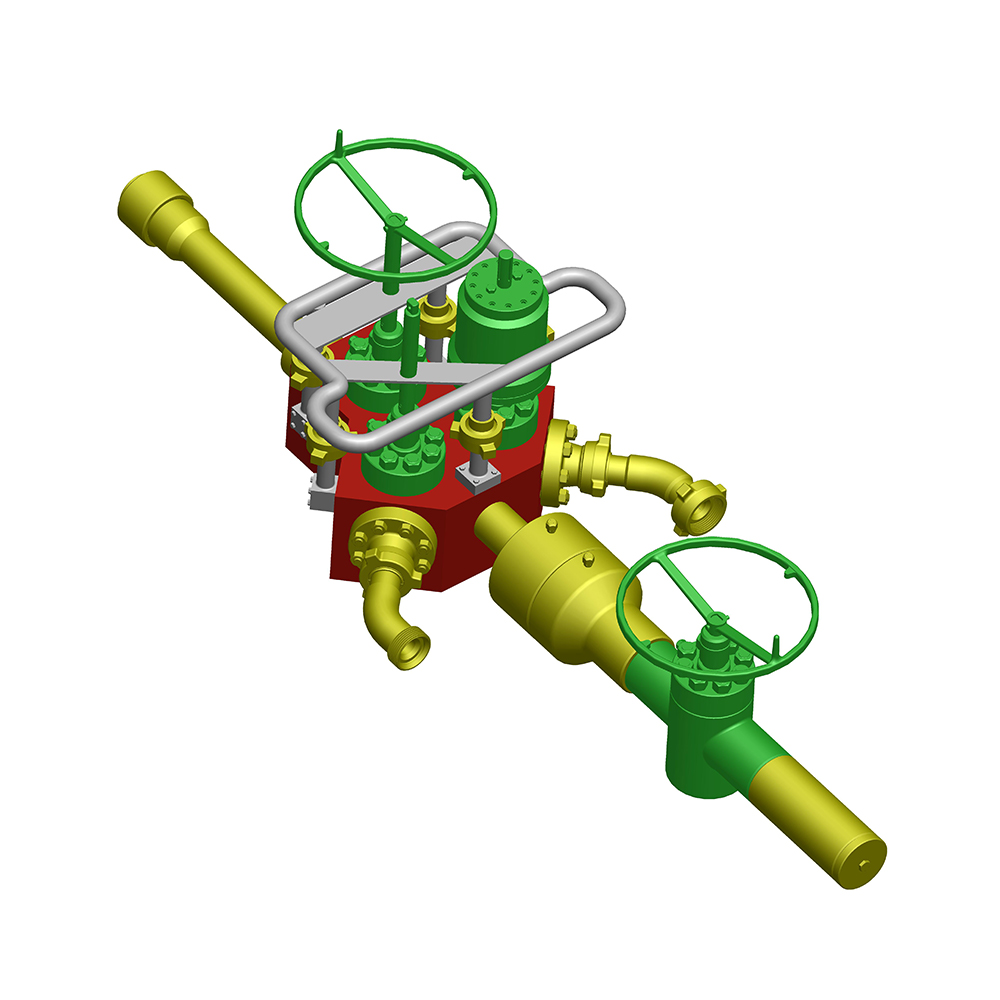
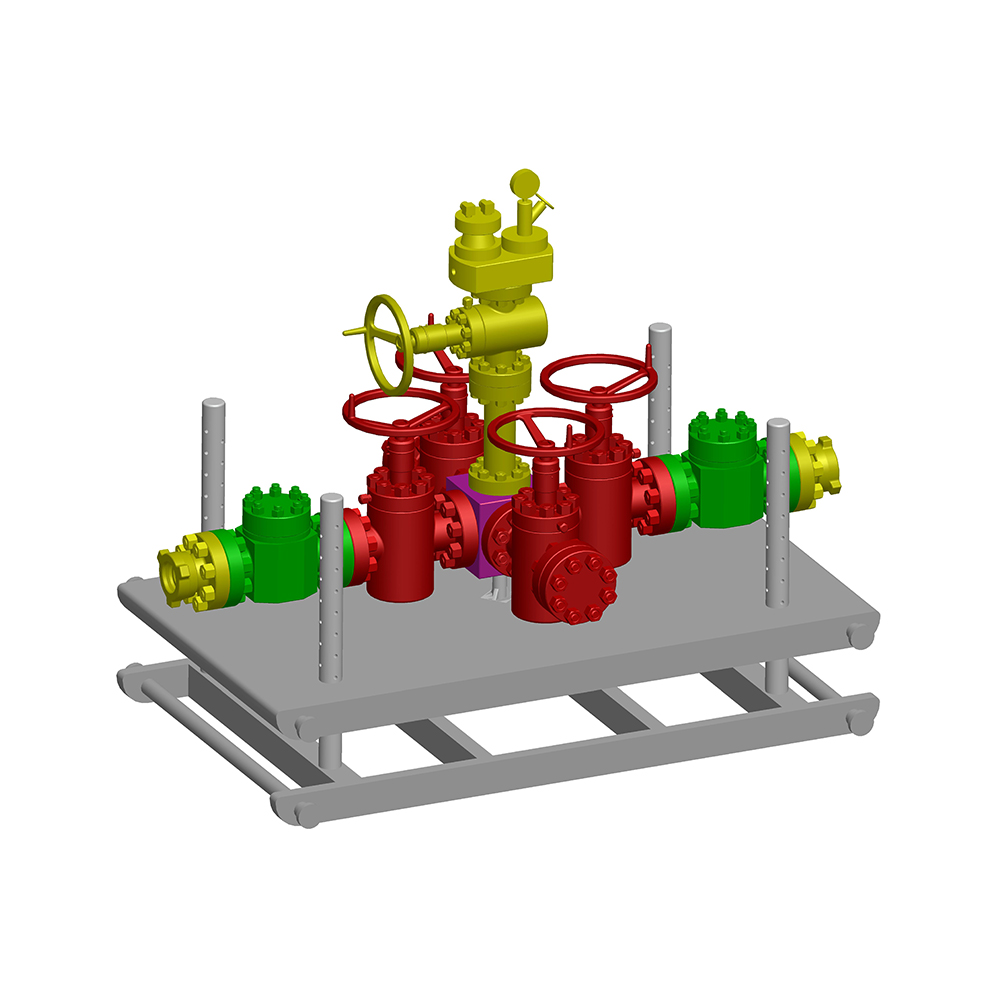
Pair it with a choke where the rate must be set, a gate valve where a positive shut-off is required, and a relief device where overpressure is credible. On a fracturing manifold, the check valve protects the pump from reverse flow while the choke or plug valve does the regulating; on a mud standpipe, it keeps pressure off the pump while the gate valve isolates the line. Our overview of valve mechanisms in petroleum service covers how gate, throttling and check valves divide this work on a single line.
Procurement risks worth checking before you order
Buy on the datasheet, not the drawing on a website, and confirm five points in writing.
- Pressure class and the standard the valve is manufactured and tested against.
- Face-to-face or end-to-end dimension, so gaskets and pipe spools still line up.
- Cracking and reseal pressure values, with the test medium stated.
- Trim and seal materials, plus any sour-service requirement.
- Test documentation, traceability and the spare-parts kit list.
These are the details that separate a valve that lasts a campaign from one that lasts a month. Our check valve product range covers lift, swing, flapper, dart, top-entry and R-type bodies in wellhead and manifold configurations, with repair kits and in-line serviceable internals.
Frequently asked questions
Does a check valve control flow rate?
No. It is a directional device that is either open or closed; flow rate is set by a choke, a control valve or a fixed restriction. Use a check valve for direction and isolation, never for measured regulation.
What cracking pressure should I specify?
Low enough to avoid starving the downstream equipment at minimum flow, high enough to stay shut against pump pulsation or gravity circulation. For most manifold and pump discharge duty, a light spring in the region of a fraction of a bar to about one bar covers the need, but the number should come from your process data, not from a catalogue default.
Can a check valve be installed vertically?
Yes, provided the design closes correctly in that orientation and the flow direction is upward in a rising line. Spring-loaded designs are far more forgiving than gravity-closing discs when mounted vertically.
How often should mud-service check valves be inspected?
At every pump or manifold service window rather than on a calendar schedule. Abrasive solids drive seat wear, so condition-based inspection catches damage before it becomes reverse leakage or a pump problem.
What is a "flow check" in heating and cooling systems?
It is the same principle at a much smaller scale: a light, spring-lifted one-way valve fitted to stop unwanted gravity circulation in hydronic circuits. The mechanism is identical — a disc that opens on forward flow and closes on the loss of it.
A check valve is one of the least expensive items in a flow control package, and one of the most disruptive when it fails. Decide the disc design from the dirtiest duty in the line, fix the pressure class and end connection against the actual piping, specify cracking pressure and trim from process data, and plan inspection around service hours rather than the calendar. That is the whole discipline — and it is what keeps a one-way valve doing its one job for the life of the field.