English
 русский
In the oil and gas industry, a check valve is a mechanical device that allows crude oil, natural gas, produced water, or drilling fluid to flow in only one direction, automatically closing when flow stops or reverses to prevent backflow. Its primary function is to protect extremely expensive pumps, compressors, and upstream piping from the destructive forces of reverse rotation, pressure surges, and fluid hammer. Understanding exactly what does the check valve do in these high-stakes environments reveals that it is not a simple plumbing fitting but a critical safety and asset-protection component that can mean the difference between uninterrupted production and a catastrophic multi-million-dollar equipment failure.
Content
- The Core Function: Preventing Reverse Flow in Petroleum Systems
- Protection of High-Capital Pumps and Compressors
- Mitigation of Water Hammer and Pressure Surges
- Downhole and Wellhead Flow Control in Drilling and Production
- Materials and Design Requirements for Petroleum Service
- Frequently Asked Questions About Check Valves in Oil and Gas
The Core Function: Preventing Reverse Flow in Petroleum Systems
The fundamental job of a check valve in any oilfield application is to act as a one-way gate, slamming shut the instant fluid attempts to flow backward and thereby isolating the upstream equipment from the downstream inventory. In a typical crude oil pumping station, a centrifugal pump may be moving 10,000 barrels per day against a discharge pressure of 800 psi. If the pump trips offline, the entire column of fluid in the downstream pipeline would immediately reverse direction and rush back toward the pump unless a check valve intervenes. According to the American Petroleum Institute's API Standard 6D, which governs pipeline valves including check valves, these devices must be capable of closing in less than 0.5 seconds under specified flow conditions to prevent the pump from spinning backward. A reversed pump rotor can reach speeds equal to or greater than its normal operating speed in under a second, generating enormous destructive torque that shatters impellers and bends shafts. The check valve, by seating tightly as soon as forward velocity approaches zero, stops this reverse flow before it can develop damaging momentum. This single action defines what does the check valve do in its most essential form.
Protection of High-Capital Pumps and Compressors
A check valve directly prevents the catastrophic mechanical destruction of centrifugal pumps, positive displacement pumps, and gas compressors by blocking reverse rotation and the subsequent hydraulic shock that would otherwise wreck internal components. On a multi-stage crude oil transfer pump that can cost upwards of $500,000, a reverse flow event without a functioning check valve can cause the pump to spin backward at full runaway speed within 1 to 2 seconds. The resulting journal bearing failure, mechanical seal blowout, and impeller-to-volute contact require a complete rotor replacement. Data from rotating equipment reliability studies within the petrochemical sector indicate that a single severe reverse flow incident without check valve protection leads to repair costs averaging $75,000 to $150,000 and production downtime of three to five days. A properly sized and maintained check valve eliminates this risk by seating on initial flow reversal, isolating the pump from the downstream pipe inventory. In gas compression applications, a compressor station check valve located on the discharge line prevents high-pressure gas from the gathering system from surging backward through a stopped compressor and spinning its rotors, which would create an ignition hazard inside the case. The answer to what does the check valve do in these contexts is clear: it preserves multi-million-dollar rotating equipment.
Mitigation of Water Hammer and Pressure Surges
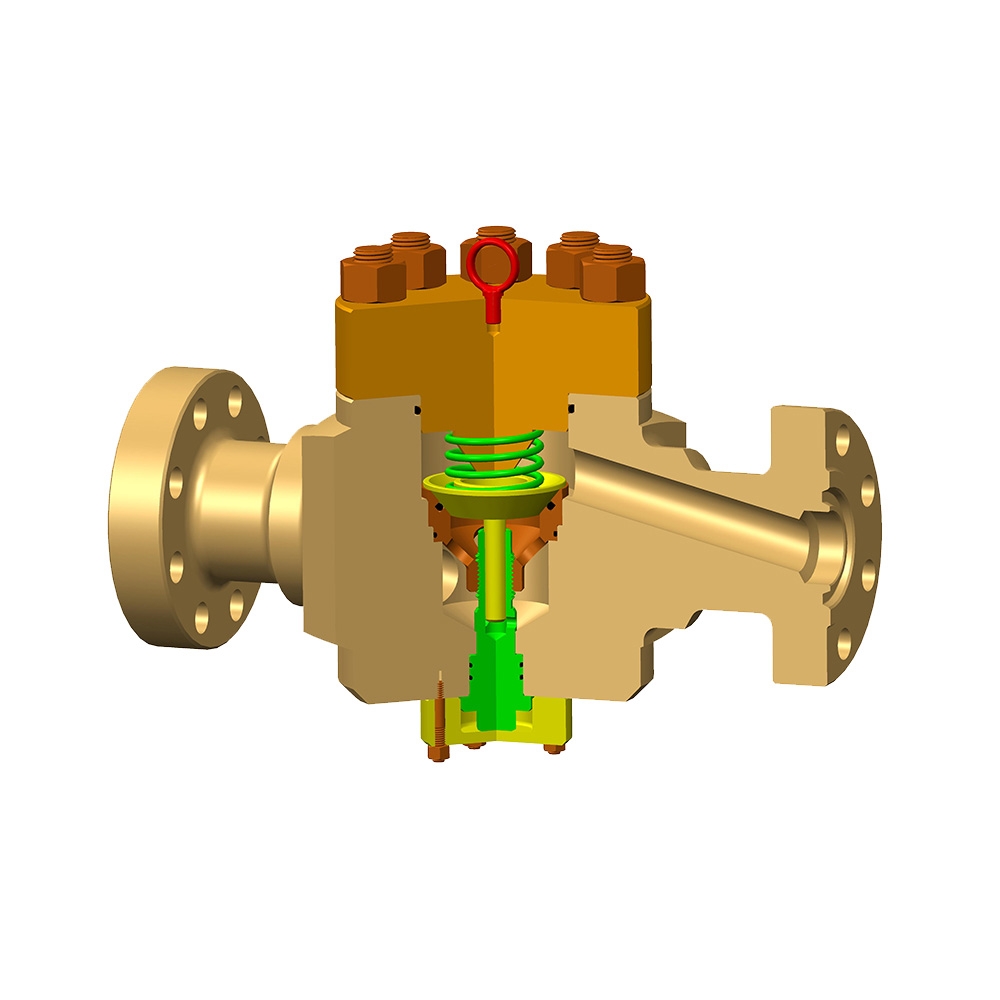
Beyond simple backflow prevention, a properly selected check valve attenuates the potentially devastating pressure spikes known as water hammer or fluid hammer that occur when a column of flowing liquid is suddenly stopped. In a long crude oil pipeline crossing undulating terrain, the kinetic energy of the moving fluid column is immense. When a valve shuts quickly downstream, a pressure wave travels back upstream at the speed of sound in that fluid, typically around 4,000 to 4,500 feet per second in liquid petroleum. If no check valve with a controlled closure characteristic is installed, the pressure surge can exceed the pipe design pressure by a factor of 2 to 10, leading to gasket blowouts and ruptured pipe welds. Advanced nozzle-type and axial flow check valves are designed with a spring-assisted disc and a venturi-shaped body that allows the disc to follow the flow deceleration closely, closing just as the forward velocity reaches zero. This "non-slam" characteristic prevents the pressure spike that would occur if the disc were to slam shut against the seat after reverse flow had already begun. Pipeline operators report that upgrading to non-slam check valves has reduced surge-related pipe failures by over 60% in liquid transmission systems. This dynamic protective function is a critical part of understanding what does the check valve do for the integrity of the entire oil transportation infrastructure.
Downhole and Wellhead Flow Control in Drilling and Production
In drilling and completion operations, downhole check valves installed in the drill string or as part of the wellhead assembly prevent formation fluids from flowing up the pipe and creating a blowout hazard. A drill string check valve, often called a float valve, is placed near the drill bit to allow drilling mud to be pumped down but prevents formation gas or oil from traveling up the drill pipe if a high-pressure zone is encountered. This function is so critical that regulatory bodies in many oil-producing regions mandate the use of two independent check valves in the drill string. At the surface, a wellhead check valve downstream of the choke manifold ensures that produced fluids can exit the well but cannot flow backward into the wellbore if downstream equipment fails or if pipeline pressure exceeds the wellhead pressure. In a gas-lift production system, a series of downhole injection check valves permit lift gas to enter the production tubing at specific depths while preventing oil and gas from entering the gas lift supply line, which would compromise the entire field's artificial lift operation. Every one of these applications answers what does the check valve do with the same principle applied to different locations: one-way flow as a barrier against uncontrolled release and equipment contamination.
| Check Valve Type | Closure Mechanism | Slam Potential | Typical Oil & Gas Application |
|---|---|---|---|
| Swing Check | Hinged disc swings open; gravity and reverse flow close it | High; tends to slam | Large-diameter transmission pipelines, low-pressure gas |
| Dual-Plate / Wafer Check | Two spring-loaded half-discs pivot on a central pin | Low; spring assists quick, soft closure | Refinery piping, compressor discharge, pump suction/discharge |
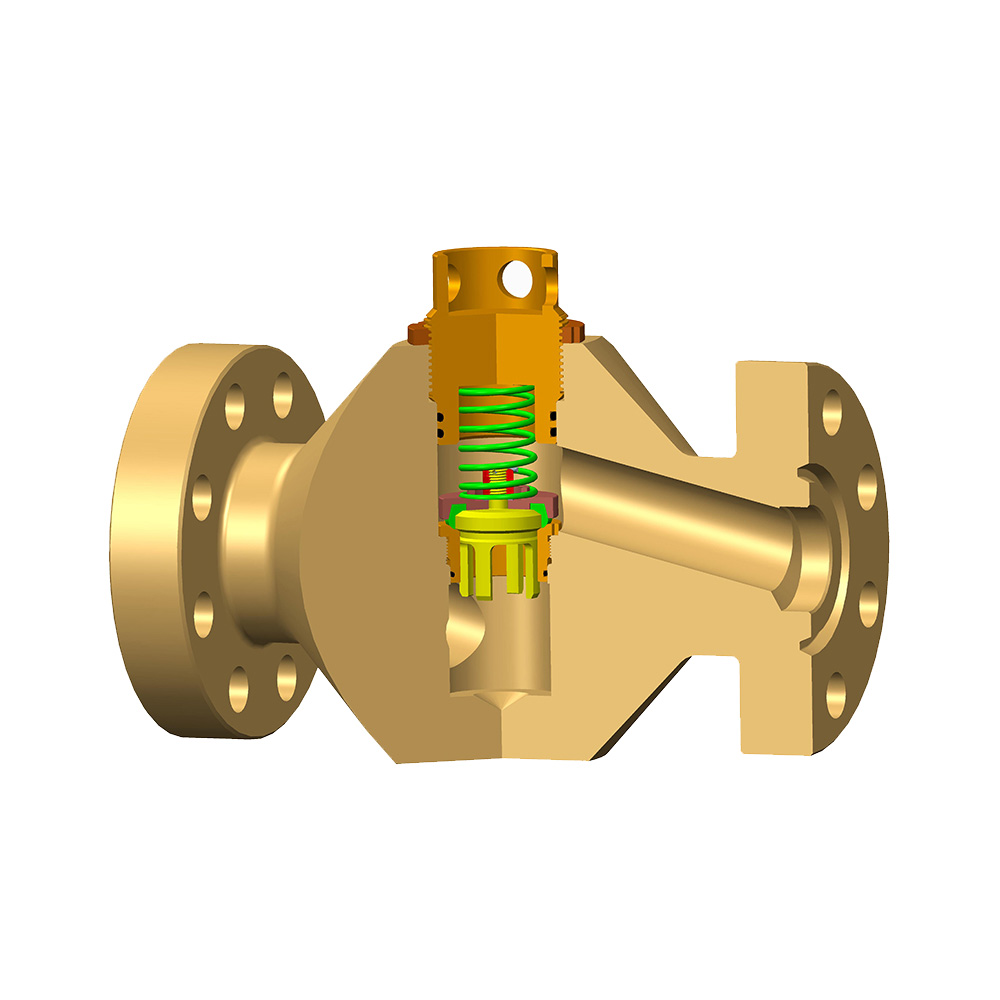
| Axial Flow / Nozzle Check | Venturi-shaped body; spring centers disc, axial flow path | Very low; closes before reverse flow starts | High-pressure pump stations, offshore platforms, crude pipelines |
| Piston / Lift Check | Disc or piston lifts off seat; gravity or spring return | Moderate; can slam if flow reverses quickly | Wellheads, gas lift systems, small-bore chemical injection |
| Drill String Float Valve | Flapper or spring-loaded plunger inside a sub | Near-instantaneous; driven by differential pressure | Bottom hole assembly during drilling operations |
Materials and Design Requirements for Petroleum Service
In the corrosive, high-temperature, high-pressure environment of oil and gas production, a check valve must be constructed from specialized alloys and designed to meet the standards of API 6D, API 6A, or NACE MR0175 for sour service. The internal trim is often made from stainless steel 316, duplex stainless steel, or Inconel to resist hydrogen sulfide stress cracking and carbon dioxide corrosion. Seats may incorporate a PTFE or metal-to-metal seal depending on whether gas-tight shutoff is required. A check valve intended for a deepwater subsea manifold, for example, must withstand ambient pressure of 15,000 psi and internal process temperatures up to 350 degrees Fahrenheit while submerged for decades without maintenance. The material selection and compliance with industry codes are as important as the flow characteristics when evaluating what does the check valve do in terms of long-term safety and environmental integrity. A failure in a subsea check valve due to inadequate material selection can result in an uncontrolled release of crude oil into the marine environment, an event with costs that run into the billions of dollars.
Frequently Asked Questions About Check Valves in Oil and Gas
What happens if a check valve fails in the open position?
If a check valve fails stuck open, it loses its ability to block reverse flow. The immediate consequence is that fluid can flow backward through the pump or compressor when the unit stops, potentially causing reverse rotation and severe bearing or impeller damage. In a pipeline network, a stuck-open check valve can allow cross-flow from one line to another, contaminating product batches or over-pressurizing lower-rated equipment downstream. This is why regular testing of the closure function is mandated in many facility operating procedures.
How often should check valves in oilfield service be inspected?
According to industry recommended practices, in-line check valves at pump stations and compressor stations should undergo an external visual inspection every month and an internal inspection of the disc, seat, and spring every 12 to 24 months depending on the severity of the service. Valves handling abrasive produced water with sand content above 0.1% may require more frequent inspection. Acoustic monitoring devices that detect the sound of disc fluttering or slamming can also provide real-time condition feedback without disassembly.
Why do some check valves have a counterweight or external lever?
A counterweight or external lever and weight assembly on a swing check valve provides a known closing assist torque, which helps the disc close more quickly and at a predictable rate when flow decelerates. This is particularly important in large-diameter water injection lines and crude oil export pipelines where the disc inertia alone would cause a delayed and violent closure. The external weight allows field adjustment of the valve's dynamic response to match the specific pipeline flow characteristics.
From the wellhead to the refinery, the answer to what does the check valve do is comprehensive and vital: it provides one-way flow control that shields expensive rotating equipment, prevents pipeline rupture from pressure surges, and acts as a barrier against blowouts. Its correct selection, material specification, and maintenance form a non-negotiable part of safe and profitable oil and gas operations.