English
 русский
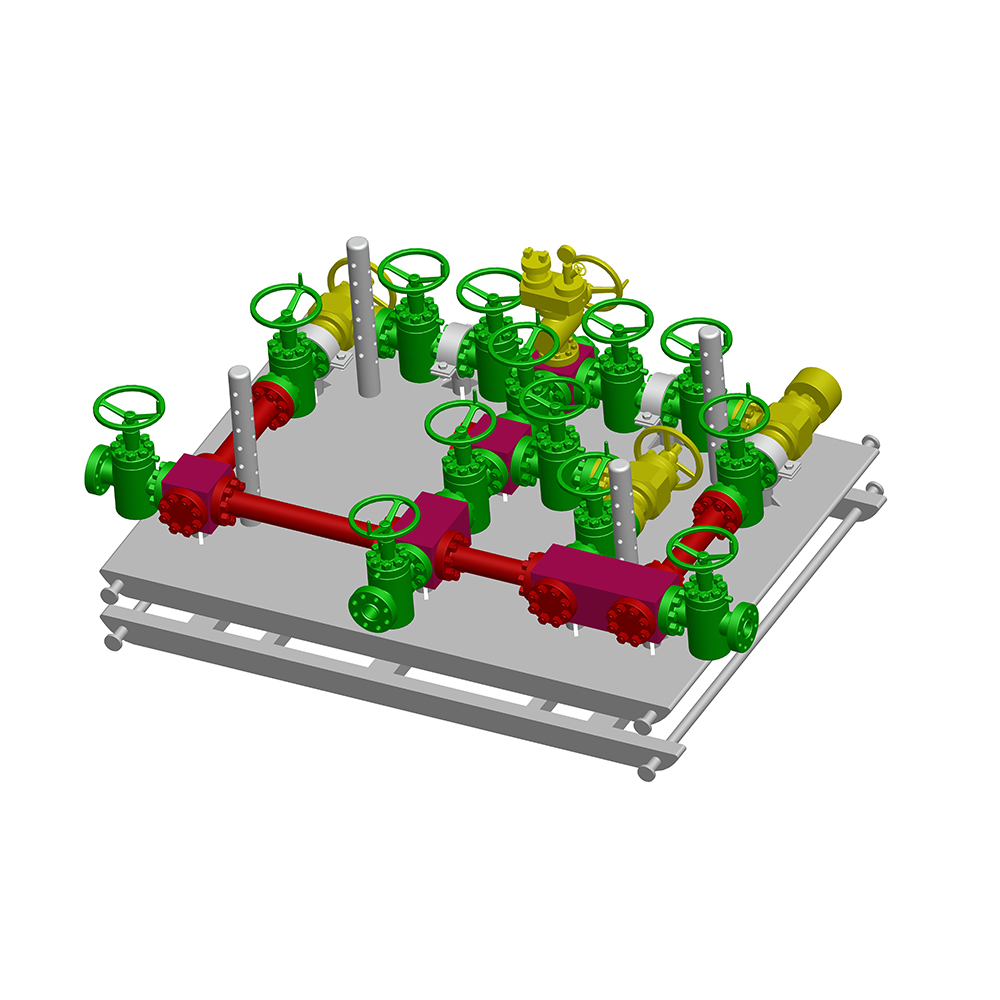
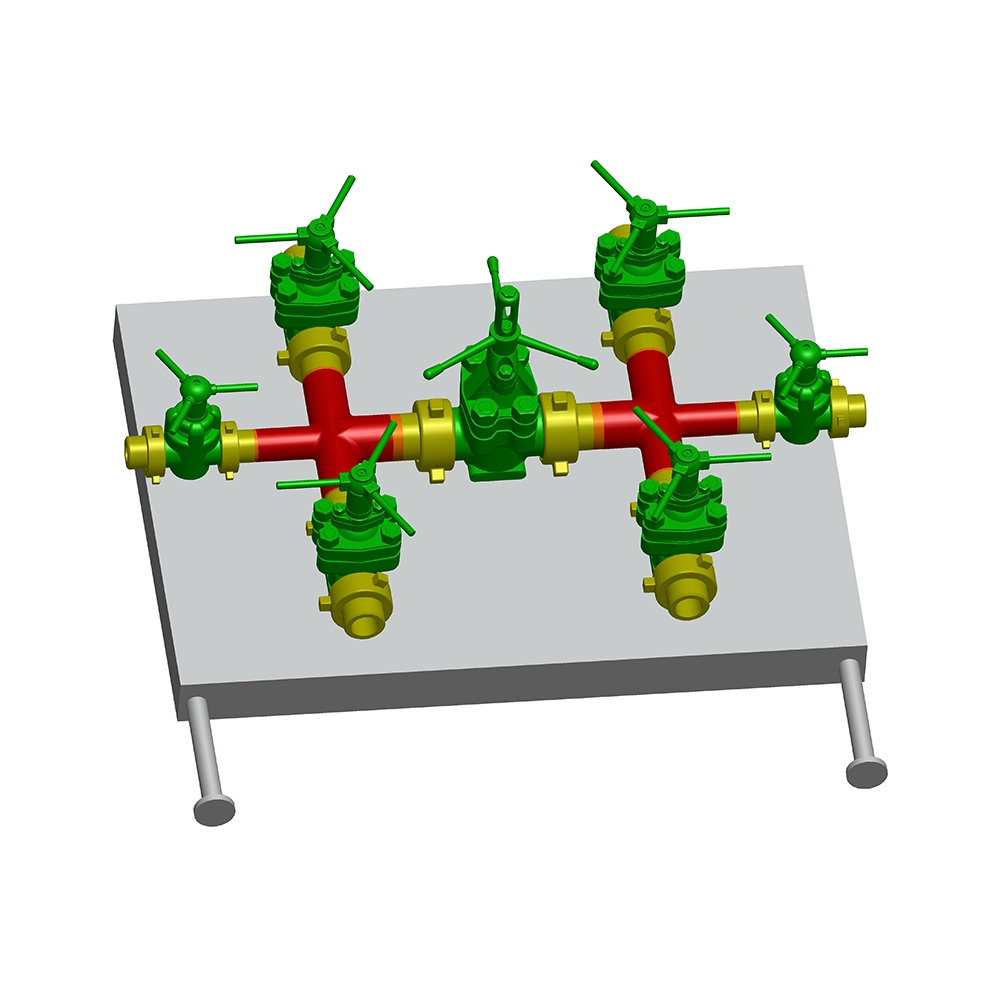
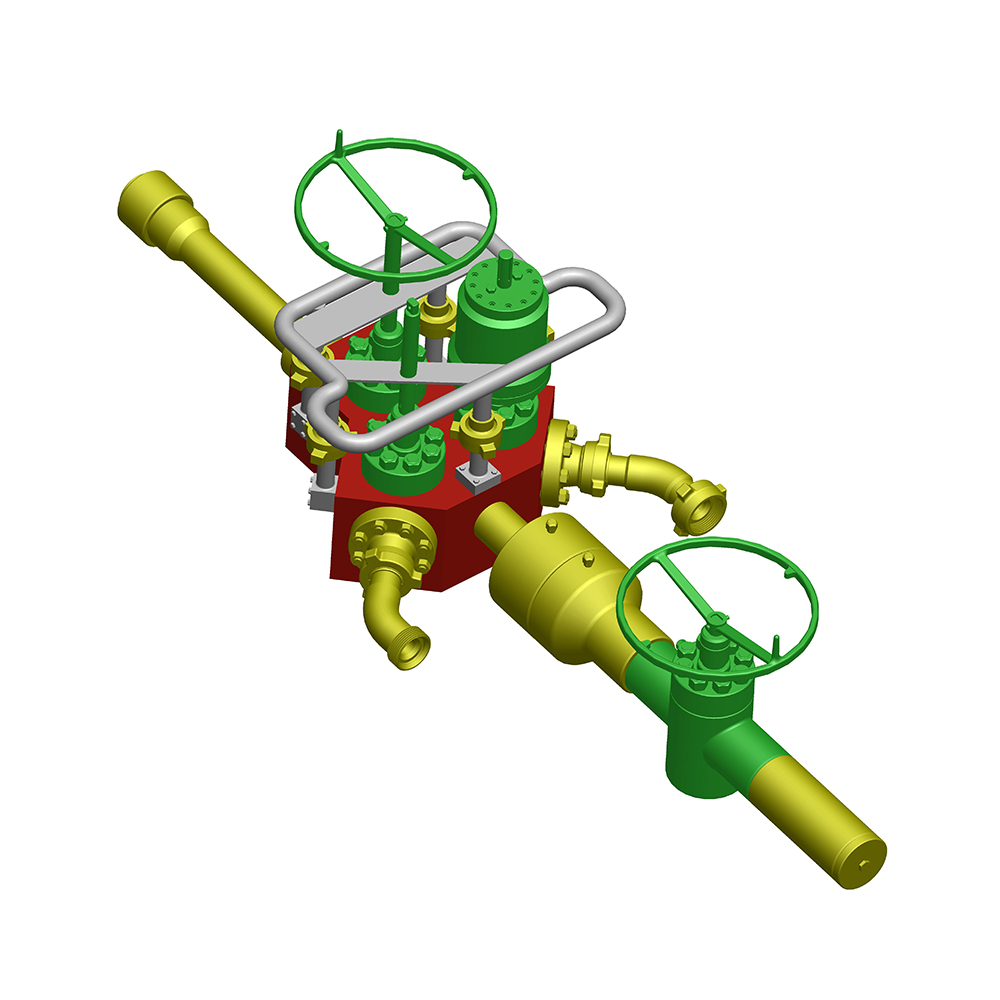
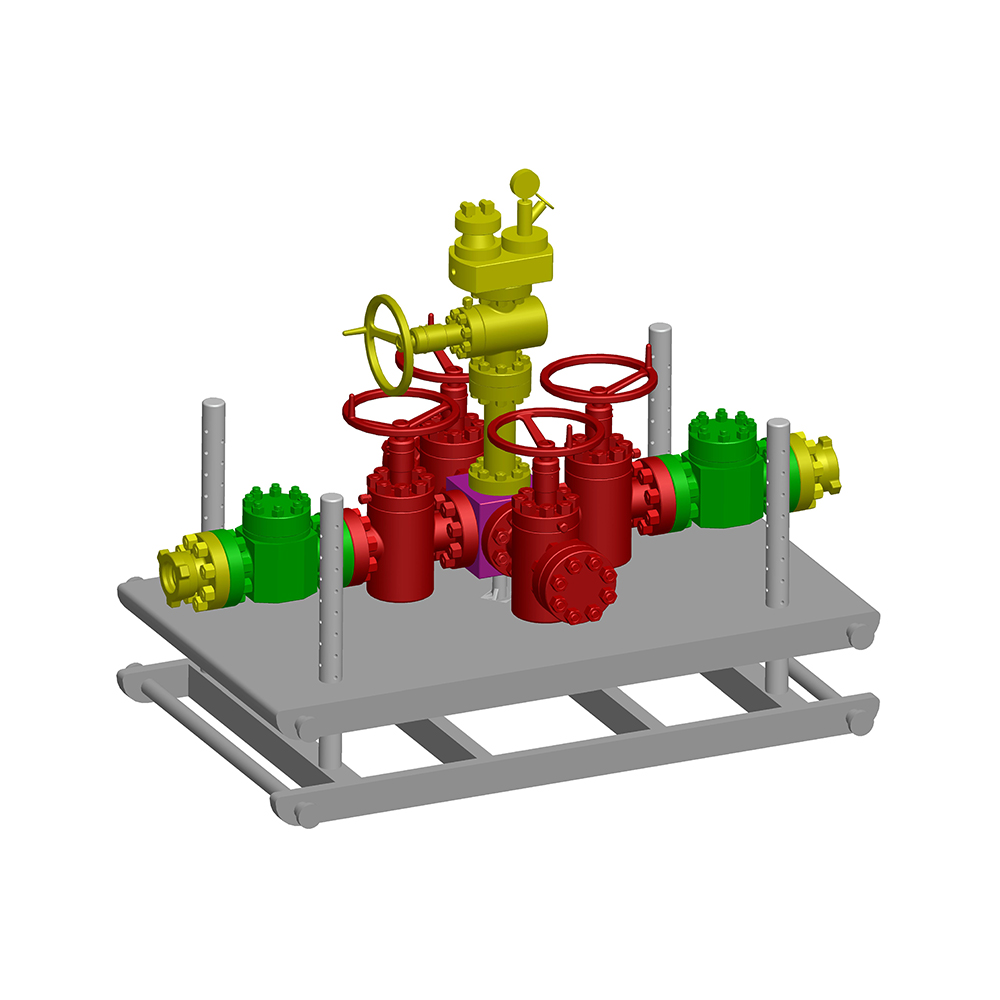
Compact wellhead systems are integrated, space-optimized assemblies that combine the casing head, tubing head, and Christmas tree into a single low-profile unit -- reducing installation footprint by 40 to 60 percent, cutting rig-up time by up to 50 percent, and lowering overall wellhead costs compared to conventional multi-component stacked systems. Originally developed for offshore platforms with severe deck space constraints, compact wellhead technology has rapidly expanded into onshore unconventional plays, remote Arctic locations, and subsea applications where installation efficiency, weight reduction, and minimal surface disturbance are critical operational priorities.
This guide explains how compact wellhead systems work, which configurations are available, how they compare to conventional wellheads in performance and cost, and what operators need to evaluate before specifying one for their next well program.
Content
- How Do Compact Wellhead Systems Work?
- Which Types of Compact Wellhead Systems Are Used in the Industry?
- Compact Wellhead Systems vs Conventional Wellheads: Full Comparison
- What Are the Key Technical Specifications of Compact Wellhead Systems?
- Why Are Compact Wellhead Systems Gaining Adoption in Unconventional Plays?
- How Are Compact Wellhead Systems Installed and Commissioned?
- What Should Operators Evaluate Before Selecting a Compact Wellhead System?
- FAQ: Compact Wellhead Systems
- Conclusion: The Case for Compact Wellhead Systems in Modern Well Programs
How Do Compact Wellhead Systems Work?
Compact wellhead systems work by integrating functions that conventional wellheads distribute across multiple independently assembled components into a single pre-engineered housing, eliminating intermediate flanged connections and reducing the number of potential leak paths from 6 to 12 down to 2 to 4.
In a traditional wellhead stack, the following components are assembled sequentially on location: conductor casing head, surface casing head, intermediate casing head (where applicable), tubing head spool, tubing hanger, and Christmas tree. Each connection between components requires a separate flange joint with a metal ring gasket, sealing surfaces that must be cleaned and inspected, and bolts that must be individually torqued to specification. The resulting stack can reach 3 to 6 meters in height and requires multiple crane lifts over 2 to 4 days of rig-up time.
A compact wellhead system replaces this sequential assembly with a pre-machined monobore or multi-bore housing in which casing hangers, tubing hangers, and annulus access ports are all accommodated within a single pressure-containing body. Key design features include:
- Integral casing hanger profiles -- machined directly into the housing bore, eliminating separate hanger spool components and their associated face seals
- Single-trip installation capability -- casing strings can be landed and sealed in a single trip rather than requiring separate trips per casing size
- Unitized pack-off seals -- annular seals between casing strings are energized mechanically or hydraulically within the compact housing bore, maintaining isolation without external flange joints
- Pre-tested subassemblies -- pressure testing of the complete compact unit occurs at the manufacturing facility before shipment, with documented test records, so field pressure testing is verification rather than qualification
- Integrated wellhead monitoring ports -- annulus pressure monitoring, chemical injection, and downhole gauge access points are built into the housing body rather than added as separate spool pieces
The result is a wellhead assembly that sits 0.6 to 1.2 meters above the wellbore centerline in many configurations -- compared to 2.5 to 5 meters for conventional stacked systems -- while providing equivalent pressure ratings up to 15,000 psi (1,034 bar) and full H2S service compliance per NACE MR0175.
Which Types of Compact Wellhead Systems Are Used in the Industry?
Four primary compact wellhead system configurations are used across oil and gas operations: surface compact wellheads for land and platform applications, subsea compact wellheads for deepwater production, modular compact systems for multi-well pads, and slim-hole compact wellheads for exploration and appraisal wells.
1. Surface Compact Wellhead Systems
Surface compact wellheads are the most widely deployed configuration, used on onshore unconventional plays and fixed offshore platforms where a low stack height directly reduces structural load on wellbay decking and simplifies crane access during workover operations.
Standard surface compact wellheads accommodate two to four casing strings within a single housing, with nominal bore sizes ranging from 7-1/16 inch to 13-5/8 inch and working pressure ratings from 3,000 to 15,000 psi. In Permian Basin multi-well pad operations, operators have reported rig-up time reductions from an average of 36 hours with conventional wellheads to 14 to 18 hours with compact systems -- a saving that compounds significantly across a 20 to 40 well pad program.
2. Subsea Compact Wellhead Systems
Subsea compact wellheads are specifically engineered for installation on the seabed, where their reduced height and weight directly lower the structural load on subsea templates and reduce the lateral reach requirements of drill ships and semi-submersibles during running operations.
Subsea compact wellhead housings are typically manufactured from low-alloy carbon steel with corrosion-resistant alloy (CRA) cladding on internal bore surfaces. Housing outer diameters of 18-3/4 inch are standard for deepwater applications, accommodating high-pressure/high-temperature (HPHT) ratings up to 15,000 psi and 350 degrees Fahrenheit. The reduced component count of compact systems is particularly valuable subsea because each additional connection represents a potential leak path that is expensive and time-consuming to remediate at water depths of 1,000 to 3,000 meters.
3. Modular Compact Wellhead Systems for Multi-Well Pads
Modular compact wellhead systems are designed for batch installation across multi-well pad sites, featuring standardized interfaces that allow the same drill rig, completion equipment, and Christmas tree to be moved from well to well without reconfiguration.
Standardization is the core value of modular compact wellheads in pad drilling programs. When all 20 wells on a pad use identical compact wellhead housings with the same hanger profile, the same tubing head adapter, and the same tree connector geometry, rig crews can execute installation procedures from muscle memory -- reducing procedural errors, inspection time, and non-productive time (NPT) per well. Operators in the Eagle Ford and Marcellus shale plays have documented NPT reductions of 15 to 25 percent per wellhead installation by switching from mixed conventional components to a standardized compact wellhead program.
4. Slim-Hole Compact Wellheads for Exploration Wells
Slim-hole compact wellheads accommodate smaller-diameter casing programs used in exploration wells where formation evaluation takes priority over production infrastructure, providing full pressure containment capability in a housing that can be installed and retrieved with a smaller, lower-cost workover rig. Slim-hole compact systems typically accommodate 4-1/2 inch to 7 inch production casings with working pressures up to 10,000 psi, and their lighter weight -- typically 800 to 1,800 kg versus 3,000 to 8,000 kg for full-size conventional wellheads -- makes them transportable by helicopter to remote exploration locations.
Compact Wellhead Systems vs Conventional Wellheads: Full Comparison
Compact wellhead systems consistently outperform conventional wellheads on installation speed, footprint, leak path count, and total installed cost -- while conventional wellheads retain advantages in field repairability and compatibility with legacy completion equipment.
| Parameter | Compact Wellhead System | Conventional Wellhead Stack |
| Stack height | 0.6 -- 1.5 m | 2.5 -- 6.0 m |
| Rig-up time | 12 -- 20 hours | 24 -- 48 hours |
| Number of potential leak paths | 2 -- 4 | 6 -- 14 |
| Weight (typical 10,000 psi system) | 1,200 -- 2,500 kg | 3,000 -- 7,000 kg |
| Factory pressure tested? | Yes (full assembly) | Component-level only |
| Max working pressure available | Up to 15,000 psi | Up to 20,000 psi |
| Field repairability | Limited (housing replacement) | High (component swap) |
| Compatibility with legacy equipment | Requires adapter spools | High (standardized flanges) |
| Total installed cost (relative) | 15 -- 30% lower | Baseline |
| Best application | Pad drilling, offshore, remote sites | Complex HPHT, legacy fields |
Table 1: Side-by-side comparison of compact wellhead systems versus conventional wellhead stacks across key operational and performance parameters.
What Are the Key Technical Specifications of Compact Wellhead Systems?
Compact wellhead systems are specified across six primary technical dimensions: working pressure rating, bore size, casing program accommodation, temperature class, material grade, and service environment -- and each of these must be matched precisely to the well's reservoir conditions and completion design.
| Specification | Standard Range | HPHT Range | Governing Standard |
| Working pressure | 3,000 -- 10,000 psi | 10,000 -- 15,000 psi | API 6A / ISO 10423 |
| Temperature class | K (-60 to 82 C) / L (-46 to 82 C) | P (-29 to 180 C) | API 6A |
| Housing bore (nominal) | 7-1/16 in -- 11 in | 13-5/8 in -- 18-3/4 in | API 6A |
| Material class | AA (general) / BB (H2S service) | DD / EE / FF (sour/CO2) | API 6A / NACE MR0175 |
| Product specification level | PSL 1 / PSL 2 | PSL 3 / PSL 3G / PSL 4 | API 6A |
| Casing sizes accommodated | 2 strings (conductor + surface) | 3 -- 4 strings (full program) | Well-specific design |
Table 2: Technical specification ranges for compact wellhead systems under standard and high-pressure/high-temperature (HPHT) service conditions, with applicable governing standards.
Why Are Compact Wellhead Systems Gaining Adoption in Unconventional Plays?
The economics of unconventional pad drilling -- where 20 to 40 wells share a single surface location and rig efficiency directly drives field development cost -- have made compact wellhead systems the default specification for major operators in the Permian Basin, Bakken, Eagle Ford, and Marcellus plays, because the per-well time and cost savings compound dramatically at pad scale.
Consider a 30-well pad program. If each well's wellhead installation takes 36 hours with a conventional system and 16 hours with a compact system, the total time saving across the pad is 600 rig hours. At a day rate of $25,000 for a modern land rig, that equals $625,000 in direct rig cost savings from wellhead selection alone -- before accounting for reduced crane lifts, fewer pressure tests, lower freight costs (lighter compact units), and reduced safety exposure from simplified assembly procedures.
Additional drivers of compact wellhead adoption in unconventional operations include:
- Environmental footprint reduction -- lower stack height reduces visible surface impact and makes wellhead guarding and fencing simpler, supporting operators' environmental commitments in sensitive areas
- Pad drilling geometry -- compact wellheads fit more comfortably in the confined spacing between adjacent wellheads on multi-well pads where conventional stack heights create interference risks during crane operations
- Automated manufacturing quality -- compact housings machined on CNC equipment to tight tolerances (typically IT7 or better on bore diameters) provide more repeatable hanger landing and sealing than field-assembled conventional stacks
- Reduced inventory complexity -- a single standardized compact wellhead SKU can replace dozens of conventional component part numbers, simplifying procurement, warehousing, and supply chain management
How Are Compact Wellhead Systems Installed and Commissioned?
Installation of a compact wellhead system follows a streamlined sequence compared to conventional wellheads: the housing is landed on the conductor, casing strings are run and hung in sequence within the single housing, pack-off seals are energized, and the tubing head adapter and Christmas tree are connected -- all using fewer crane picks and a smaller installation crew than conventional systems require.
Step 1 -- Housing Installation
The compact wellhead housing is installed on the conductor casing after the conductor is cemented in place. For surface compact systems, the housing is threaded or welded to the conductor using a connection pre-machined at the housing manufacturer's facility. The housing is typically landed and leveled in a single crane pick lasting 30 to 60 minutes.
Step 2 -- Casing String Hanging
Each casing string is run through the compact housing bore and landed in the appropriate hanger profile machined into the housing. Hanger orientation is confirmed by a reference mark on the hanger body aligning with a corresponding mark on the housing, providing a positive visual indication that the hanger is correctly landed before the rig releases tension. Integral pack-off seals between casing strings are set either mechanically (by rotation or weight) or hydraulically through ports in the housing body.
Step 3 -- Pressure Testing
Each casing annulus seal and the primary bore seal are tested individually using test ports built into the compact housing body. Test pressures are applied per API 6A and the well-specific wellhead test procedure, with pressure held for 15 minutes per seal per most operator requirements. Because the compact housing was factory-tested as a complete assembly, field test results are almost always definitive -- a failed field test reliably indicates an installation error rather than a component manufacturing defect.
Step 4 -- Christmas Tree Connection
The Christmas tree connects to the compact wellhead housing via a tubing head adapter (THA) or directly through a unitized tree connector, depending on the system design. Compact wellhead systems typically use a single clamp connector or threaded connection at the tree interface rather than a full-face flanged joint, reducing the number of bolts and gaskets required and cutting tree installation time by 30 to 50 percent compared to conventional flanged tree connections.
What Should Operators Evaluate Before Selecting a Compact Wellhead System?
Before committing to a compact wellhead system, operators must evaluate five critical compatibility factors: the well's casing program geometry, reservoir pressure and temperature envelope, surface or subsea installation environment, completion and workover tool compatibility, and the regulatory approval status of compact wellhead technology in the operating jurisdiction.
- Casing program geometry -- the compact housing must accommodate all planned casing string sizes with adequate radial clearance between strings; a well with an intermediate casing string that is only 1/2 inch smaller in outer diameter than the surface casing may not physically fit within a standard compact housing bore
- Pressure and temperature envelope -- confirm that the compact system's API 6A temperature class and working pressure rating both exceed the maximum anticipated wellhead pressure and maximum surface shut-in temperature, with a minimum 10 percent safety margin
- Completion tool compatibility -- frac plugs, packers, and wireline tools run during hydraulic fracturing or production logging must pass through the compact wellhead bore without interference; verify that the minimum through-bore of the compact system meets the requirements of the entire completion tool string
- Workover access -- conventional wellheads allow individual component replacement in the field; compact housings that develop a seal failure typically require complete housing replacement, which may mean pulling the well -- evaluate whether the compact system's field repairability profile is acceptable for the well's expected production life and workover frequency
- Regulatory approval -- in some jurisdictions, compact wellhead systems must be individually approved by the regulatory body before installation; confirm that the selected compact wellhead has received the necessary approvals (e.g., BSEE in the U.S. Gulf of Mexico, HSE in the UK North Sea) before procurement
FAQ: Compact Wellhead Systems
Q1: Can a compact wellhead system be used on an existing well originally drilled with a conventional wellhead?
Converting an existing well from a conventional wellhead to a compact wellhead system is technically possible but rarely economical as a standalone retrofit. The most practical conversion scenario is during a major workover that requires pulling the Christmas tree and tubing string anyway -- at that point, a compact wellhead housing can be substituted for the conventional tubing head spool, provided the conductor and surface casing head remain in serviceable condition. Most operators instead apply compact wellhead systems to new-well programs rather than retrofitting existing wells.
Q2: What is the typical lead time for a compact wellhead system versus conventional components?
Standard compact wellhead systems from established manufacturers typically have lead times of 8 to 16 weeks for PSL 1 and PSL 2 equipment. Custom or HPHT compact wellheads rated for PSL 3G or PSL 4 service can require 20 to 36 weeks due to the additional NDE testing, traceability documentation, and material certification requirements. In contrast, conventional wellhead components are often available from distributor stock in 2 to 6 weeks, giving conventional systems a lead time advantage for urgent or unplanned drilling programs. Operators running long-range pad drilling campaigns should plan compact wellhead procurement 6 to 12 months in advance to avoid schedule risk.
Q3: Are compact wellhead systems suitable for high-H2S sour gas wells?
Yes -- compact wellhead systems are available in full sour service configurations compliant with NACE MR0175 / ISO 15156. Sour service compact housings use low-alloy steel with restricted hardness (typically HRC 22 maximum), corrosion-resistant alloy seal rings, and elastomeric seals formulated for H2S compatibility. Material class DD, EE, or FF per API 6A designates sour service capability. Operators in H2S-containing formations in the Permian, Middle East, and North Sea routinely specify sour service compact wellheads with the same confidence as conventional sour service equipment.
Q4: How do compact wellhead systems handle annulus pressure management during production?
Compact wellhead systems include dedicated annulus access ports machined into the housing body for each casing annulus -- typically 2-inch or 1-inch NPT or flanged ports providing access to the A, B, and C annuli as required by the well design. Annulus pressure monitoring gauges, chemical injection valves, and bleed-off valves connect to these ports using the same fittings as conventional wellhead annulus access equipment. API 90 and regulatory requirements for sustained casing pressure (SCP) monitoring are fully addressed by compact wellhead annulus port designs, with no reduction in monitoring capability compared to conventional systems.
Q5: What is the cost difference between a compact wellhead system and a conventional wellhead system?
The capital cost of a compact wellhead system hardware is generally 10 to 20 percent higher than an equivalent-rated conventional wellhead component set, reflecting the higher machining precision and factory assembly costs. However, when total installed cost is calculated -- including rig time for installation, crane operations, pressure testing, and inspection -- compact wellhead systems are consistently 15 to 30 percent cheaper per well than conventional systems. The break-even point is typically reached on the third or fourth well of a pad program, after which each additional well delivers the full cost advantage of the compact approach.
Q6: Which industry standards govern the design and manufacture of compact wellhead systems?
Compact wellhead systems are governed by the same primary standard as conventional wellheads: API 6A (ISO 10423), which covers specification for wellhead and christmas tree equipment including material requirements, dimensional tolerances, pressure testing procedures, and quality management requirements across all PSL levels. Additional applicable standards include API 6AF for fire testing of wellhead equipment, NACE MR0175 / ISO 15156 for sour service material qualification, and API 90 for annular casing pressure management. Subsea compact wellheads additionally comply with API 17D (ISO 13628-4) for subsea wellhead and christmas tree equipment. Operators should verify that any compact wellhead system under consideration holds a current API 6A monogram license from the manufacturer.
Conclusion: The Case for Compact Wellhead Systems in Modern Well Programs
Compact wellhead systems have moved from a niche solution for offshore space constraints to a mainstream specification choice across onshore pad drilling, subsea production, remote exploration, and unconventional completions. The combination of reduced installation time, fewer leak paths, lower total installed cost, factory-verified quality, and smaller surface footprint makes a compelling technical and economic case that conventional wellhead stacks struggle to match in most modern well programs.
The remaining areas where conventional wellheads retain genuine advantages -- ultra-HPHT applications above 15,000 psi, legacy field compatibility, and situations demanding field-repairable components -- are real but increasingly narrow as compact wellhead technology continues to advance in pressure and temperature capability.
For operators planning new well programs, the evaluation process should begin not by asking whether a compact wellhead system is applicable, but by identifying the specific technical constraints -- casing program geometry, pressure envelope, completion tool requirements, and regulatory context -- that determine which compact wellhead configuration is the optimal specification for each well design. In most cases, that evaluation will confirm that a compact wellhead system is the right choice.