English
 русский
A check valve for oil is a one-way flow device that opens when oil moves in the intended direction and closes automatically the moment flow reverses. In oil field equipment, that action protects pumps, meters, wellheads, and piping from backflow, pressure loss, and fluid contamination. For anyone buying or maintaining oilfield valves, the practical question is not whether a check valve is needed, but which design, material, and pressure rating will survive the worst condition your system can throw at it.
Content
Why a Check Valve for Oil Is Essential
The primary job of a check valve in oil service is to eliminate reverse flow before it damages equipment or creates a safety hazard. A sudden pump trip, a line drain-down, or an upstream pressure loss can all push oil backwards; without a check valve, that reversed column can spin a pump backward, drain a vertical riser, or force well fluid into the wrong manifold.
- Pump and compressor protection — reverse rotation breaks shafts and damages impellers.
- Pressure retention — the valve holds line pressure when the upstream source stops.
- Fluid segregation — prevents mixing of different crude grades, chemicals, or gas streams.
- Safety and environmental protection — limits spills and uncontrolled hydrocarbon release.
- Reduced downtime — fewer failures and lower maintenance costs over the asset life.
In check valve applications across oil and gas operations, failure of this small component is frequently the root cause of much larger operational losses.
How an Oil Check Valve Works
Every check valve uses the same logic: forward differential pressure pushes the closing element off its seat; reverse differential pressure, along with gravity or spring force, pushes it back. The minimum pressure needed to open the valve is called the cracking pressure. The core parts are the body, the seat, the closing element (disc, dart, flapper, or ball), and, in spring-loaded designs, a spring that returns the element faster.
- Opening stage — upstream pressure overcomes cracking pressure and lifts the element.
- Flow stage — the element stays open while forward velocity keeps it off the seat.
- Closing stage — flow slows or reverses; the element returns and seals against the seat.
Rapid closing creates a shock wave known as water hammer, which is why larger oil systems need either slow-closing swing discs, spring-assisted elements, or properly sized valves that match system velocity.
Common Check Valve Designs for Oil Service
Swing, lift, dart, and flapper check valves cover most oil production and pipeline duties; the right choice depends on pipe size, flow velocity, orientation, and how quickly the valve must shut when flow stops.
Swing check valves
A swing check valve for oil uses a hinged disc that swings open in the flow path and returns to the seat when flow stops. It has low pressure drop and handles large flow rates, which makes it a standard choice for pipelines and pump discharge lines. Install it on horizontal or slightly inclined piping, and give the disc enough room to close before reverse flow accelerates.
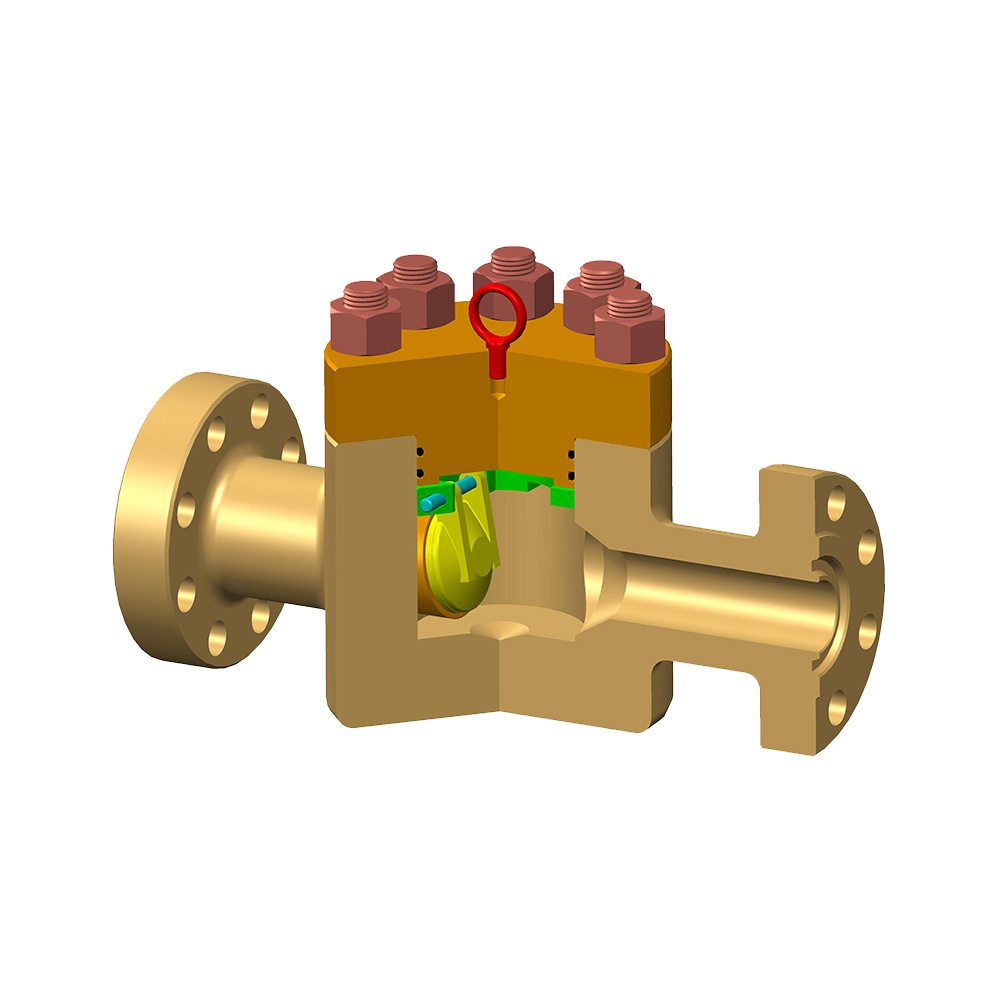 Swing Check Valve for Oil Pipelines and Pump DischargeThis hinged-disc check valve offers low pressure drop and suits large flow rates, making it a dependable choice for pipelines and pump discharge lines when reverse flow protection is needed.View Product →
Lift check valves
A lift check valve guides a disc or piston vertically onto the seat, so the medium must turn and flow upward through the valve. It creates more turbulence than a swing design and suits smaller-bore, higher-pressure service such as wellhead injection lines and hydraulic control circuits.
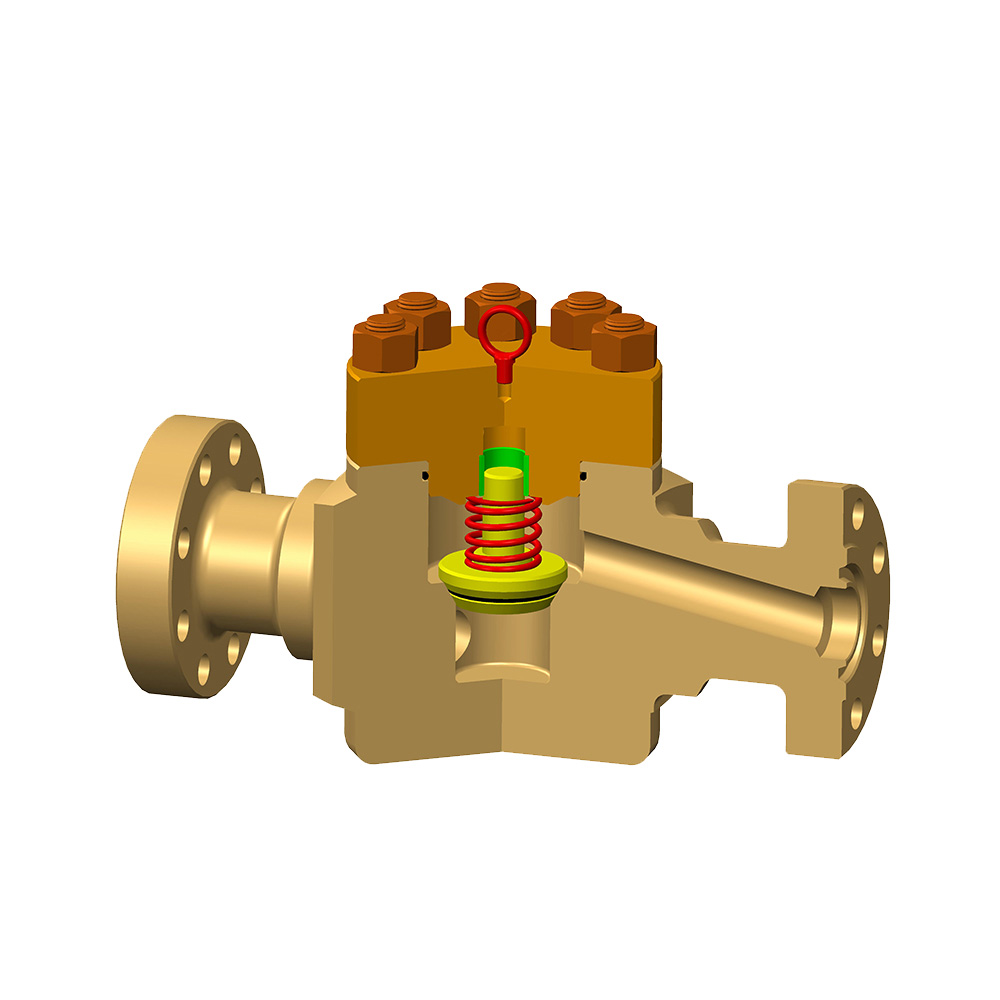 Lift Check Valve for High-Pressure Small-Bore ServiceDesigned for smaller-bore, higher-pressure applications like wellhead injection and hydraulic circuits, this valve uses a vertically guided disc that creates more turbulence but handles demanding conditions.View Product →
Dart check valves
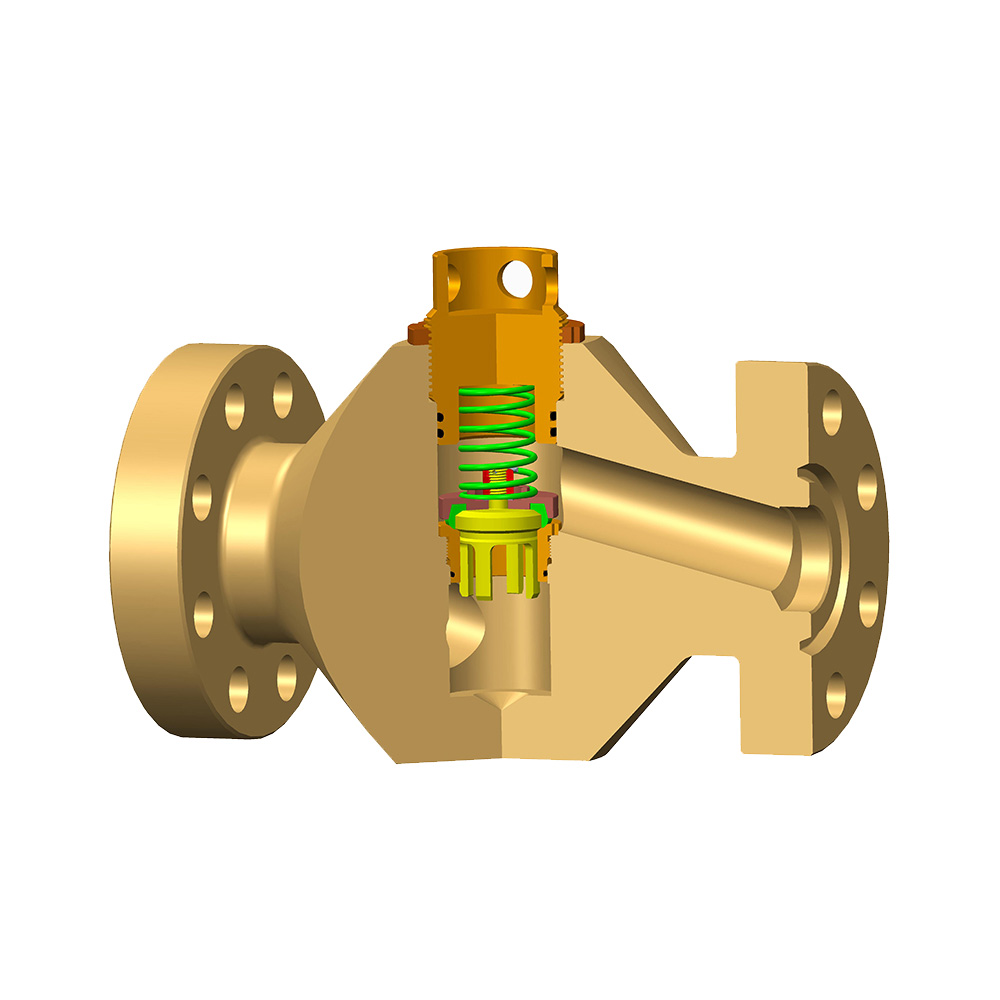
A dart check valve uses a streamlined dart-shaped element that moves axially inside the body. Because the element travels in line with the flow, response is fast and the valve handles pulsating flow well, which is why dart designs appear in drilling mud lines, cementing units, and high-vibration oil systems.
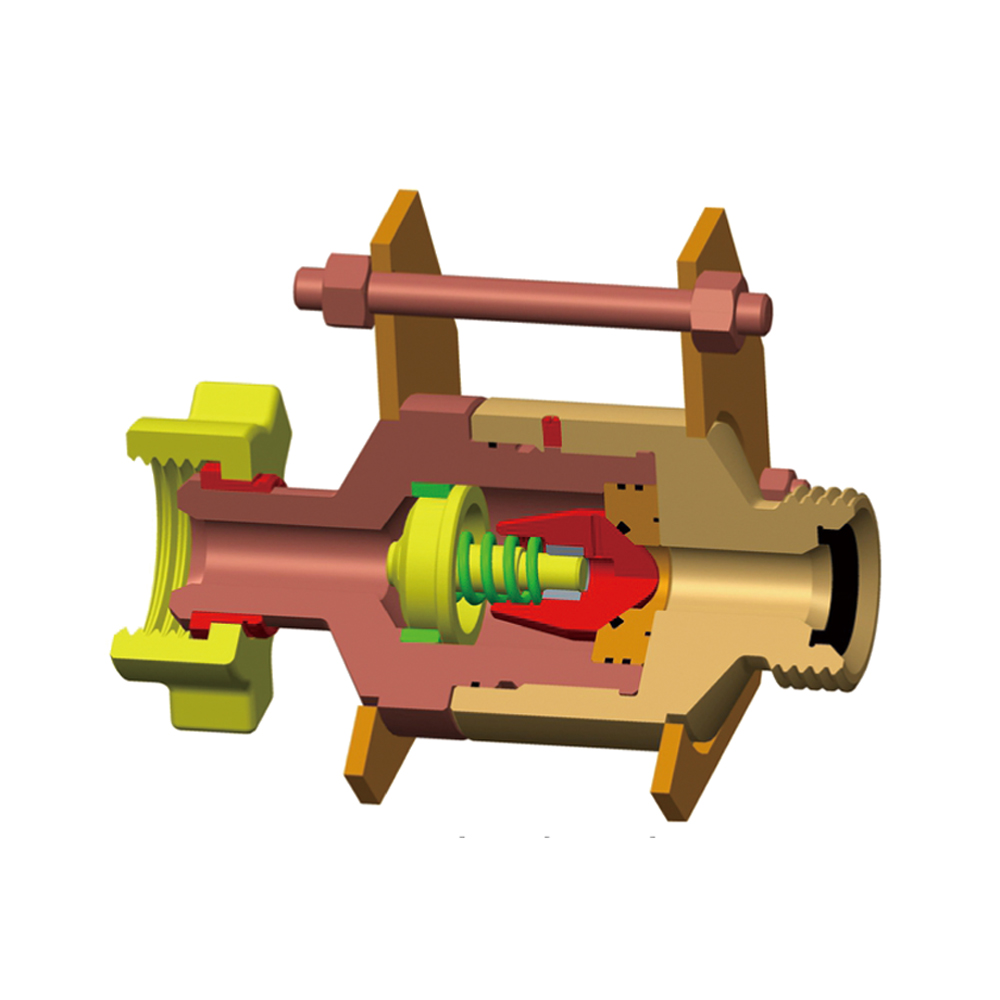 Dart Check Valve with Fast Axial ResponseIts streamlined dart element moves in line with flow for quick closure, handling pulsating flow well—ideal for drilling mud lines, cementing units, and high-vibration oil systems.View Product →
Flapper and top-entry check valves
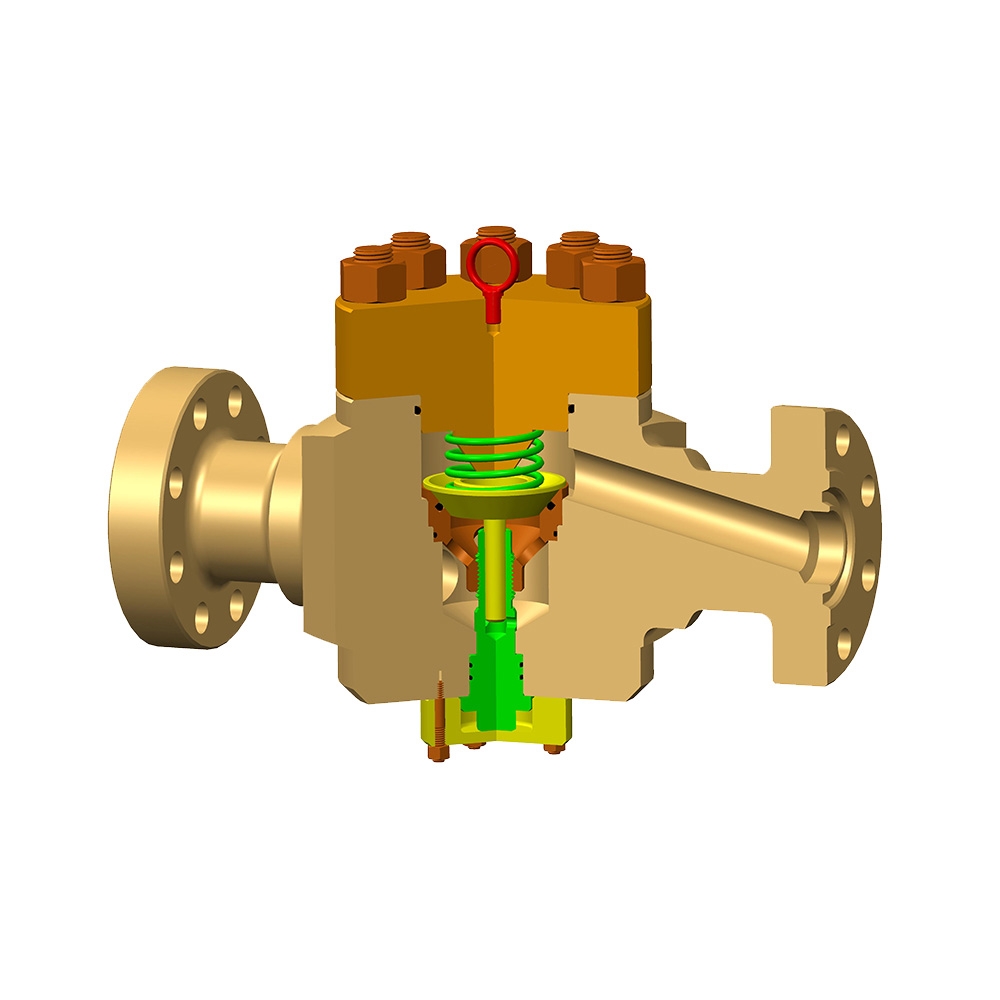
Flapper check valves use a flat, spring-hinged plate that seals across the bore; they are compact and repair-friendly. Top-entry check valves allow the whole internal assembly to be removed through the top cover without pulling the valve from the line, a clear advantage in tight wellhead and manifold layouts.
| Design | Closing element | Typical duty | Orientation flexibility |
|---|---|---|---|
| Swing | Hinged disc | Large-diameter pipelines, pump discharge | Horizontal preferred; spring-assisted for vertical |
| Lift | Disc or piston | High-pressure, small-bore lines | Horizontal; vertical only with spring |
| Dart | Axial dart | Mud lines, cementing, pulsating flow | Flexible; good for high vibration |
| Flapper | Spring-hinged plate | Compact pipework, gas injection | Good vertical performance with spring |
| Top entry | Removable internal cartridge | Wellheads, manifolds needing in-line service | Depends on internal spring type |
How to Select a Check Valve for Oil Service
Specify the check valve from the worst case — maximum working pressure, highest operating temperature, most corrosive fluid, and minimum expected flow — not from the typical operating point.
- Pressure rating: confirm the working pressure against API 6A or API 6D class ratings; for wellhead duty, the valve should match the tree pressure rating.
- Temperature: check seating material limits (NBR, FKM, or PTFE) against your minimum and maximum operating temperatures.
- Fluid: crude, gas, mud, and chemical service all change the trim recommendation; sour service with H2S requires sulfide-stress-cracking-resistant materials.
- Size and end connections: flanged, threaded, or welded ends must match existing piping and maintenance access.
- Flow velocity: oversized valves chatter; undersized valves erode. Match the valve to the nominal flow velocity range of the line.
- Orientation: confirm horizontal or vertical installation and specify a spring-loaded element if the line is vertical.
Standards and traceability matter as much as the design itself. A supplier with API monogram rights and ISO certification can document material grades, heat numbers, and pressure test results. The valve technology used in petroleum systems relies on this kind of documented quality to remain safe in the field.
| Parameter | Why it matters | Red flag to avoid |
|---|---|---|
| Working pressure | Must exceed worst-case shut-in pressure | No stamped pressure class or test certificate |
| Seal material | Must survive oil chemistry and temperature | Generic elastomer without a temperature range |
| Flow direction | Determines correct installation position | Missing arrow or ambiguous orientation data |
| Inspection access | Affects downtime and maintenance cost | Design that requires cutting the line for service |
| Documentation | Proves material and test conformity | No drawing, no heat trace, no hydrostatic record |
Installation and Maintenance Best Practices
Most premature check valve failures in oil systems come from wrong orientation, upstream debris, or ignoring the manufacturer's flow and torque specifications.
- Confirm the flow arrow points with the intended oil flow, and install a strainer or filter upstream.
- Respect orientation limits: use horizontal mounting for swing valves and spring-loaded lift or flapper types for vertical lines.
- Use correct gaskets, flange facing, and torque values to avoid leaks and body distortion.
- Provide enough clearance for cover removal or cartridge extraction.
- Listen for chattering or slamming — both indicate that the valve is under- or oversized for the flow velocity.
- Include a second valve or bypass where the line cannot be shut down for service.
Check Valve for Oil: Answers to Common Questions
What is the cracking pressure of a check valve for oil?
Typically 1 to 5 psi for spring-assisted liquid service. Some heavy-oil or vertical installations use higher cracking values to ensure positive closing. The product data sheet should state the exact range for the selected size and spring.
Can a swing check valve be installed vertically?
Horizontal is preferred so the disc closes by gravity. For vertical flow upward, spring-assisted swing, lift, or flapper designs are more reliable because the spring supplies the closing force.
What is the difference between a check valve and a back-pressure valve?
A check valve prevents reverse flow; a back-pressure valve maintains a minimum upstream pressure and is commonly set inside wellhead tubing to keep pressure on the completion. Both stop uncontrolled flow, but their setpoints and control functions differ.
Why does my check valve keep hammering or rattling?
Oversizing by one nominal size is the most common cause: velocity drops, the element floats near the seat, and it fluctuates open and closed. Recalculate the velocity range and choose the next smaller size if the duty permits, or switch to a spring-loaded design.
Which standards apply to oil check valves?
API 6A for wellhead and tree service, API 6D for pipeline valves, and ASME pressure ratings where piping codes apply. Always ask the manufacturer for a certificate that states the applied standard and the actual test pressure.
Final Recommendation for Buying a Check Valve for Oil
Buy the design that matches your piping layout, the material that matches your fluid, and the certification that proves the valve was tested. For oil field installations, that means checking the pressure rating, seal compatibility, and test records before delivery, and choosing a manufacturer that can show API-based manufacturing and ISO-certified quality control. Jiangsu Zhonglin Oil Equipment produces a full range of oil check valves — swing, lift, dart, flapper, top entry, and R-type — under API and ISO quality systems, so the engineering documentation and pressure test traces are available at the inquiry stage. With the right specification and supplier, a check valve for oil runs quietly for years and delivers protection exactly when it matters.