English
 русский

A gas wellhead is the surface pressure barrier that ties every casing string into one sealed stack, carries the casing load, and gives the Christmas tree a flange to land on. It is chosen before the first casing joint is run and rarely changed afterwards, so one wrong outlet size or a missed sour-service requirement can follow a well for its entire producing life.
The practical test comes down to three questions: can the assembly hold the maximum anticipated surface pressure, can it seal each annulus independently, and can a BOP, a test plug or a wireline job be run on it without adapters nobody stocks? If any answer is no, the wellhead is underspecified, however good the steel is.
What follows covers the jobs a gas wellhead does in service, how its parts stack up, why gas duty is harder than oil duty, how to read the ratings, and the checks that decide whether a purchase works out at the rig site.
Content
- What a Gas Wellhead Actually Does
- Gas Wellhead Components, From Bottom to Top
- Why Gas Duty Is Harder on a Wellhead Than Oil Duty
- Reading the Ratings: Pressure, Temperature, Material and Specification Level
- Wellhead and Christmas Tree: Where One Ends and the Other Begins
- Installation Is Where Most Problems Start
- Specifying and Buying a Gas Wellhead: A Practical Checklist
- Maintenance and Monitoring
- Frequently Asked Questions
What a Gas Wellhead Actually Does
A gas wellhead performs four jobs at the same time, and each one tends to fail in its own way.
- Suspension. Casing hangers transfer the weight of the casing string, often several hundred tonnes, into the casing head and from there into the conductor and the cellar floor.
- Annulus sealing. Every casing string is sealed off from the next so that pressure can be monitored and bled per annulus instead of migrating up behind the pipe.
- Pressure containment. The stack, its flanges, studs and outlets form the primary surface barrier during drilling, completion and production.
- Interface. Bowl dimensions and top flanges decide which BOP, which tubing hanger and which tree will fit, which makes the wellhead a mechanical interface as much as a pressure vessel.
During drilling, the wellhead is the lower half of the well control stack with the BOP flanged on top. After completion, the tree takes over flow control and the wellhead becomes the permanent foundation beneath it. Gas duty does not change those roles; it raises the sealing standard they have to meet.
Gas Wellhead Components, From Bottom to Top
A conventional gas wellhead stacks in a fixed order: casing head, casing hanger, casing head spool, tubing head spool, tubing hanger, and then the tree, with valves and adapters filling the gaps between.
The casing head is the base of the assembly. It is welded or threaded onto surface casing, carries the first hanger, and provides outlets for annulus access and pressure monitoring. Because it is set in concrete early, its outlet count and flange size are the hardest decision to reverse later.
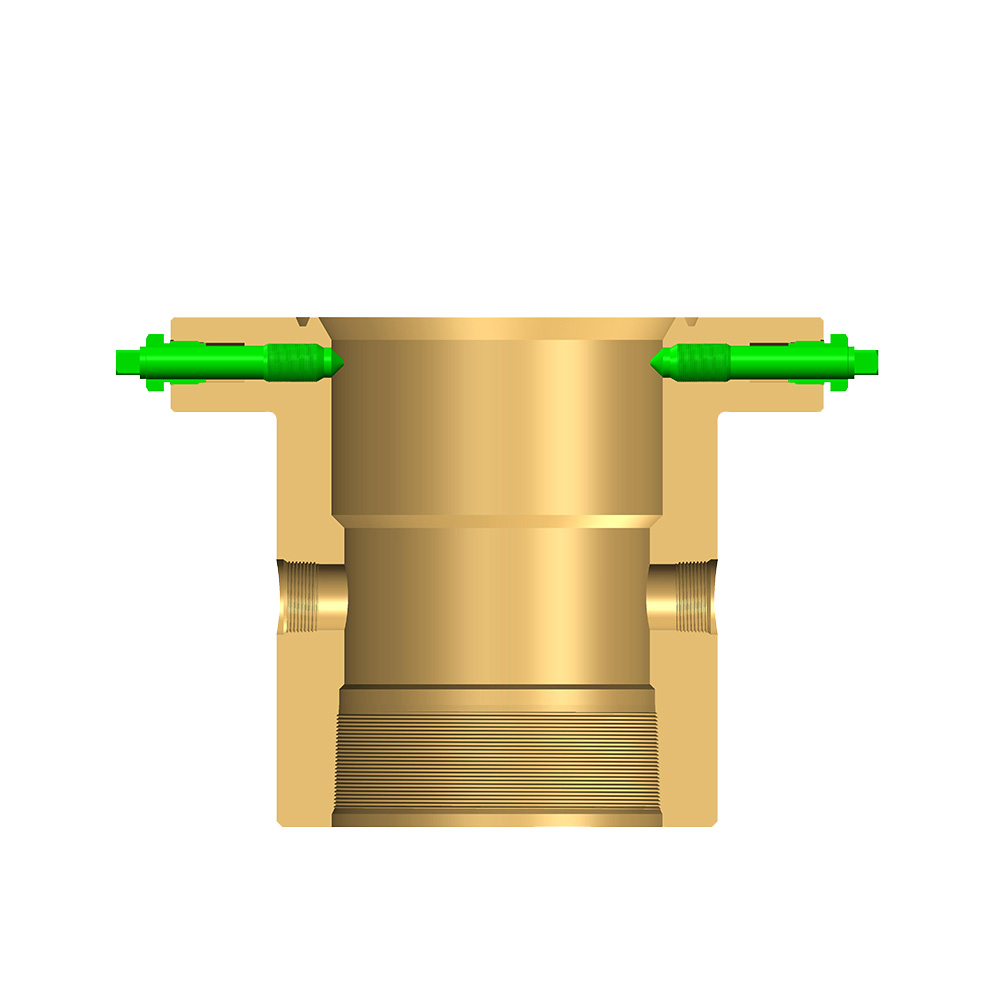 Casing Head for Wellhead Base AssemblyThe base wellhead component that carries the first casing hanger and provides annulus access and pressure-monitoring outlets.View Product →
The casing hanger does two things at once: it grips and supports the casing string, and it seals the annulus around it. Slip-type hangers are quicker to land and re-land; mandrel hangers are often preferred where the seal must be verifiable and the load predictable. Above them, casing head spools add hanging points and extra outlets as more strings go in.
The tubing head spool marks the transition from drilling to completion, and the tubing hanger inside it suspends the tubing and seals the production annulus. A back pressure valve screwed into the hanger lets the BOP come off while the well stays isolated from above, which is the one accessory crews notice most when it is missing.
| Component | Primary job | What decides the fit |
|---|---|---|
| Casing head | Ties the wellhead to surface casing, carries the first hanger | Casing size and weight, weld or thread connection, outlet count and size |
| Casing hanger | Suspends a casing string and seals its annulus | Slip or mandrel type, casing grade, elastomer or metal seal |
| Casing head spool | Adds hanging capacity and further annulus outlets | How many strings remain, outlet arrangement, overall height |
| Tubing head spool | Transitions from drilling to completion | Top flange that must match both the BOP and the later tree |
| Tubing hanger | Hangs tubing and seals the production annulus | Tubing size and thread, single or dual string, ESP clearance |
| Back pressure valve | Isolates the well from above while the BOP is removed | Thread profile in the hanger, working pressure, retrieval tooling |
| Studded cross and adapter | Routes flow and adapts flange to thread interfaces | Stud pattern, flange type, stack height tolerance |
It helps to compare the complete range rather than single parts, because the wellhead assemblies are only as good as the interfaces between them. A spacer spool that is 30 mm short will cost more in rig time than the part itself.
Why Gas Duty Is Harder on a Wellhead Than Oil Duty
Gas is far less forgiving than oil, so a gas wellhead is judged on seal tightness first and pressure rating second.
Gas has low viscosity and low surface tension, so it will pass through a leak path that crude would plug with wax or emulsion. A scratch across a seal bore that holds liquid may weep gas steadily for years. Because gas also expands strongly as pressure drops, a very small mass leak becomes a large volume at surface, which is why gas-tight rather than merely pressure-tight is the right specification language.
- Temperature. Pressure drop across a choke cools the downstream side sharply, and the coldest metal, not the reservoir temperature, governs the temperature class. Cold embrittlement and hardened elastomers both start there.
- Sour service. Even modest hydrogen sulphide content can push the material into sour service, which brings hardness limits, certified chemistry and a different material class.
- Cycling. Wells that are shut in and restarted frequently load and unload seals repeatedly; that is a different requirement from a well produced steadily for a decade.
- Hydrates. Wet gas plus a cold outlet can form hydrates in small annulus valves and instrument lines, which is a design question rather than an operating mistake.
The practical consequence is that gas wellhead seals are usually metal-to-metal or backed by a metal element, and elastomer seals are chosen with the gas composition in hand rather than from a generic table.
Reading the Ratings: Pressure, Temperature, Material and Specification Level
Four numbers settle most gas wellhead specifications: rated working pressure, temperature class, material class and product specification level.
Rated working pressure is the ceiling for the assembly, not for the reservoir. A 5,000 psi stack on a well that can build 8,000 psi shut-in pressure has no margin at all, and hydrostatic variation over the life of the well rarely makes that gap smaller. For gas wells, 10,000 psi is a common working platform and 15,000 psi appears where pressures and temperatures are both high.
| Parameter | Typical options | What it changes on site |
|---|---|---|
| Working pressure | 2,000 to 20,000 psi in standard steps | Wall thickness, flange type, stud size, mass of the whole stack |
| Temperature class | From moderate service through extended cold and high-temperature classes | Material toughness, seal compound, acceptable test temperatures |
| Material class | General service through severe sour service classes | Trim material, hardness limits, certification burden |
| Specification level | Levels 1 to 4 | Amount of non-destructive testing, traceability and documentation |
| Performance requirement | Standard or higher cycling class | Whether the seal is proven through repeated pressure and temperature cycles |
Two assemblies can look identical and differ by thousands of dollars purely in specification level. That difference shows up in mill certificates, traceability of every pressure-containing part, and how many items were actually tested rather than inspected visually.
Wellhead and Christmas Tree: Where One Ends and the Other Begins
The wellhead is the permanent foundation; the Christmas tree is the valve stack that controls flow above it.
The wellhead is installed as the well is drilled and stays in place for the life of the field. The tree is installed at completion and can be removed, replaced or upgraded during a workover. The tree carries the master valves, wing valves, choke and gauges; the wellhead carries the casing and tubing loads and the annulus seals. Confusing the two leads to the classic procurement error of buying a tree with the right pressure rating and the wrong top flange.
Gas wells with two tubing strings need a dual-bore tree, and the hanger, spool and tree have to be ordered as one set rather than assembled from three sources.
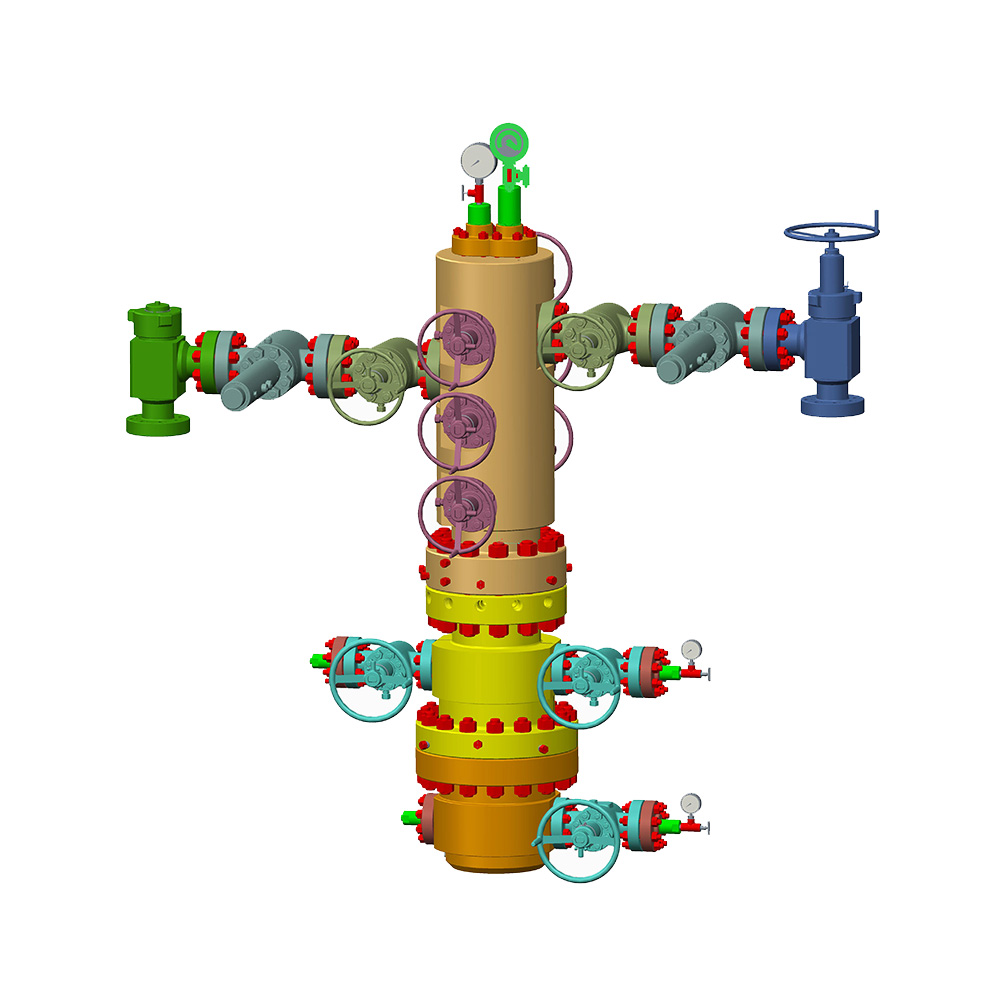 Dual-Tubing X-mas Tree for Gas Well ProductionA dual-bore X-mas tree for two-tubing-string gas wells, built to API Spec 6A with pressure ratings from 2000 to 20000 PSI.View Product →
Installation Is Where Most Problems Start
Most wellhead leaks trace back to installation rather than to the equipment, and nearly all of them come from a handful of repeated causes.
- Seal bores left with grit, paint or a scratch from chain tongs; sealing surfaces work in thousandths of an inch.
- Hangers landed without checking alignment, so the seal energises unevenly and the load sits on one side.
- Studs torqued by feel instead of with calibrated equipment and a documented sequence.
- No individual annulus pressure test before drilling out the shoe, which removes the chance to fix a leak cheaply.
- BOP stack-up height not checked against the spool, so the last flange will not make up.
The tubing head spool is where these details converge, because it has to accept the BOP during completion and the tree afterwards, at the same interface.
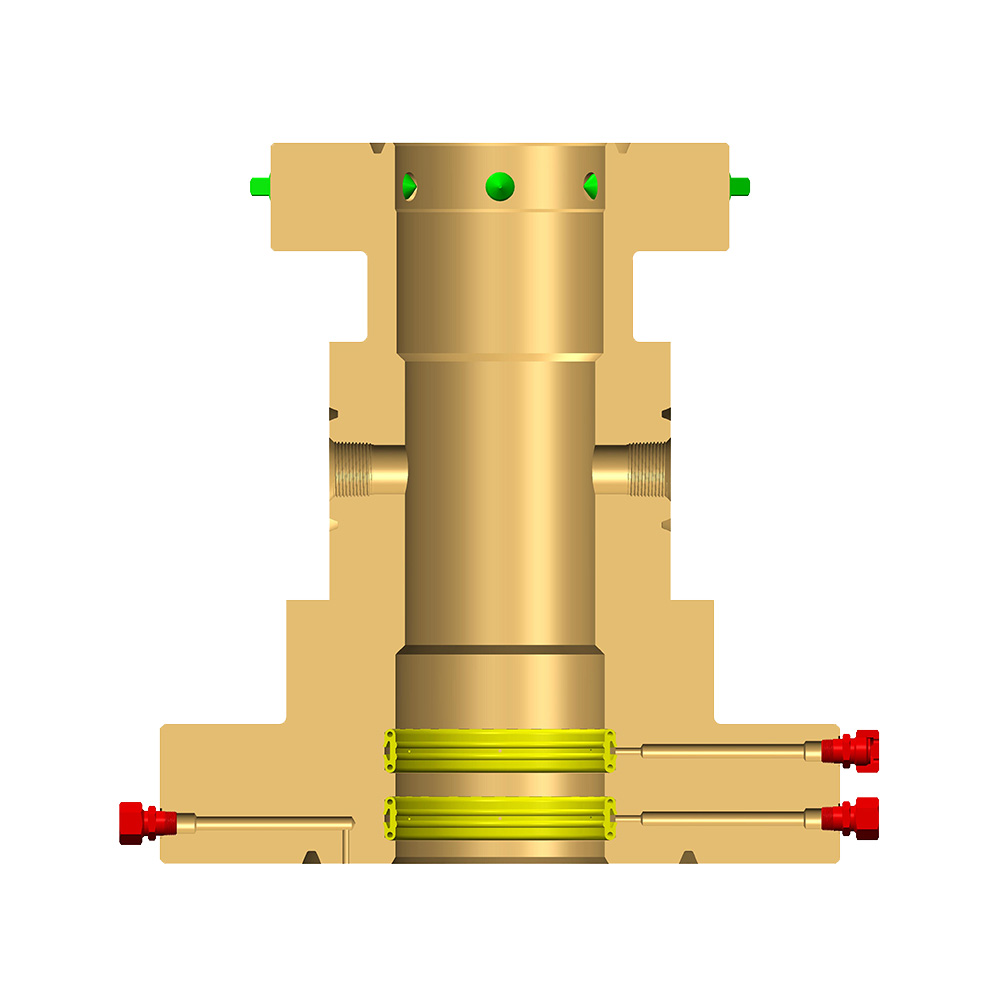 Tubing Head Spool for Completion and Tree InterfaceThe tubing head spool that accepts the BOP during completion and the tree afterward, with variants for ESP and dual-tubing setups.View Product →
A test plug run in the tubing hanger, plus a wear bushing kept in place while tools are in the hole, prevents the two most common forms of damage on a new installation.
Specifying and Buying a Gas Wellhead: A Practical Checklist
Buy from the well plan outward, not from a catalogue inward, and settle the interfaces before the price.
- Pressure envelope. Maximum anticipated surface pressure plus a stated margin, not the current reservoir pressure.
- Temperature envelope. Reservoir temperature for the upper end, choke cooling and ambient conditions for the lower end.
- Connections. Casing sizes and weights, weld or threaded base, outlet sizes, and matches to the BOP and tree flanges.
- Material and sour service. Gas composition first, then material class, hardness limits and any requirement for certified chemistry.
- Seal philosophy. Metal-to-metal primary sealing with elastomer backup is the usual choice for gas; ask how the seal was qualified.
- Documentation. Material certificates, traceability of pressure-containing parts, and whether the monogram is applied under licence.
- Tools and spares. Back pressure valves, retrieval tools, test plugs, wear bushings and seal kits should be quoted with the stack, not after it lands.
- Service and lead time. Who attends the first make-up, and how quickly a spare hanger can reach a remote location.
Maintenance and Monitoring
A gas wellhead needs little attention, but what it needs is specific and scheduled rather than reactive.
Annulus pressures should be recorded on a routine basis, since a slow rise on an outer annulus is often the first visible sign of a seal problem. Valve function tests and greasing follow the manufacturer's interval, and flange studs deserve a torque check after the first thermal cycle and periodically afterwards. Where wells are remote or unmanned, real-time wellhead monitoring turns those manual rounds into a trend line that raises an alarm long before a pressure rise becomes a hazard.
Frequently Asked Questions
What is the difference between a wellhead and a casing head?
The casing head is the bottom section of the wellhead, connected to surface casing and carrying the first hanger. The wellhead is the complete assembly, from that casing head up through the spools and hangers to the top flange where the tree lands.
What pressure rating should a gas wellhead have?
Match the rating to the maximum anticipated surface pressure with a documented margin. Gas wells commonly use 10,000 psi equipment, moving to 15,000 psi where pressure and temperature are both high, and a lower rating only where shut-in pressure is genuinely limited.
Can a gas wellhead be repaired without killing the well?
Some work can be done live, such as changing a valve on a wing outlet or installing a back pressure valve to isolate the well from above. Anything involving a hanger seal or a casing annulus normally requires the well to be killed or isolated first.
Why is a metal-to-metal seal preferred for gas service?
Because gas passes elastomer imperfections that liquids do not, and because metal seals hold up better under thermal cycling and long service. Elastomer seals still have a role, but usually as a secondary barrier rather than the primary one.
How often should wellhead valves be tested?
Testing intervals follow local regulation and operator policy rather than a single global rule. The practical rule is that the interval should be short enough to catch a leaking master valve before it becomes the only barrier.
A gas wellhead is a simple-looking stack of steel with an unusually long memory. Every decision made at the specification stage, from outlet size to seal type to specification level, is still visible at the well ten or twenty years later, and usually at the least convenient moment. Getting the interfaces, the sealing philosophy and the documentation right at the start is far cheaper than correcting them during a workover.