English
 русский

A compact wellhead system is a modular wellhead assembly that integrates the casing head, casing spools, tubing head, and tree adapter into a shorter, lighter stack than a conventional wellhead. The result is less rig time, lower BOP handling risk, and a smaller footprint on the platform or pad. Compact wellhead systems are not a single product; they are a design philosophy that favors slip-lock connectors, reduced flange-to-flange heights, and debris-tolerant profiles for drilling and completion operations.
Content
What Defines a Compact Wellhead System?
Compact wellhead systems are defined by three practical traits: a shorter overall stack height, fewer flanged connections, and faster installation with standard rig equipment.
In a conventional wellhead, the casing head, casing spools, and tubing head are separate heavy flanged bodies. Each connection adds height, weight, and a potential leak path. A compact system reduces that stack by using integrated spools, slip-lock or quick-connector profiles, and pre-assembled seal arrangements. The casing hanger often lands directly into the casing head or a single spool, rather than through multiple adapter flanges.
Debris tolerance is another common design target. During drilling, cuttings, rust, and dried mud can fall into the bowl area. A compact wellhead may use a debris-tolerant hanger profile or a protective wear bushing so the seal surfaces remain clean until the completion phase. This matters when the wellhead sits open for weeks between casing strings.
Why Operators Choose Compact Wellhead Systems
The main reason to choose a compact wellhead system is economic: it reduces the time the drilling rig must stay on the well, and it lowers the amount of heavy BOP handling required between hole sections.
On a conventional wellhead, moving the BOP from one casing spool to the next may require lifting the BOP, installing an adapter, and pressure-testing new connections. A compact system can allow the BOP to remain landed while the internal hanger and spool components are changed through the bore. That saves rig time and reduces the risk of dropped objects or damaged sealing surfaces.
Other benefits include:
- Smaller deck or pad footprint, which matters on offshore platforms and multi-well pads.
- Lower stack weight, reducing structural load on the conductor or surface casing.
- Fewer flanged joints, which means fewer leak paths and less torque work.
- Faster nipple-down and nipple-up operations between drilling and completion.
- Better compatibility with coiled tubing, wireline, and snubbing operations when the internal profile is designed for through-bore access.
Core Components of a Compact Wellhead Stack
A compact wellhead stack still performs the same four functions as any wellhead: it supports casing strings, seals each annulus, provides a landing point for the tubing hanger, and gives a connection for the Christmas tree or frac equipment.
Casing head and casing hanger
The casing head is the foundation of the stack. It welds or threads onto the surface casing string and provides the first pressure-containing bowl. In a compact design, the casing head may be shorter and may accept a slip-type or mandrel casing hanger without a separate spool. The casing hanger transfers the weight of the casing string to the head and seals the annulus between casing strings.
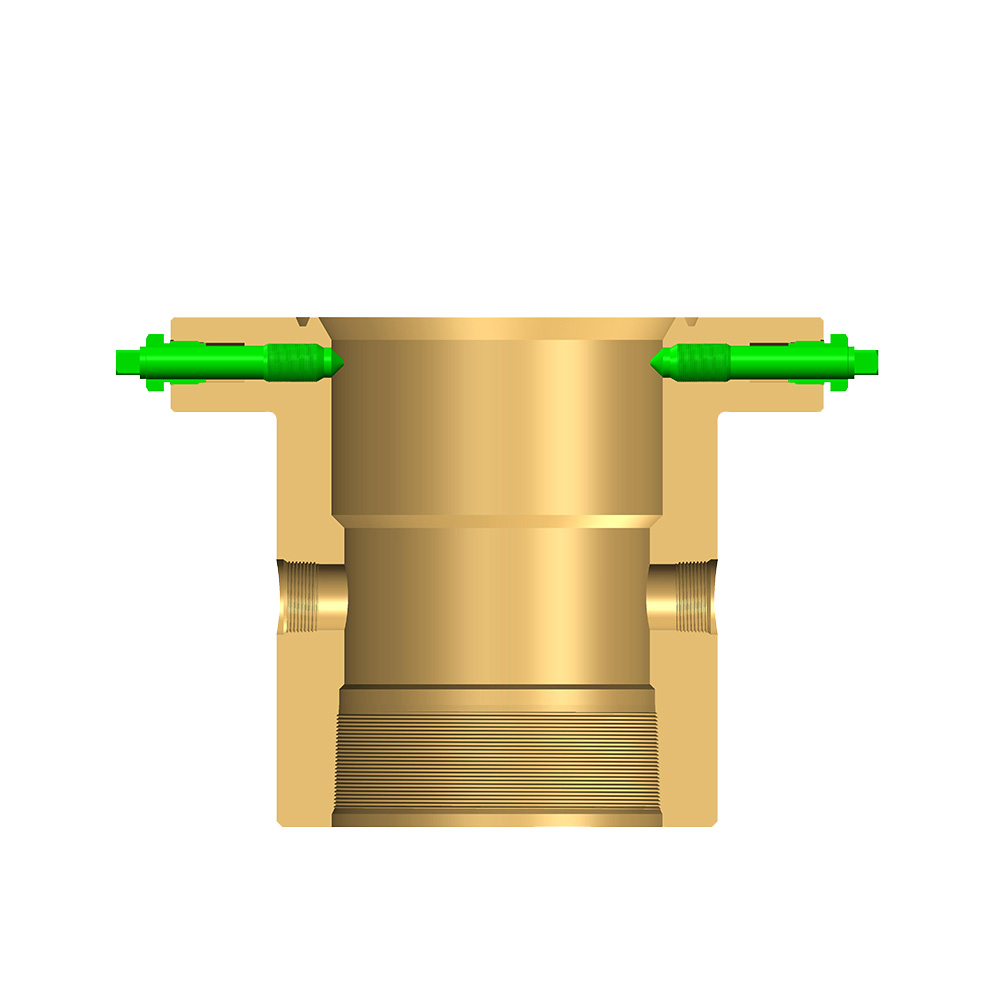 CSG Casing Head for Compact Wellhead StacksCompact casing head option that forms the wellhead foundation and accepts slip-type or mandrel casing hangers in reduced-height arrangements.View Product →
When selecting a casing head, check the casing size, pressure rating, and the hanger type. A CSG-style casing head, for example, is often used where a compact, slip-on arrangement is preferred over a large flanged spool.
Casing head spool and outlet connections
The casing head spool adds an outlet for annulus access, kill lines, or choke manifolds. In compact systems, this spool is often combined with the casing head body or made shorter by using a clamp-style connection. The outlet size and flange rating must match the rig's choke and kill manifold, so this is a procurement point where a wrong interface can stop the job.
Tubing head spool and tubing hanger
The tubing head spool sits above the casing head spools and supports the tubing hanger. The tubing hanger suspends the production tubing and seals the tubing-to-casing annulus. Compact versions may use a single spool with a combined hanger landing profile, which reduces the number of flanged connections above the wellhead.
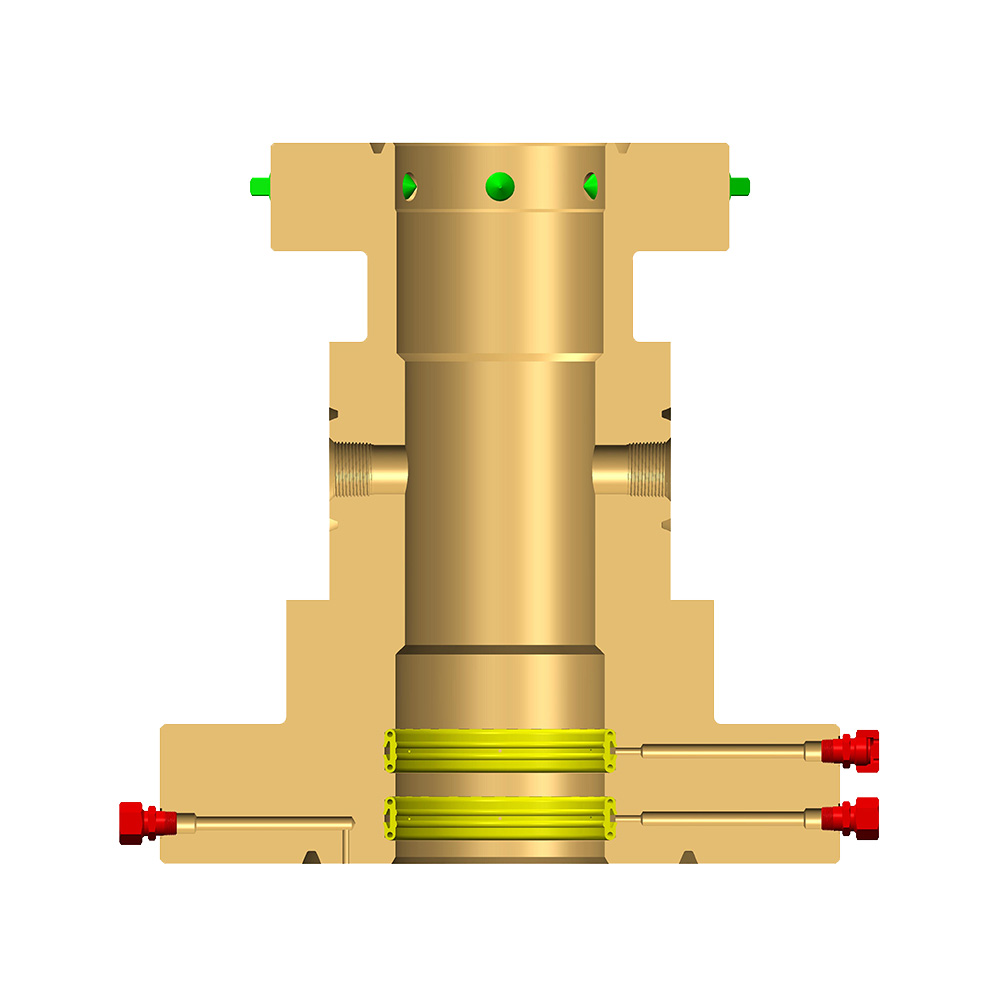 Tubing Head Spool for Wellhead AssembliesWellhead component that supports the tubing hanger and seals the tubing-to-casing annulus, with compact versions reducing flanged connections above the casing head.View Product →
For wells with electrical submersible pumps or dual tubing strings, the tubing head spool and hanger must be ordered with the correct penetrations and bypass ports. Those options are usually not interchangeable after manufacturing.
Frac wellhead and tree adapter
When the well is prepared for hydraulic fracturing, the compact wellhead may be topped with a frac wellhead assembly or a goat head. These components must handle high pump rates, abrasive proppant, and rapid pressure cycles. A dedicated frac wellhead is not the same as a standard Christmas tree; it uses a larger bore and wear-resistant materials in the flow path.
 Frac Wellhead Assembly for Hydraulic Fracturing OperationsHigh-pressure wellhead assembly for fracturing service, handling abrasive proppant and rapid pressure cycles before production tree installation.View Product →
After fracturing, the frac stack is removed and the production tree is installed. The tree adapter or tubing head adapter must match the tree's bottom connection, so it is worth confirming the API flange size, type, and ring groove before shipment.
Selection Criteria: Pressure, Size, and Interface
Choose a compact wellhead system by matching four variables: pressure rating, casing and tubing sizes, outlet configuration, and material class for the produced fluid.
The table below compares a conventional wellhead with a compact wellhead on the points that most often drive cost and schedule.
| Feature | Conventional wellhead | Compact wellhead system |
|---|---|---|
| Stack height | Taller; multiple flanged spools | Shorter; integrated spools and adapters |
| BOP handling | Often lifted between casing sections | May remain landed while internal parts change |
| Connection type | Standard API flanges, more joints | Slip-lock, clamp, or reduced-flange design |
| Leak paths | More flanged connections to test | Fewer connections, but seals are critical |
| Best fit | Simple wells, low rig day rate | Multi-well pads, offshore, HPHT, fast-moving rigs |
Pressure ratings usually range from 2,000 psi to 15,000 psi or higher, with API 6A or API 6A/17D requirements depending on the application. Temperature class, material class, and NACE compliance for H2S service should be stated in the data sheet, not assumed. A compact wellhead that is rated correctly for pressure but wrong for sour service will fail inspection or create an operational hazard.
Interface control is equally important. The casing head outlet, the tubing head adapter, and the tree connection must all match the rig's existing equipment. If the wellhead is part of a batch order for a pad, keep a single interface drawing for every well and verify it against each rig's BOP stack.
Installation and Field Fit
Compact wellhead systems install faster only when the rig crew understands the landing sequence and the seal test procedure.
Before running the casing, inspect the bowl and seal areas for debris. A wear bushing should protect the bowl while drilling continues. When the casing hanger is landed, confirm that it is seated and that the seal energizes with the specified torque or pressure. Do not rely on visual indication alone; use the manufacturer's landing tool and pressure test the annulus before nippling up the next spool.
Real-time wellhead monitoring can help confirm that the stack remains stable during drilling and completion. Real-time wellhead monitoring systems track pressure, temperature, and vibration at the wellhead, giving the rig crew an early warning if a seal starts to leak or a hanger moves. That data is especially useful on compact systems where the stack has fewer flanged connections but tighter internal clearances.
During completion, keep the bore clean and use the correct back pressure valve when the tree is removed. A back pressure valve provides a temporary barrier inside the tubing hanger, so the well can be secured without killing it. The retrieving tool and test plug must match the hanger profile; mixing tools from different wellhead designs is a common source of lost time.
Common Procurement Risks and How to Avoid Them
The most expensive compact wellhead is the one that does not fit the rig, the casing program, or the completion design.
- Assuming "compact" means interchangeable. Compact wellheads from different manufacturers use different hanger profiles, seal systems, and running tools. A hanger from one design will not land in another.
- Ordering by pressure rating only. Two wellheads can both be rated to 10,000 psi but have different temperature classes, material classes, or H2S limits.
- Ignoring the BOP interface. The BOP adapter, drilling spool, and wellhead outlet must match the rig's stack. Confirm studded or flanged connections, ring gaskets, and stud sizes.
- Forgetting spare seals and running tools. Compact systems often use proprietary elastomers or metal seals. If the seal is damaged during installation, a spare must be on site.
- No factory acceptance test record. Ask for pressure test charts, material certificates, and API monogram documentation before the equipment leaves the factory.
FAQ
What is the difference between a compact wellhead and a conventional wellhead?
A compact wellhead uses a shorter, more integrated stack with fewer flanged connections. A conventional wellhead uses separate heavy spools and adapters. The compact design saves rig time and reduces BOP handling, but it requires the correct running tools and hanger profiles.
Can a compact wellhead be used for hydraulic fracturing?
Yes, but the wellhead must be rated for frac service. A dedicated frac wellhead assembly or goat head is often installed above the tubing head for the frac operation, then removed before the production tree is installed. Standard wellhead components may not tolerate high pump rates and abrasive proppant without a frac-rated flow path.
How do I choose the pressure rating for a compact wellhead?
Start with the maximum anticipated surface pressure, then add the required safety margin and any regulatory requirement. The pressure rating must cover the highest pressure the wellhead will see during drilling, completion, and production. For HPHT wells, temperature derating may reduce the allowable working pressure.
What should be included in a compact wellhead order?
A complete order typically includes the casing head, casing hangers, casing head spools, tubing head spool, tubing hanger, tree adapter or frac adapter, seal kits, running tools, and test plugs. Specify API specification level, material class, temperature class, and outlet connections on the data sheet.
Compact wellhead systems reward early planning. Match the stack to the casing program, the rig's BOP, and the completion method, and the shorter, lighter assembly will pay back through faster nipple-up, safer BOP handling, and fewer leak paths. Treat the hanger profile, seal system, and running tools as a matched set from the same supply chain, and verify every interface before the equipment leaves the yard.