English
 русский
Specifying a check valve for gas service, buyers and engineers usually get caught in the same three places: the wrong body style, the wrong seat material, or a spring rating that never matched the line. The short answer first — for clean, dry gas lines a swing or dual-plate design is usually right; for high-pressure wellheads and compressor discharge where fast closing matters, a lift (piston) type wins; and a dart or flapper design only earns its place where the run is short and the space is tight.
Everything after that is engineering detail. But those details are what decide whether the valve lasts ten years or fails on the first pressure excursion.
Content
- What a Gas Check Valve Actually Does — and Why Gas Is Different
- Types of Check Valves for Gas Service
- Sizing and Cracking Pressure: Where Most Bad Choices Get Made
- Materials and Sealing for Wet, Sour, and Hot Gas
- Installation and Maintenance: The Failures That Actually Happen
- FAQ
- What is the difference between a lift check valve and a swing check valve for gas?
- Do gas check valves have to be installed horizontally?
- What cracking pressure should I expect from a spring-loaded check valve?
- Can the same check valve be used on natural gas and on compressed air?
- How often should gas check valves be inspected?
What a Gas Check Valve Actually Does — and Why Gas Is Different
A check valve for gas is an automatic valve: it opens on the differential pressure created by the medium flowing through the line, and closes on reverse differential pressure, with no actuator, no air supply and no external signal.
It fails easily precisely because it is simple. Gas is compressible, and a compressible medium drives the disc into chatter as flow approaches the closing point. On a liquid line, a slightly oversized swing check valve may only be noisy. On a gas line, that same valve can wear out its hinge pin in a matter of hours of operation. This is not a defect in the design; it is the medium behaving as a compressible fluid always does.
The second difference is the closing event. A liquid line decelerates the disc gently. Gas does not. Once reverse flow establishes, the disc lands on the seat almost instantly, and on a long run that produces a measurable pressure spike upstream. That is why cracking pressure and disc travel deserve far more scrutiny on gas than on liquids.
Types of Check Valves for Gas Service
Four designs cover almost every gas application, and the first selection decision is closing speed, not pressure drop. Decide how fast the disc must seat before you compare anything else.
Swing check valves
Swing check valves are the most widely used pattern because they offer the best flow capacity and the lowest pressure drop — the disc swings on a hinge and stays fully open as long as flow remains forward.
Their weakness is response time. The disc must sweep a full arc before it reseats, so a swing valve is a poor choice anywhere fast reverse flow can develop. These valves are normally installed horizontally, with the flow arrow cast on the body aligned to the line.
Swing valves also chatter in the part-open position, so never oversize one. If the line is DN80 but the actual flow is covered by a DN50, install the DN50 with reducers rather than forcing a DN80 valve into a duty it cannot hold open.
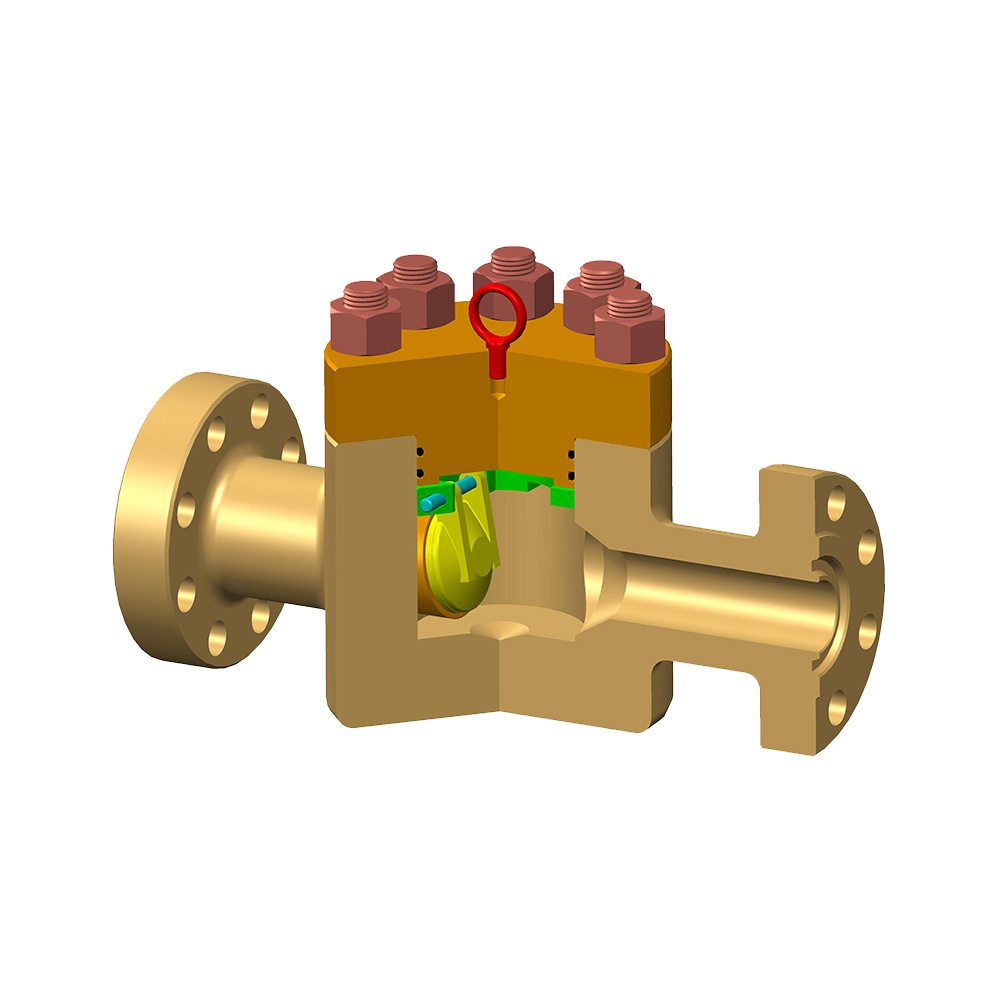 Swing Type Check Valve in Check Valve CategoryProduct page for the Swing Type Check Valve, relevant when comparing swing-disc chatter, sizing limits, and pressure-drop trade-offs with dual-plate designs.View Product →
Dual-plate check valves
Dual-plate check valves use two spring-loaded half-discs and travel roughly half as far as a swing disc. They close considerably faster, which is why they dominate compressor discharge and gas transmission skids. The trade-off is a slightly restricted flow path and therefore a modestly higher pressure drop than a full-bore swing valve of the same size.
Lift and piston check valves
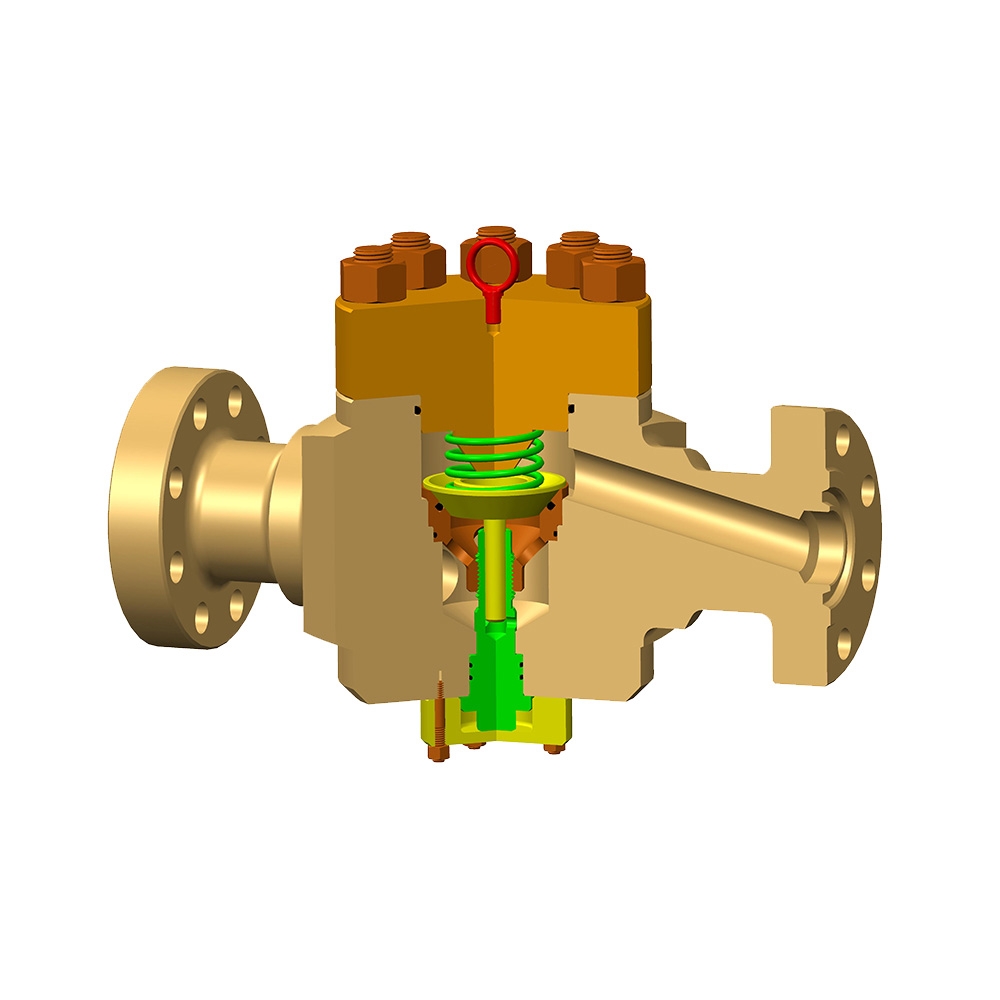
Lift check valves raise the disc along a vertical guide. They close quickly, hold a tight seat even at high pressure, and avoid the disc skew that plagues swing designs.
The cost is a higher cracking pressure, typically between 0.5 and 2 psi depending on the spring fitted. On a low-pressure gas line that penalty is noticeable. On a wellhead or compressor discharge, where fast closure and a reliable seat at pressure matter far more than a fraction of a psi, lift-type construction is the common answer. The mechanism shared by gate, choke and check valves in petroleum service is covered in more depth in this overview of core valve technologies in the petroleum industry, which is worth reading if you want the structural detail.
Dart and flapper designs
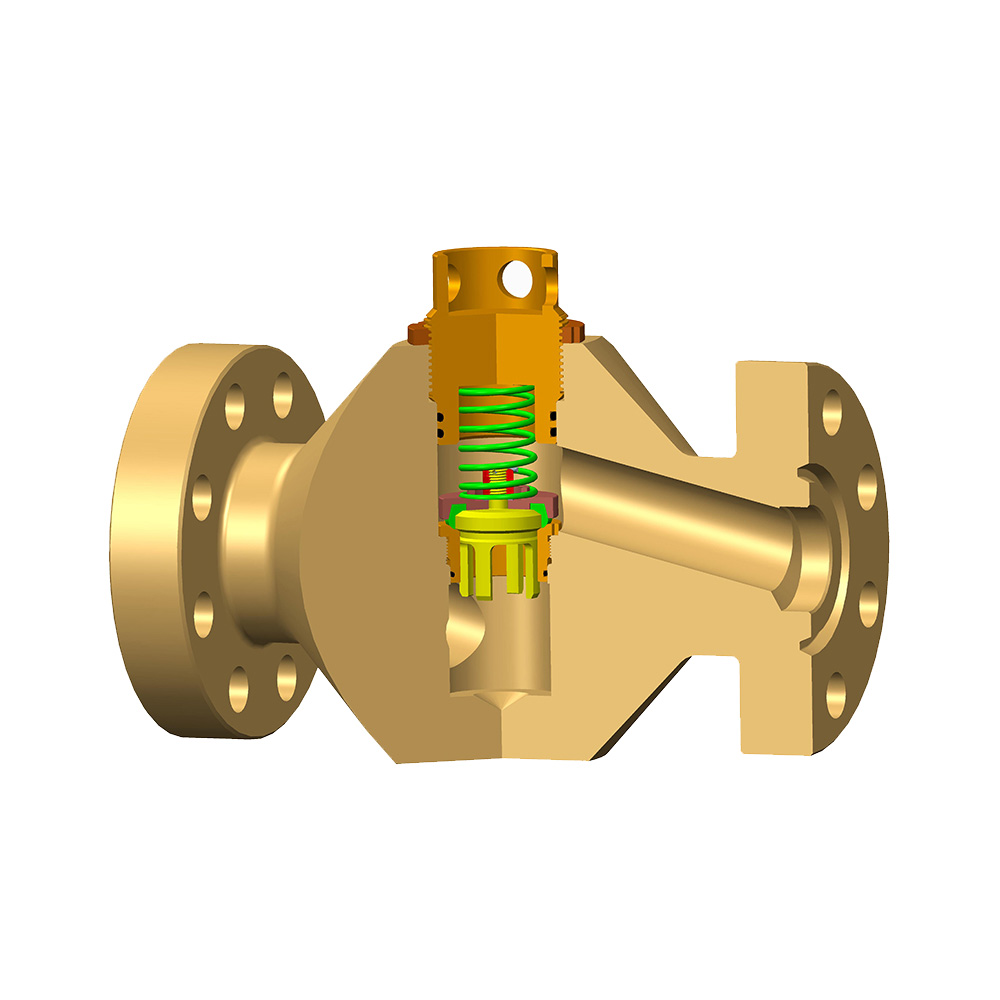
Dart and flapper check valves seat a flat or conical disc directly onto a seat. They are compact, need almost no installation envelope, and close quickly on gas.
They also produce the highest pressure drop of the four patterns, and the wear concentrates on a single sealing face, so leakage tends to appear gradually after heavy cycling. Instrument-air branches and compressor station skids — short runs, tight space — are sensible places for a flapper. A twelve-inch transmission main is not.
If you are unsure which pattern fits, it helps to look at the pressure class and size range covered by the check valve product family before settling on a body style.
Sizing and Cracking Pressure: Where Most Bad Choices Get Made
A check valve is sized by flow rate, never by copying the pipe diameter — oversizing is the single most common reason a gas check valve fails early.
Cracking pressure is the minimum differential pressure required to lift the disc off its seat. Swing designs need the least, roughly 0.5 psi. Spring-loaded lift and dual-plate designs need more. Fit a spring-loaded check valve on a line that cannot deliver its cracking pressure and the disc will sit part-open, chattering, until the hinge pin, guide bushing or seat face gives out.
Pressure drop is the other side of the same trade. Going one size up lowers pressure drop but raises the risk of chatter. Going one size down raises velocity, which helps hold the disc open but pushes pressure drop higher. The reliable method is to calculate normal and minimum flow first, then verify cracking pressure against the minimum flow case — not the design case.
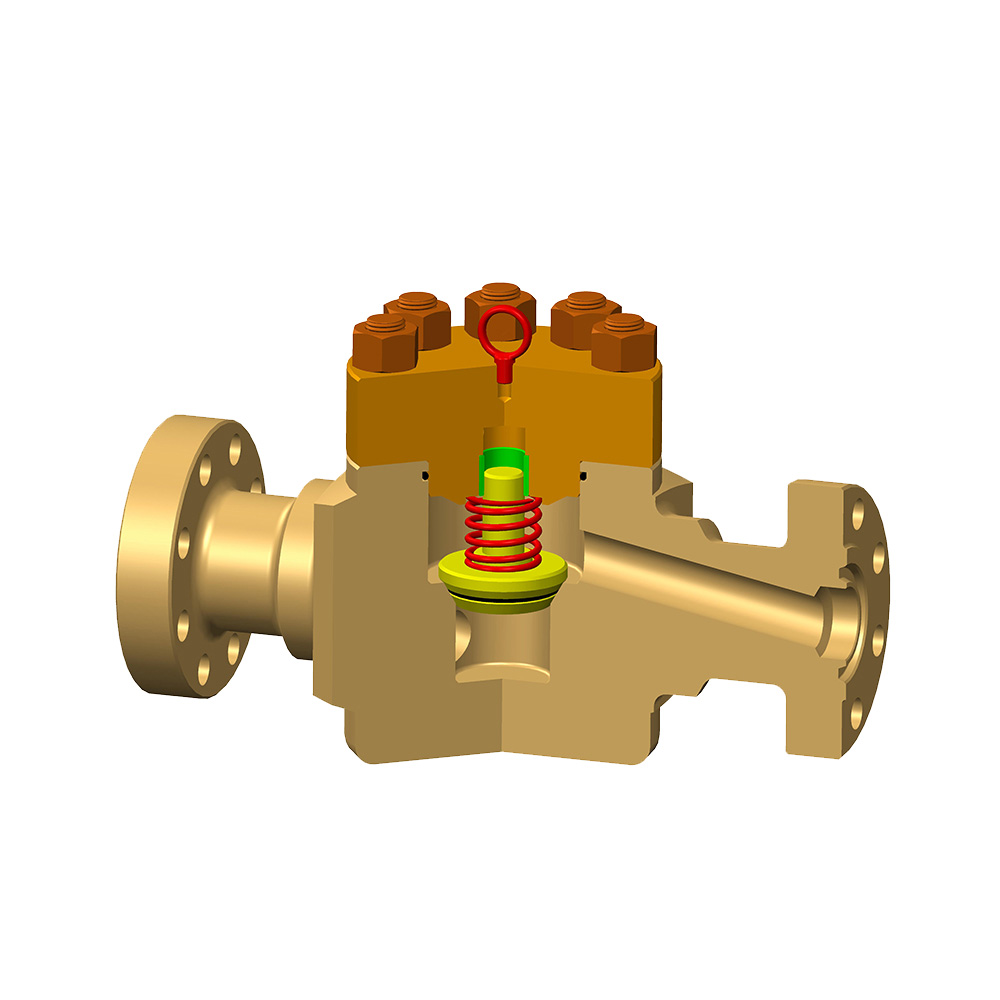 Lift Check Valve in Check Valve CategoryProduct page for the Lift Check Valve, useful alongside guidance on flow sizing, cracking pressure, pressure-drop trade-offs, and gas-service seat material selection.View Product →
| Design | Typical cracking pressure | Closing speed | Relative pressure drop | Where it fits in gas service |
|---|---|---|---|---|
| Swing | About 0.5 psi | Slow | Low | Clean, dry transmission lines; horizontal installation |
| Dual-plate | About 0.5–1 psi | Fast | Medium | Compressor discharge, gas transmission skids |
| Lift / piston | About 1–3 psi | Fast | Medium to high | High-pressure wellheads, lines with sharp pressure swings |
| Dart / flapper | About 0.5–2 psi | Fast | High | Instrument-air branches, compressor skids, short runs |
Materials and Sealing for Wet, Sour, and Hot Gas
Seat material selection in gas service comes down to three questions: what is in the gas, how hot does it run, and is hydrogen sulfide present. If any one of those answers is unfavourable, body steel and seal material both need rethinking.
On dry natural gas, a carbon steel body with a 13Cr or 316 stainless trim is the standard combination. Add free water, carbon dioxide, or H2S and the picture changes: sour service requires material selection to NACE MR0175 / ISO 15156, which in practice means 316L or duplex stainless and elastomers rated for the same environment.
Elastomeric seals also behave differently in gas than in liquid. Gas permeates rubber more readily, and rapid decompression can leave dissolved gas trapped inside the elastomer, expanding and blistering or tearing it — the mechanism known as explosive decompression. That is why high-pressure gas service often accepts a lower sealing class in exchange for a fully metal-seated design.
Temperature is unavoidable too. Ordinary nitrile degrades noticeably above 90°C, FKM holds to roughly 200°C, and beyond that you are looking at PTFE or metal-to-metal sealing. Report both the maximum and minimum operating temperature to your supplier rather than the normal condition alone — cold-start embrittlement causes just as many field failures as heat ageing.
Installation and Maintenance: The Failures That Actually Happen
Installation orientation is where field errors start. Swing valves belong horizontal, so the hinge pin sits on a horizontal axis. Lift valves must be vertical, so gravity can return the disc to its seat. Flapper and dart designs are the most orientation-tolerant of the four, which is one of their few genuine advantages.
The failures that actually show up in service cluster into four groups:
- Disc chatter — valve oversized or cracking pressure too high for the line, leaving the disc vibrating part-open.
- Pressure-wave damage — reverse flow in a gas line slams the disc shut, and the upstream spike deforms the seat or the body.
- Seat leakage — solids or mill scale trapped on the seating face, or an elastomer that has hardened with age.
- Hinge and guide wear — most often on compressor discharge lines where pulsation is continuous.
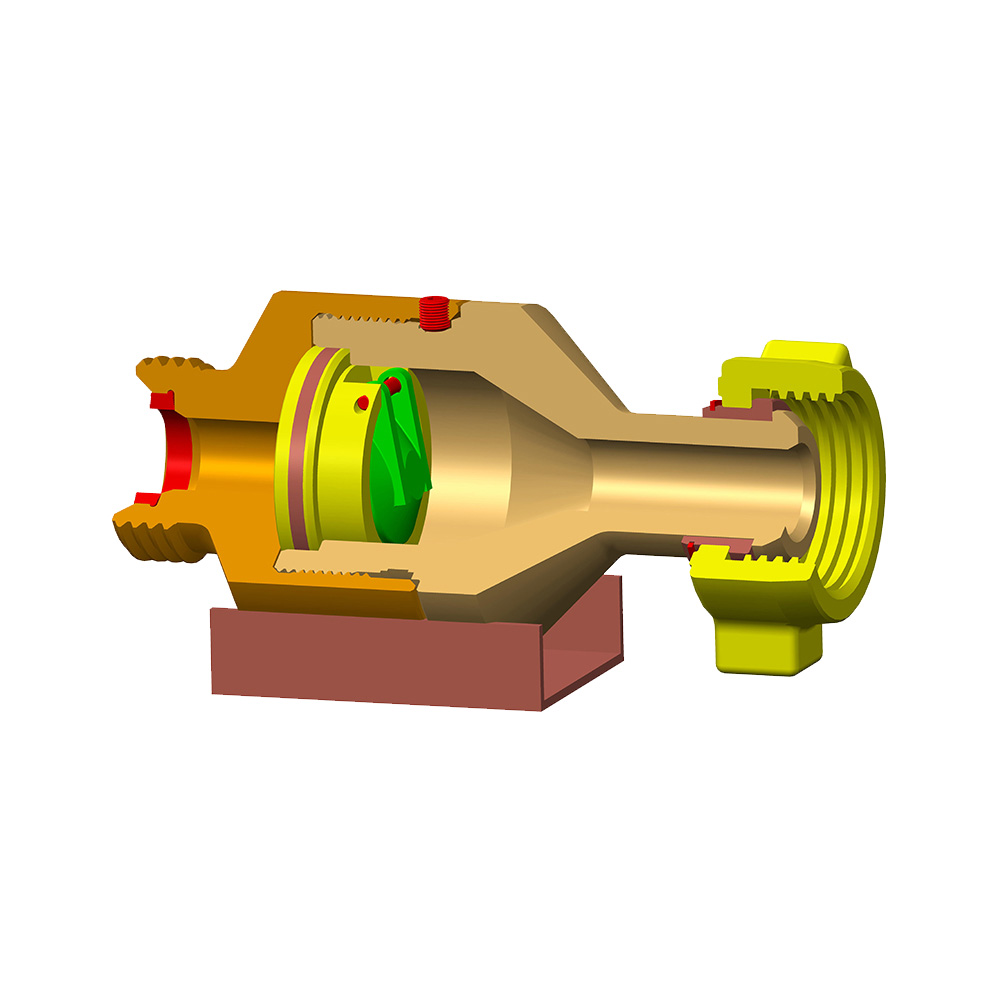 Flapper Check Valve in Check Valve CategoryProduct page for the Flapper check valve, suited to review with maintenance planning around inspection intervals, wear items, and model-matched spare parts.View Product →
Maintenance planning can stay simple: treat the check valve as a wear item, not a permanent fitting. Inspection intervals follow duty — compressor discharge and wellhead service is usually a six-month check, while a clean transmission line can reasonably go one to two years. Keeping seat faces, elastomers and springs as model-matched spares costs less than replacing complete valves.
One last point: purge and flush every new line before commissioning. Welding slag and rust are the most frequent cause of seat leakage on gas check valves, and the valve itself is rarely to blame.
FAQ
What is the difference between a lift check valve and a swing check valve for gas?
A lift check valve raises the disc along a vertical guide, which gives a short stroke, fast closing and a reliable seat at high pressure, at the cost of higher cracking pressure and pressure drop. A swing check valve rotates the disc on a hinge, which gives better flow capacity and lower pressure drop, but slower closing and a greater tendency to chatter when oversized. Lift types dominate compressor discharge and wellhead duties; swing types suit long transmission lines.
Do gas check valves have to be installed horizontally?
No. Swing valves are best installed horizontally so the hinge pin stays on a horizontal axis. Lift valves must be vertical so gravity can reseat the disc. Dual-plate and flapper designs tolerate most orientations, but the flow arrow must always match the actual direction of gas flow.
What cracking pressure should I expect from a spring-loaded check valve?
Roughly 0.5 to 2 psi on common half-inch to two-inch patterns. Larger sizes usually develop higher cracking pressure from the same spring. If your minimum flow only generates 0.2 psi of differential, a spring-loaded valve will never open fully — either specify a softer spring or move to a swing design.
Can the same check valve be used on natural gas and on compressed air?
Structurally, usually yes, but material and certification requirements differ. Sour natural gas calls for NACE MR0175 material selection, while instrument air is generally satisfied by carbon steel with nitrile seals. If the same valve is also intended for wellhead piping, it should meet the relevant API 6A or API 6D requirements.
How often should gas check valves be inspected?
Six months is a reasonable interval for compressor discharge and wellhead positions where pulsation is continuous; one to two years is defensible for clean, dry transmission lines. Two signals justify an early inspection: abnormal noise from the valve, and regular oscillation in upstream pressure.
Specifying a check valve for gas is really a question of order. Decide the required closing speed first, then cracking pressure and size, and only then material. Get that sequence backwards and you will usually find out a few weeks after commissioning — with a disc that is chattering and a valve that was never actually defective.