English
 русский
A check valve for a well is a one-way valve that automatically prevents liquid from flowing backward when the pump stops. It is installed at the wellhead, near the pump, or in the production string to protect the pump, casing, and formation from backflow damage. The most important decision is not whether to use one, but where to place it and what type, material, and pressure rating suit your well conditions.
Content
- What Is a Check Valve for a Well?
- Why a Well Check Valve Matters
- Common Types of Check Valves for Wells
- How to Choose a Check Valve for a Well
- Installation Placement: Wellhead or Downhole?
- Pressure, Temperature, and Material Considerations
- Common Problems and Maintenance
- Frequently Asked Questions
- Final Buying Advice
What Is a Check Valve for a Well?
A check valve for a well is a mechanical one-way gate that opens in the direction of production and closes as soon as flow reverses. In a water well, it keeps the drop pipe full so the pump does not need to re-prime every cycle. In an oil or gas well, it prevents produced fluids and gas from flowing back into the reservoir or wellbore when surface equipment is shut down.
Most well check valves fall into two operating groups: gravity-closing disc designs and spring-assisted port designs. Spring-assisted valves work in any orientation and are preferred for horizontal wellhead systems.
Why a Well Check Valve Matters
The first reason is simple: without a check valve, the fluid column drains back every time the pump stops. That creates a vacuum, lets the pump spin backward, and allows sand and debris to settle around the pump intake.
- Reverse rotation can damage the motor or pump coupling.
- A drained column causes the pump to lose prime and run dry.
- Sand and debris fall back into the pump, causing wear on the first restart.
- Contaminated surface water can enter the well annulus.
- Restarting against an empty column creates water hammer and pressure spikes.
For a broader understanding of where check valves are applied outside the wellbore, see our article on check valve applications across industries.
Common Types of Check Valves for Wells
The most common designs for well service are swing, lift, dart, flapper, and top-entry check valves. For most producing wells, swing and dart valves offer the best low-pressure-drop performance; lift valves better suit high-pressure, low-flow systems.
Swing Check Valve
A swing check valve uses a hinged disc that opens with forward flow and closes by gravity and reverse flow. Its large flow path keeps pressure drop low, which is valuable on high-flow production lines and wellhead flowback systems.
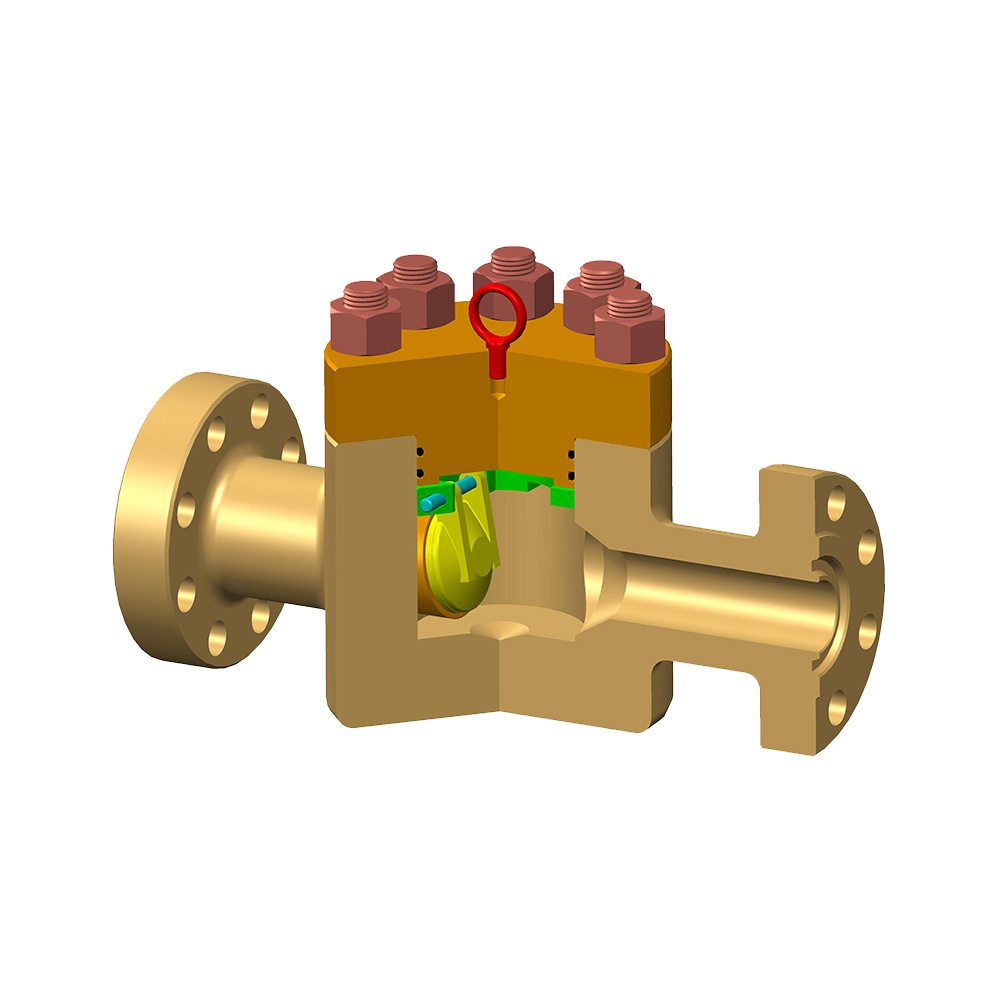 Swing Type Check Valve for High-Flow Production LinesThis swing check valve opens with forward flow and closes by gravity and reverse flow, offering a large flow path with low pressure drop. It suits high-flow production lines and wellhead flowback systems where efficient flow is critical.View Product →
Lift Check Valve
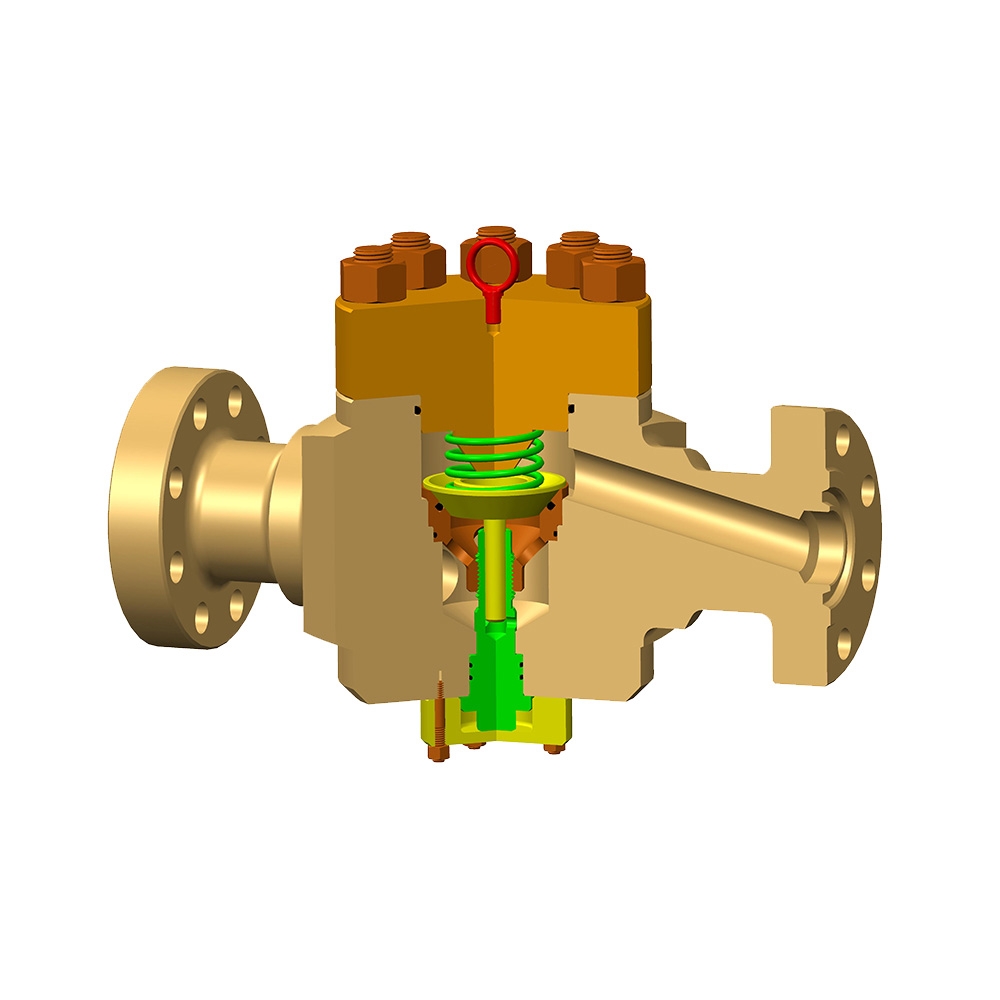
A lift check valve has a disc or piston that moves vertically off a seat. It is more compact, provides tighter shutoff, and handles higher pressure ratings, making it a good choice for pump discharge lines and injection wells.
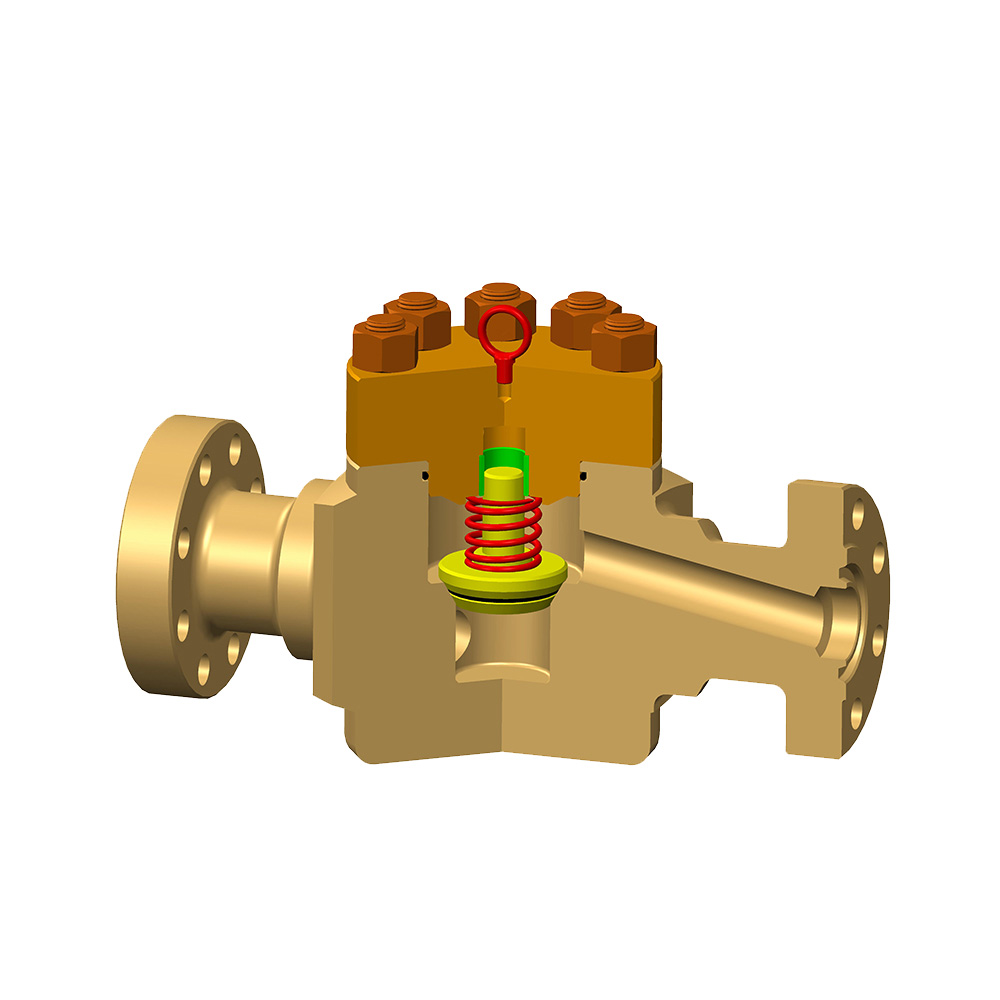 Lift Check Valve for Pump Discharge and Injection WellsFeaturing a vertically moving disc or piston, this lift check valve provides a compact design, tighter shutoff, and higher pressure capability. It is well suited for pump discharge lines and injection well applications requiring reliable sealing.View Product →
Dart Check Valve
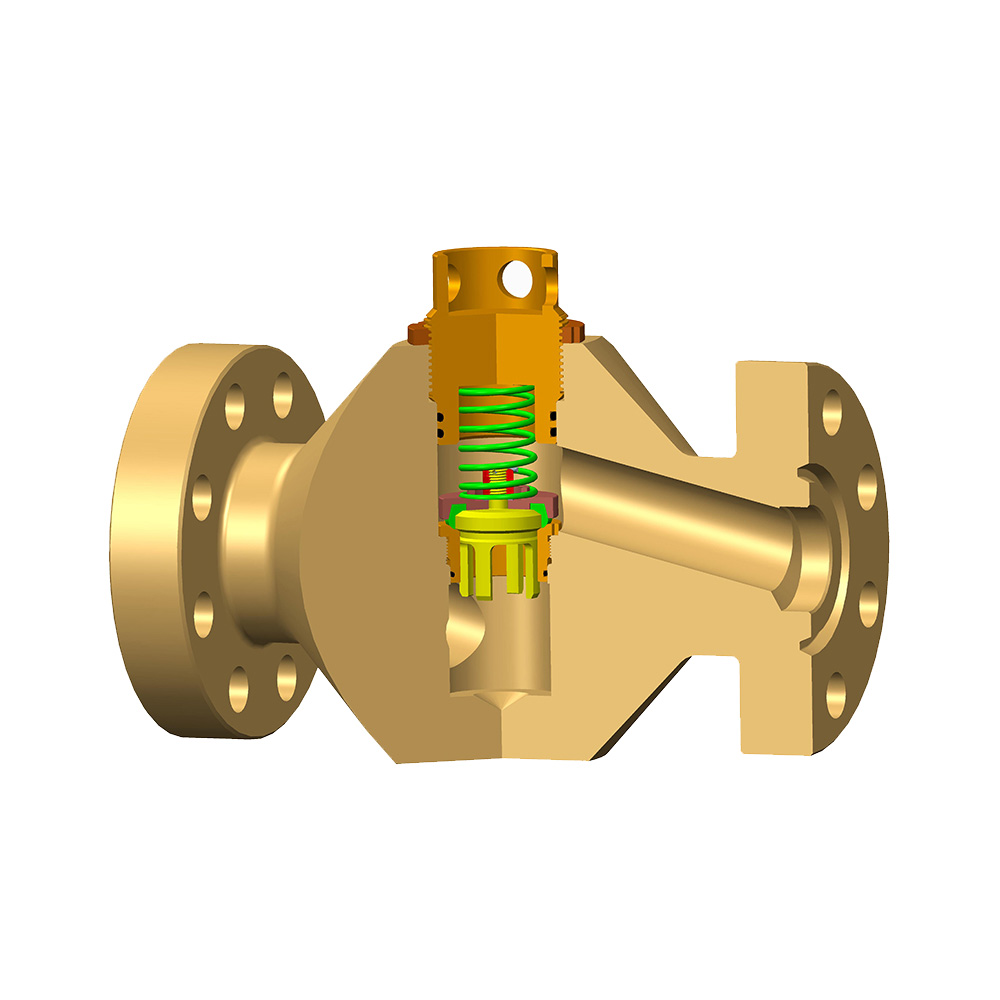
A dart check valve uses a dart-shaped closure that lands in a cone seat. This design is widely used in drilling and well service operations where tools or debris may pass through the string while the valve still needs a positive seal against reverse flow.
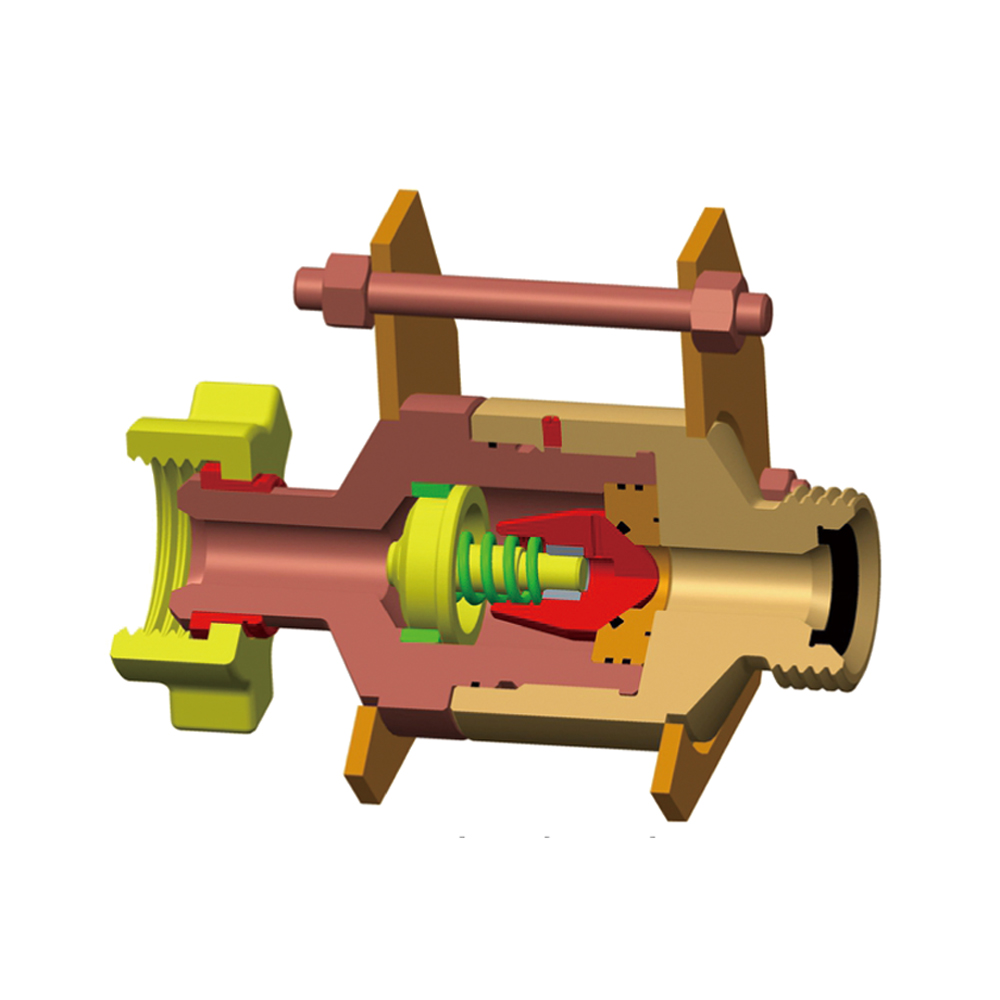 Dart Check Valve for Drilling and Well Service OperationsUsing a dart-shaped closure that seals in a cone seat, this check valve allows tools or debris to pass while maintaining a positive seal against reverse flow. It is widely used in drilling and well service operations.View Product →
The table below summarizes how the main types compare in closing mechanism and typical well application.
| Type | Closing mechanism | Typical well application |
|---|---|---|
| Swing | Hinged disc | High-flow wellheads, production lines |
| Lift | Vertical disc or piston | High-pressure pump discharge |
| Dart | Dart-and-cone seat | Drill string, well service tools |
| Flapper | Spring-loaded flap | Compact pump installations |
| Top entry | Replaceable seat via top cover | Wells needing quick inline maintenance |
How to Choose a Check Valve for a Well
Select a check valve by first determining the maximum shut-in pressure, flow rate, and fluid corrosivity; only then look at physical size and connection type. A valve too large for the flow will flutter, while a valve too small adds excessive pressure loss.
- Identify whether the valve will be at the wellhead, downhole, or on the pump discharge.
- Confirm that the pressure rating covers the highest shut-in or surge pressure, not just normal pumping pressure.
- Ask for a cracking pressure that matches your system: lower for gravity-drain wells, higher for high-pressure lift applications.
- Check the end connection: threaded, flanged, or welded to match your wellhead equipment.
- Select seat and body materials that resist sand, scale, H2S, or paraffin.
| Factor | What to verify | Why it matters |
|---|---|---|
| Well depth | Static level and setting depth of the pump | Determines whether a downhole or surface valve is needed |
| Pressure | Maximum shut-in pressure and transient surges | Prevents body or seat failure |
| Temperature | Fluid temperature range | Affects seal and elastomer life |
| Flow rate | Normal and peak flow | Controls valve size and pressure drop |
| Fluid type | Fresh or salt water, crude, gas, H2S | Dictates material and trim selection |
| Service access | Frequency of well intervention | Determines need for top-entry or flanged design |
When purchasing for oil and gas wells, prefer a manufacturer that holds API qualification and can provide pressure test records and material traceability. You can review our API-related certificates and quality system before placing an order.
Installation Placement: Wellhead or Downhole?
Placement controls how much of the fluid column is protected. The practical engineering answer is to install a check valve as close to the pump discharge as possible, and add a second check valve at the wellhead if the well produces gas or is shared with injection equipment.
- For a submersible pump well, put the check valve directly above the pump to keep the discharge column full.
- For a surface pump on a shallow well, put the check valve on the pump discharge line, before the first isolation valve.
- For high-head wells, use two check valves to avoid a long unsupported fluid column and reduce water hammer.
- Injection wells should have a check valve at the wellhead to prevent reservoir fluids from flowing back into the injection line.
A simple well test with a vacuum gauge can reveal whether a missing or leaking check valve is causing the pump to lose prime.
Pressure, Temperature, and Material Considerations
The valve body, seat, and seal must match the maximum working pressure and the chemical aggressiveness of the well fluid. Carbon steel is the standard choice for most oilfield wellheads, while stainless steel or duplex is specified for H2S and high-chloride water. Brass is usually limited to small domestic water wells.
| Material | Pressure range | Recommended use |
|---|---|---|
| Carbon steel | 2,000–10,000 psi | Standard oil and gas wellhead and flowback |
| Stainless steel | 2,000–10,000 psi | Sour water, H2S, corrosive brines |
| Brass | Up to 1,000 psi | Small water wells, low pressure |
| Duplex stainless | 5,000–15,000 psi | Offshore, high-chloride, high-pressure service |
Always confirm the pressure class of the seats and springs, not only the body. Elastomer seats work well in clean fluids; metal-to-metal seats are preferred for high-temperature or abrasive service.
Common Problems and Maintenance
Most well check valve failures show up as a slow leak, a chattering sound, or a pump that repeatedly loses prime. The first task is to confirm that the valve is installed in the correct orientation and at the correct elevation.
- Leaking: clean or replace the seat and disc; check for debris or scale trapped on the sealing surface.
- Chattering: either the valve is oversized or the cracking pressure is too low for the system.
- Sticking: caused by scale, paraffin, or sand build-up; inspect the moving parts during routine well service.
- Water hammer: install a lower cracking-pressure spring and inspect the pump cycling rate.
Inspect the check valve every time the pump is pulled for maintenance. Keep a repair kit with O-rings and coil springs so a worn valve can be rebuilt without waiting for a new assembly.
Frequently Asked Questions
Does every well need a check valve?
Not every single installation requires one, but any well with a pump that lifts a column of water from depth should have a check valve to keep the column primed and prevent reverse rotation.
Should the check valve be placed at the top or bottom of a well?
For a submersible pump, place it directly above the pump. For a surface-pumped well, place it on the discharge line close to the wellhead. A second valve can be added at the wellhead when gas or injection service creates backflow risk.
What size check valve do I need?
Size by flow velocity rather than pipe diameter alone. For water wells, keep velocity below 7 ft/s to avoid excessive friction. For high-rate oil wells, the valve should match the production tubing size and pressure class.
How often should a well check valve be replaced?
There is no fixed interval; inspect annually or whenever the pump is pulled. Replace seals and seats immediately if leak testing shows the valve cannot hold pressure in the reverse direction.
Final Buying Advice
Start with the well data, not a parts catalog. Record the depth, casing or tubing size, pump discharge pressure, and fluid sample analysis. Compare that information with the pressure class, connection standard, and seat material of the check valve. A small upcharge for an API-compliant, service-friendly design is the cheapest protection you can add to a producing well.